
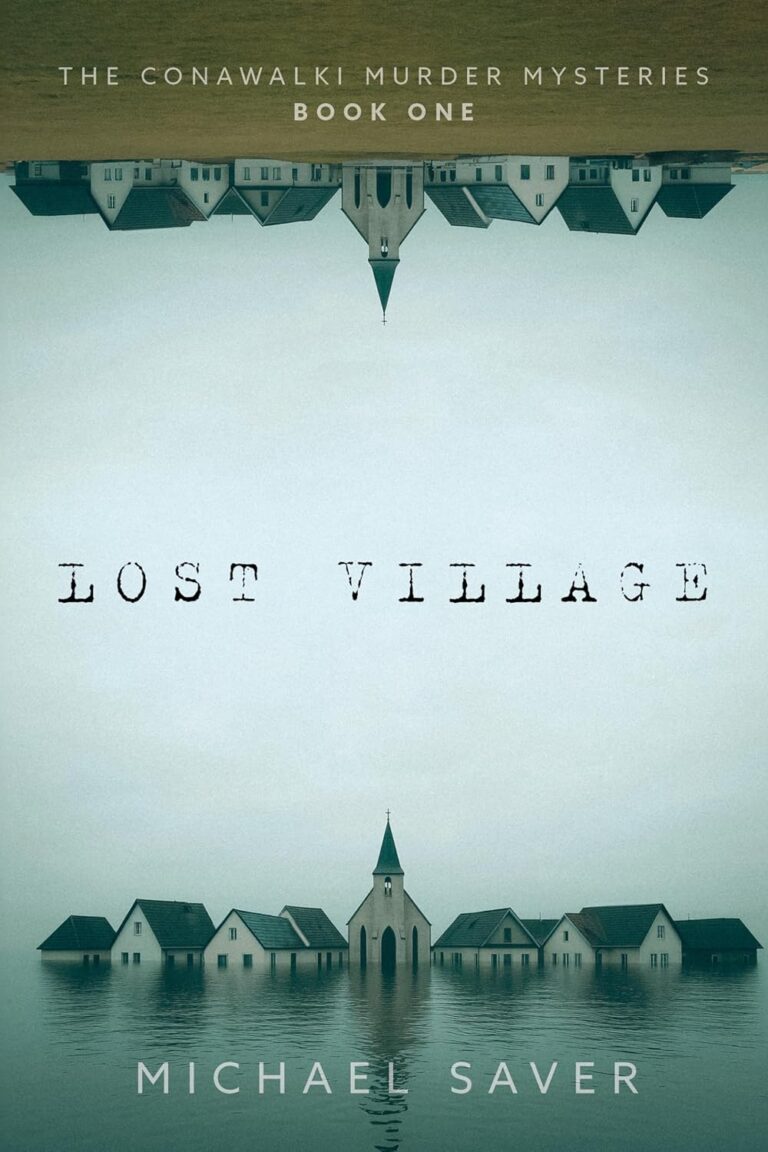
 LOST VILLAGE (The Conawalki Murder Mysteries Book 1)
Winner of the 2026 IndieReader Discovery Awards in LGBTQ+, Fiction
What’s the book’s first line?
“The One lit his cigarette, then flicked the match out the truck window. Not dry enough to catch fire, he thought. Too bad.”
What’s the book about? Give us the “pitch”.
Lost Village is a Canadian thriller and coming of age story set in the fictionalized town of Conawalki, Ontario. The novel explores the profound impact of community upheaval, identity struggles, and the dark undercurrents that can lurk beneath the seemingly peaceful surfaces of a small town.
In May of 1973, the town of Conawalki prepares to celebrate 15 years since the town was physically relocated to make room for the flooding of the land that created the St. Lawrence Seaway. On a warm Sunday evening of the May holiday weekend, the brutal murder of a well-known elderly citizen shocks the fragile community. Three teenage friends, each on their own search for identity and a future away from Conawalki, are drawn into the turmoil. Their glam rock band, Three Smart Boys, is set to perform at the community celebration, but their involvement in the investigation takes them down dark and dangerous paths. Mark Sheiffer, the band’s 17-year-old vocalist and keyboard player (and David Bowie’s #1 fan) is coming to terms with his queer identity while enduring daily bullying. A second vicious murder brings suspicion onto Sebastien Chateauguay, Conawalki’s resident hippy and one of Mark’s closest friends. When two classmates disappear just before the Inundation Day festival, Detective Sergeant Andrew Stewart must unravel the web of secrets and lies engulfing the village to catch a killer before another murder takes place.
Lost Village – where the past refuses to stay submerged!
What inspired you to write the book? A particular person? An event?
This novel began as therapy, with me making sense of my own experience growing up in the real town of Iroquois, Ontario which was displaced by the flooding and was never the same. I came to realize that many people experience dislocation for all kinds of reasons. The story rapidly grew beyond my own search for understanding of my history as a queer person to a broader exploration of identity, integrity, and friendship amidst the backdrop of violence and collective trauma. Particularly, I wondered how it might have been different.
What’s the main reason someone should really read this book?
Readers attest that Lost Village is an absolute page turner and a difficult book to put down. Reader Views noted the novel has witty characters developed with “dry humor and wry cheekiness”. CANREADS noted “Lost Village is a striking, ambitious debut, reaching well beyond the familiar borders of a murder mystery… Readers who enjoy the quieter supernatural tones of Stephen King and the small-town layering of Louise Penny will feel right at home.” I am honoured and humbled by that. And I think that is magnificent company to be in! CANREADS also named the book Best Mystery/Suspense novel of 2026.
What’s the most distinctive thing about the main character? Who-real or fictional-would you say the character reminds you of?
Lost Village has a large cast of characters, but the “Three Smart Boys” bandmates, Mark Sheiffer, Sebastien (Seb) Chateauguay and Felix (Flix) Sistilli, are at the heart of the story. Mark Sheiffer is the main character, and he most embodies my experience and sensibility. He meets his many struggles with the kind of courage and resilience that I wish I had at his age. And his passion for Glam Rock, especially David Bowie and Lou Reed, enables him to see the world ‘aslant’ (as per Emily Dickinson, “Tell all the truth but tell it slant”).
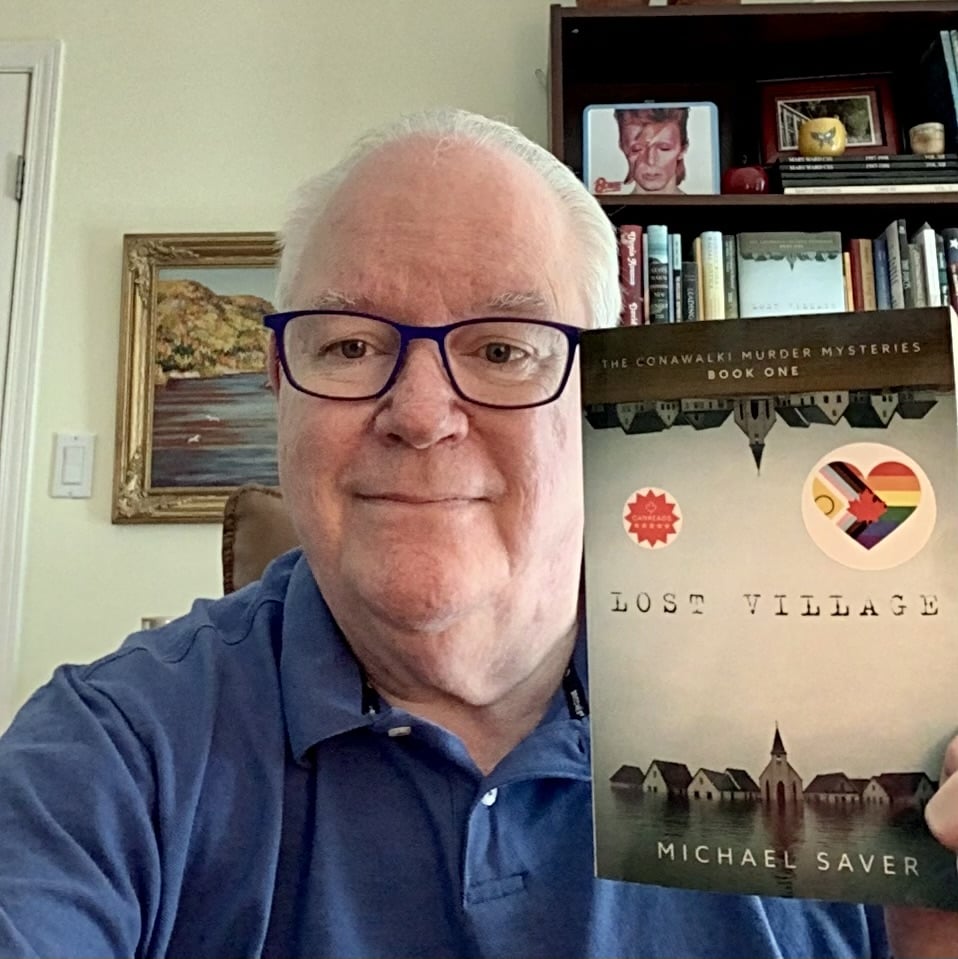 When did you first decide to become an author?
My grade two teacher recently commented that she wasn’t surprised that I became an author because when she assigned four lines I always gave her ten! I wrote my first play when I was 12. I studied theatre, became a drama teacher, and a number of my plays have had amateur productions. Later in my working life as a teacher educator I wrote policy documents and professional articles. But I thought a novel was beyond my reach. I am delighted to discover that I love to write fiction!
Is this the first book that you’ve written?
Yes! At age 70 I did not expect to suddenly be a published author working on my second book! It’s never too late!
What do you do for work when you’re not writing?
I have been an educator, teacher educator and educational leader for 40 years. Since 2016, I have served organizations through professional development and consulting focusing on inclusivity and living and leading with authenticity and integrity. As well, I have been a Facilitator with the Center for Courage & Renewal since 2001, leading Circles of Trust, Courage to Teach and other programs internationally. I presently serve as Lead Facilitator for the Center’s Core Programs.
How much time do you generally spend on your writing?
I try to write every day, even for an hour if that’s the time I can find. But I enjoy a solid couple of hours or a full day especially when the story is flowing. On days when I am finding the flow to be slow, I edit and re-read. I also use Speechify to hear my words read back to me. This helps me to see the small things that I can correct, and have a sense of how the plot and characters are (or aren’t) developing.
What’s the best and the hardest part of being an indie?
I feel an enormous sense of freedom as an indie author – that ultimately what has been published is fully my own work. I did have incredible support from Friesen Press in terms of editing, design (the cover of Lost Village is magnificent, and has received constant kudos), learning the ropes of promotion, etc.. However, the hardest thing is that actually selling and promoting the book is fully up to me. Consequently, I have experienced a real challenge moving my work beyond my networks to a broader audience. I have done everything I can via social media to grow an audience and have appreciated IndieReader, CANREADS, Reader Views and other excellent organizations that provide honest feedback and solid support. And I feel constantly that I’m not doing enough to get my book into the hands of readers.
What’s a great piece of advice that you can share with fellow indie authors?
Resist giving your inner critic too much latitude. In my case, he is helpful to keep me striving for excellence. But he also can promote self doubt. Hold your inner critic in balance with belief in yourself as an author. You have something to share, and there is an audience out there for it!
Would you go traditional if a publisher came calling? If so, why?
Honestly, I would. I know that Lost Village could find a much broader audience with the right distribution and promotion. People keep asking me “why isn’t this in my local bookshop? Why isn’t this appearing more in online forums or on the front pages of Amazon?” This is the aspect that traditional publishing provides that I have missed as a self-published author. The time and energy that goes into trying to compensate for that is time I can’t use writing. But, there is a trade-off. I have enormous control over my work and royalties as an indie author. There is no question that I will lose some of that if Book Two is picked up by a traditional publisher.
As a Canadian author I have so many literary heroes who have inspired me: Margaret Atwood, Louise Penny, Richard Wagamese, Tanya Talaga, Claire Cameron. As a queer author: Tennessee Williams, Felice Picano, Andrew Holleran, Matt Cain and my fellow Canadian Anthony Bidulka.