
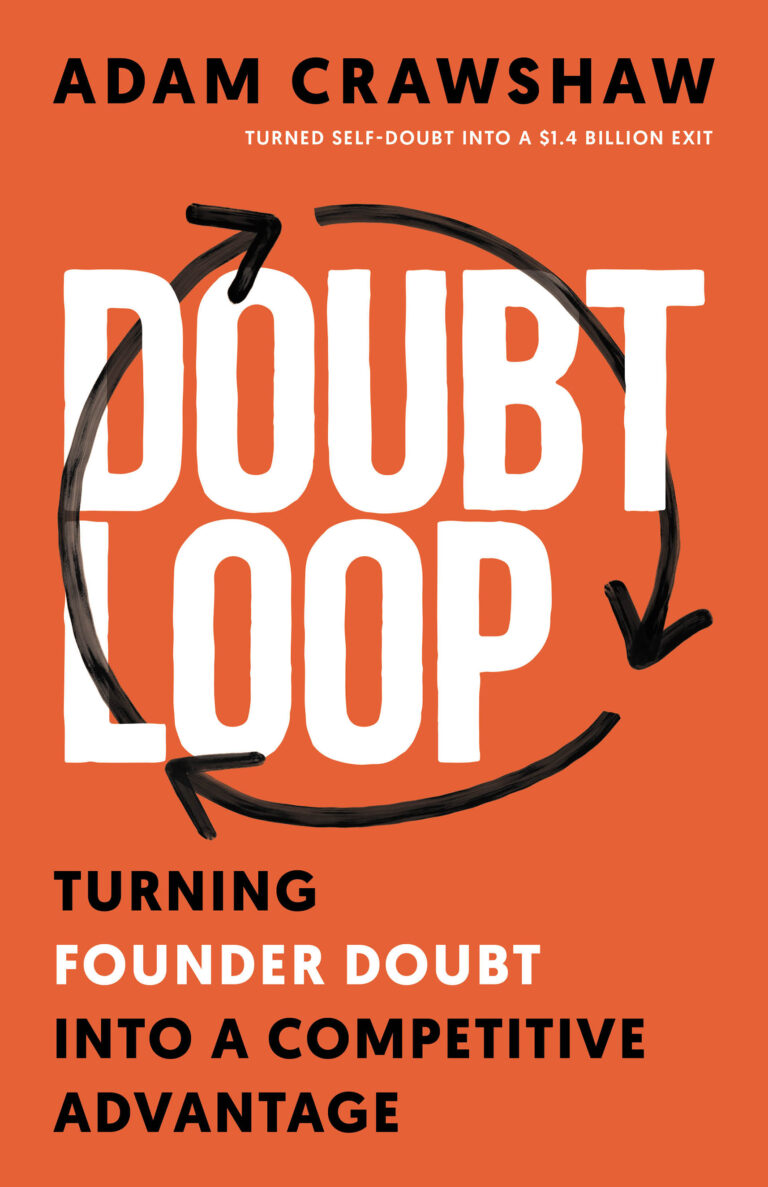
 THE DOUBT LOOP: Turning Founder Doubt into a Competitive Advantage received a 4+ star review, making it an IndieReader Approved title.
Following find an interview with author Adam Crawshaw:
What is the name of the book and when was it published?
The Doubt Loop: Turning Founder Doubt into a Competitive Advantage. Published in April 2026.
What’s the book’s first line?
“I was five the first time I watched a human fly.”
It’s a real memory. Two teenage acrobats walking a wire above the county-fair bleachers in Peru, Indiana. I was sure one of them would fall, and underneath the fear was this small, electric thought: maybe they won’t. That’s self-doubt in a single frame, and I’ve never really shaken it.
What’s the book about? Give us the “pitch”.
Most founder advice tells you to kill your self-doubt. I think that’s exactly wrong. The same nervous energy behind a panic attack is the energy behind your best work. What changes the outcome isn’t the feeling, it’s what you do with it.
So the book gives you a simple loop: Notice, Name, Convert. Notice when your stomach knots. Name the actual fear out loud, because “I’ll waste their money” is something you can act on and a vague sense of dread isn’t. Then convert it into one real move this week. A number to track, a test to run, a conversation to have.
What inspired you to write the book? A particular person? An event?
My co-founder Sandeep and I built Assembly in 2018 and sold half of it for $1.4 billion in under three years. I always assumed a win that size would finally quiet the doubt. It didn’t. The morning after, the voice was right back, whispering that I’d just gotten lucky with timing.
That was the moment I understood the doubt was never going anywhere, so I’d better learn to live with it instead of waiting for it to leave.
What’s the main reason someone should really read this book?
Because hardly anyone fails the way they’re afraid they will. It’s rarely some dramatic disaster. Usually it’s quieter than that. Someone just stops pushing, lets the doubt win, and calls the fight early. If you can turn that voice into something closer to a coach, one that pushes you but is also on your side, you stop being one of those stories. I can’t make you fearless. Nobody can. But you can learn to use the fear, and that changes everything.
When did you first decide to become an author?
Honestly, I’m not sure I ever decided to be an author. I just needed to explain myself. For years the people closest to me watched me chase one milestone after another and never exhale. They started calling my blank, overwhelmed stares “The Mona Lisa Smile,” which was their gentle way of checking on me without making it a big deal. The book began as the long answer to “what was actually going on with you back then.” Deciding to publish it came much later, and it scared me more than the writing ever did.
What do you do for work when you’re not writing?
I spend my time around founders and businesses. Some of that is investing, putting money behind people and companies I believe in and helping where I can. The rest is advisory work, sitting with founders in the messy middle of building something and being the person I wish I’d had in the room during my own hard stretches. The writing and the work feed each other. Every conversation about a real founder’s fear ends up sharpening the ideas, and the ideas give those conversations somewhere to go.
What’s the best and the hardest part of being an indie?
They’re the same thing seen from two sides. Nobody’s coming to tell you it’s good enough. The gift in that is total ownership. No one sanded off the swearing, the goofy analogies, or the parts where I come off badly. The hard part is there’s no outside “yes” to lean on when the doubt gets loud. No big advance, no famous name on the cover to hide behind. You either turn that fear into pages or you wait forever for permission that never arrives.
What’s a great piece of advice that you can share with fellow indie authors?
Things are never as good or as bad as they seem. My dad used to remind me of one word, “moderation,” and I think it’s one of the hardest things for any of us to actually live. A glowing review won’t make your book, and a brutal one won’t break it. The day everything clicks and the day nothing works are usually closer together than they feel in the moment. If you can keep an even keel through both, you’ll keep going long after the people riding the highs and lows have burned out. Staying steady is its own kind of talent, and almost nobody talks about it.
Is there something in particular that motivates you (fame? fortune?)
Not fame. Fame is mostly a target on your back. The money mattered for a while, mostly as a way to keep score, but it turned out to be a hollow thing to chase for its own sake. What moves me now is working on problems I’d happily work on for free and answering to my own clock. The truest line in the book is also the last one: all of this is worthless if you make it and become a jerk. I’d rather stay someone my family and friends actually want around.