
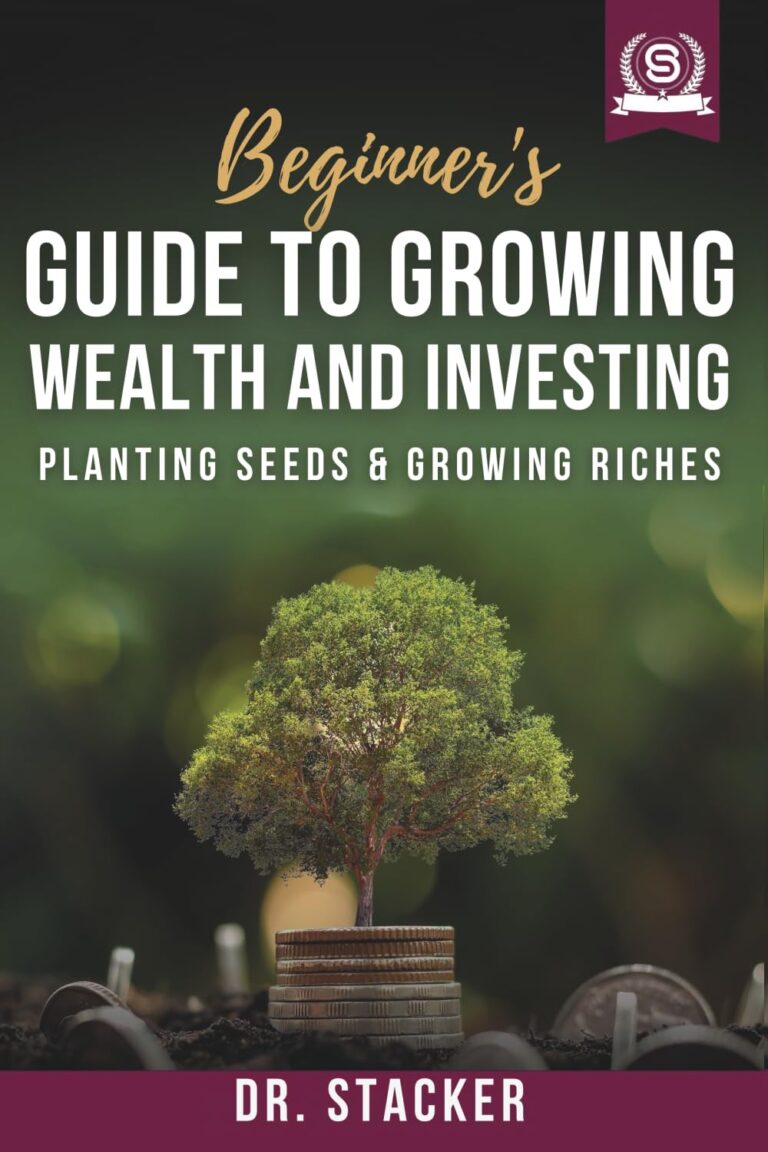
 BEGINNER’S GUIDE TO GROWING WEALTH AND INVESTING: Planting Seeds & Growing Riches
Winner of the 2026 IndieReader Discovery Awards in Finance/Investment/Economics, Nonfiction
What’s the book’s first line?
“It’s not about being an investor, it’s about being the type of person that can invest.”
What’s the book about? Give us the “pitch”.
Most investing books teach people what to do. This book helps people understand what’s been keeping them from doing it. As the saying goes, it’s not easy, but it is simple. The formula for building wealth is straightforward: spend less, save more, and invest. The challenge isn’t understanding the formula, it’s becoming the type of person who can do it consistently over time.
As an educator, I’ve spent nearly 30 years helping people learn, grow, and navigate change. What I’ve discovered is that success in almost any area of life comes down to more than information. It comes down to behavior. Counterintuitively, financial change actually starts with behavioral change.
That’s why this book combines investing fundamentals with stories, analogies, and practical frameworks that help readers build a strong financial foundation. You don’t teach a swimmer the butterfly stroke before teaching them how to float and tread water. In the same way, I believe people need the right foundation before they can confidently build wealth.
At its core, this book is about helping people become capable of doing what wealth requires, not just knowing what wealth requires.
What inspired you to write the book? A particular person? An event?
The inspiration came from two places: my own financial journey and my career as an educator.
Like many people, I wasn’t taught much about money growing up. During my financial journey, I discovered something interesting: many people already know the basics of wealth building. Their biggest challenges almost always come back to implementing those basics consistently.
As I look back on my own journey, much of the success I experienced came from my ability to move from knowing what to do to actually doing what needed to be done consistently. The problem I saw was that traditional wealth-building information focuses heavily on financial topics while largely ignoring the human behavior side of the equation. The reality is that both must be addressed if people are going to be truly successful.
Then, during a conversation with my little sister, it hit me. The biggest question people need answered has very little to do with investing. It’s this: “What keeps intelligent, hardworking people from doing what they already know they should do?” My sister knew what to do. She had access to me. She had access to information. Yet she still wasn’t doing it consistently.
That conversation changed everything for me…Once I found the right question, the book became my attempt to help people like her start doing what they already know they should be doing. I call that the “Implementation Gap.” Ironically, closing that gap is less about information and more about transformation. This book jump starts that transformation process.
The book provides the investing and financial fundamentals people need, but where it truly excels is helping readers work through the behavioral challenges and changes that often prevent them from applying what they know.
I didn’t want to write a book that impressed people with financial jargon. I wanted to write one that genuinely changed lives by helping readers become more confident, capable, and consistent with money.
I didn’t want to write a book that impressed people with financial jargon. I wanted to write one that could genuinely change lives by helping readers become more confident, capable, and consistent with money.
What’s the main reason someone should really read this book?
You don’t need this book if you already understand that building wealth is relatively simple: spend less than you earn, save consistently, and invest over time.
You do need this book if you can’t figure out how to get yourself to do those three things consistently.
Most investing books teach you what to do. This book helps you understand what’s been keeping you from doing it. If you’ve ever found yourself saying, “I know what I should be doing, but I’m just not doing it,” then you’re exactly who I wrote this book for.
You don’t need more information. You need a guide to help you become the type of person who can invest and build wealth consistently.
You’ll start this book thinking you’re learning about investing. You’ll finish it understanding why you’ve struggled to invest and what to do about it.
When did you first decide to become an author?
I don’t know that I ever woke up and decided to become an author. In fact, even today, I sometimes struggle to think of myself as an award-winning author. Let me share something most people in my position rarely talk about: imposter syndrome.
There were many moments during the writing process when I found myself asking, “Who do you think you are to have the audacity to write a book?” I think that’s a feeling many people can relate to. Whether it’s writing a book, building wealth, starting a business, changing careers, investing, or pursuing a dream, there’s often a voice in the back of our minds questioning whether we’re qualified, capable, or worthy.
Ironically, working through those feelings reinforced one of the core lessons of the book. Confidence doesn’t usually come before action, it is largely a the result of action you’ve taken.
I didn’t become an author because I believed I was one. I became an author because I had something I genuinely wanted to share. After spending decades as an educator, I had seen too many people struggle with the gap between knowing what to do and actually doing it. I believed that message could help people, so I kept writing even when doubt showed up.
Looking back, I don’t think I decided to become an author. I decided to help people. Writing a book simply became one of the ways I chose to do it.
Is this the first book that you’ve written?
Yes, this is my first published book. I’m incredibly proud that my first book has resonated with readers and your judges, but more importantly, I’m grateful that it’s helping people take action in their financial lives.
What do you do for work when you’re not writing?
I usually give two answers to that question. The first is what I do for employment. I’m a college administrator, instructor, and small business owner through Stackers University. The second answer is the work I actually do.
Regardless of what hat I’m wearing, I’ve always viewed myself as an educator and coach who helps people work through the challenges they encounter in life. Sometimes those challenges are financial, but often they’re behavioral. When I was earning my Master’s degree in Counseling, I learned a concept that has stayed with me throughout my career: counseling is helping others find their best answer. That’s exactly what I’ve focused on for 30 years.
I’ve spent nearly 30 years helping students learn, grow, and navigate change. Throughout that time, I’ve worked in residential life, counseling, student services, teaching, and higher education administration. While the settings have changed, the mission has been consistent: helping people become more capable, more confident, and more successful.
I’ve always been fascinated by human growth and development, especially when it comes to how people respond to change, challenge, and support. It’s what eventually led me to earn a Ph.D. in Educational Leadership. I’m endlessly curious about why people struggle to do things they genuinely want to do and how I can help them do it.
In many ways, writing this book wasn’t a departure from my career, it was a continuation. The subject matter may be money, but the deeper focus has always been helping people grow and create positive change in their lives.
How much time do you generally spend on your writing?
At least 2 hours a day writing or creating content.
What’s the best and the hardest part of being an indie?
Getting your message out to people.
What’s a great piece of advice that you can share with fellow indie authors?
Don’t listen to the voice in your head that constantly questions whether you’re qualified, experienced enough, or worthy of writing your book.
Imposter syndrome is far more common than most authors admit. The reality is that many people who need your message will never meet you, but they may read your book.
Your job isn’t to be perfect. Your job is to be useful.
Write the book. Improve the book. Publish the book. Let the readers decide what it’s worth.
Would you go traditional if a publisher came calling? If so, why?
Yes, but not for book sales—for book impact.
Books change lives only when they reach people. If a traditional publisher could help this message reach more readers and create a greater positive impact, I would absolutely be open to the conversation.
The opportunity that excites me isn’t selling more books. It’s helping more people.
Is there something in particular that motivates you (fame? fortune?)
Neither fame nor fortune has ever been my primary motivation.
What motivates me is transformation.
I’ve spent nearly 30 years helping people learn, grow, navigate change, and accomplish things they once thought were beyond their reach. Whether it’s a student earning a degree, a professional overcoming a challenge, or someone taking control of their financial life, I find tremendous fulfillment in helping people discover what they’re capable of.
One of my favorite sayings is, “I’m Possible.” Too often people lose the apostrophe and see “Impossible.”
I believe most people are capable of far more than they realize. Sometimes they need information. Sometimes they need encouragement. More often, they need someone to help them bridge the gap between knowing what to do and actually doing it.
If my work helps someone build a better financial future, gain confidence, or change the trajectory of their life, that’s incredibly motivating to me.
Which writer, living or dead, do you most admire?
If I had to choose one, it would probably be Norman Vincent Peale.
What I admired most wasn’t his writing style as much as his understanding of the relationship between belief and action. Long before I became interested in behavioral finance, I was fascinated by why people do what they do, what holds them back, and how their beliefs influence their outcomes.
His work helped me appreciate that change often begins internally before it becomes visible externally. That idea has influenced not only my career as an educator and coach, but also how I think about wealth building.
Many people assume financial success starts with money. I’ve come to believe it starts with the person managing the money. In that sense, Peale’s influence can be found throughout my work.
Which book do you wish you could have written?
Think and Grow Rich by Napoleon Hill. Not because I believe it’s perfect, but because of the impact it has had on generations of readers.
What fascinates me most about the book is that despite its title, it isn’t really a book about money. It’s a book about belief, persistence, purpose, and personal transformation. Those themes continue to resonate nearly a century after it was written.
If I could change one thing, I would spend less time on thinking and more time on implementation. Many people know what they should do. Many people even believe they should do it. The challenge is consistently translating those thoughts and beliefs into action.
In many ways, that’s the gap my own book attempts to address.
Think and Grow Rich helped people believe they could become wealthy. I want to help people consistently do what building wealth requires.