
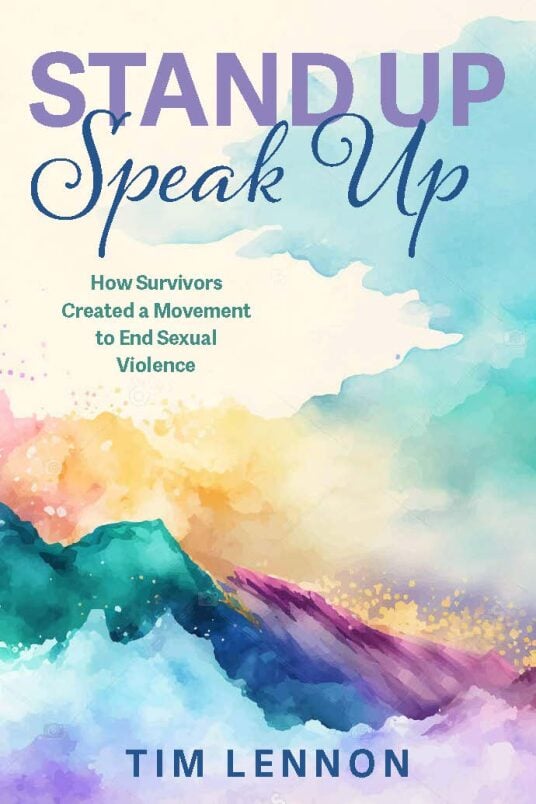
STAND UP SPEAK UP: How Survivors Created a Movement to End Sexual Violence
Winner of the 2026 IndieReader Discovery Awards in Best First Book: Nonfiction + Politics/Current Events, Nonfiction
What’s the book’s first line?
“Father Peter B. Murphy, an assistant priest at my parish, was a frequent visitor and welcomed guest in my parents’ home.”
What’s the book about? Give us the “pitch”.
For generations, survivors of sexual abuse stood alone–now they step forward as a powerful social movement.
Stand Up, Speak Up celebrates survivors who emerged from the shadows of imposed shame to challenge cultures of oppression and institutions of power. They ignited a movement to end the violence that has plagued society for generations. The book shares the obstacles, victories, and courage of the survivors who stepped forward and shattered the silence.
The book celebrates the activism of survivor-leaders who changed the world.
What inspired you to write the book? A particular person? An event?
After 30 years of activism supporting survivors, speaking up, and engaging in public actions, I wanted to broadcast that survivors have stepped forward to form a social movement, the movement for respect and dignity.
What’s the main reason someone should really read this book?
My book documents the history of sexual violence and how survivors stepped forward to create a social movement to change the culture, reform the ideology and practice of misogyny and child exploitation, and to intervene politically in changing the world.
 When did you first decide to become an author?
Society changed, and I wanted to document the rise of the social movement of survivors who have heroically intervened in society to create organizations, associations, and coalitions fighting for justice. After 30 years of activism, our time has come to announce ourselves as a powerful movement–we are here and are not going away.
Is this the first book that you’ve written?
Yes.
What do you do for work when you’re not writing?
I have the great honor and privilege to be retired. On the other hand, I am active in advocacy through volunteer support, including sponsoring support groups and working to bring survivor organizations together through survivor coalitions.
How much time do you generally spend on your writing?
Now, not much, as my writing addresses current issues and movement organizing.
What’s the best and the hardest part of being an indie?
The best part of being an indie is calling on my readers, editors, and family and friends to provide constant feedback on the theme, scope, style, and documentation of my book. The hardest part was self-doubt. As a first-time author, I always questioned my writing.
What’s a great piece of advice that you can share with fellow indie authors?
Please persevere. Pursue your dream or goal. Involve and engage close to you to be supporters and, equally important, critics. Seek expert help as reviewers in early drafts. Employ book editors, proofreaders, and book designers to ensure your “gem” is polished and ready to go.
Would you go traditional if a publisher came calling? If so, why?
Yes, my book is an act of advocacy, and if I can expand my voice to a wider audience, I will do so.
Is there something in particular that motivates you (fame? fortune?)
I was a victim of childhood rape and sexual abuse. If my book helps one person, that will be enough.
Which writer, living or dead, do you most admire?
OMG. Hard choice. So many. Probably Herman Melville, Moby Dick. A literary challenge due to its themes, excitement, character study, adventure, and engagement.
Which book do you wish you could have written?
I wrote the book I wished I could write.