
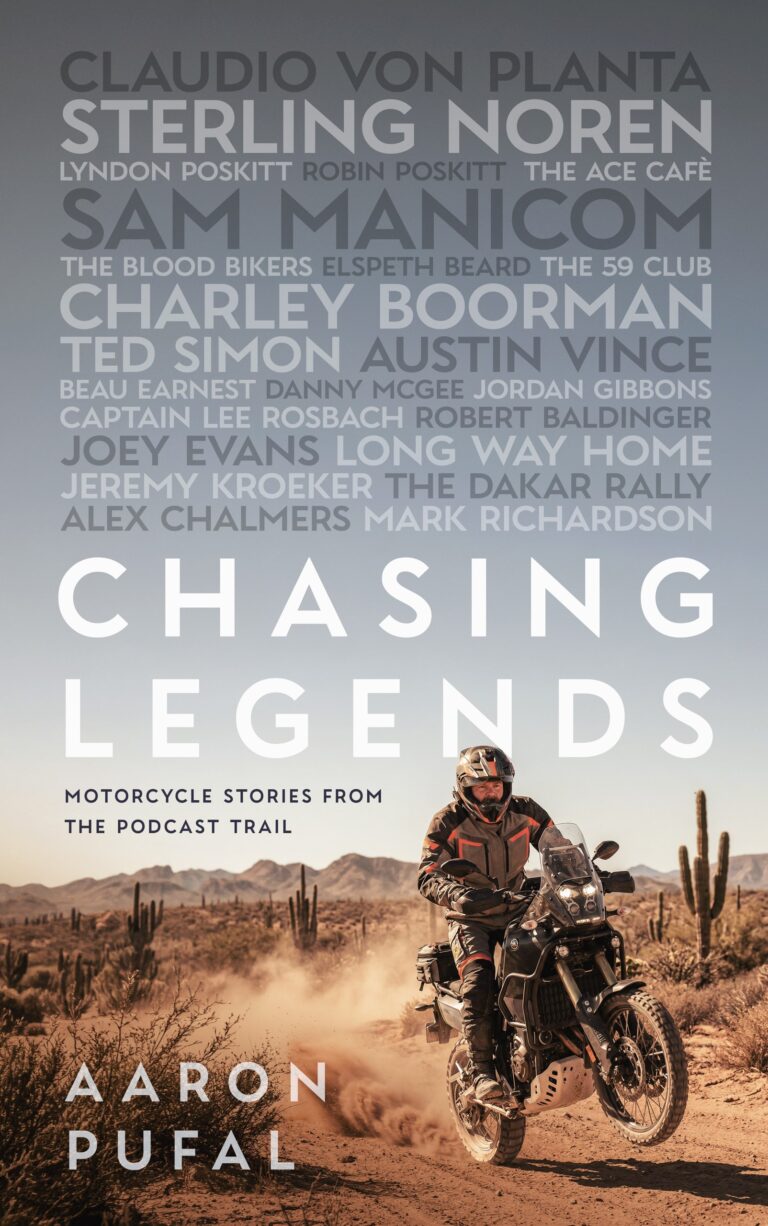
 CHASING LEGENDS: Motorcycle Stories from the Podcast Trail
Winner of the 2026 IndieReader Discovery Awards in Sports/Fitness/Recreation, Nonfiction
What’s the book’s first line?
“Every legend I chased turned out to be an ordinary person who simply refused to stop. That was the most terrifying and liberating discovery of my life.”
What’s the book about? Give us the “pitch”.
Part memoir, part oral history, part navigation chart through adventure motorcycling’s past and future, Chasing Legends reveals the stories behind the stories, the missed opportunities, the fumbled questions, the moments of connection that only happen when you show up with curiosity and a willingness to listen.
For anyone who’s ever looked at a map and wondered what’s there. For anyone who understands that the road isn’t an escape; it’s where life is lived most honestly.
What inspired you to write the book? A particular person? An event?
After interviewing so many legends from the motorcycle world on my podcast, I kept finding myself thinking, “These stories need to live somewhere permanent.” A podcast episode gets listened to and then, for most people, it fades into the background. But the conversations I was having, the lives, the lessons, the raw passion these people carried, they deserved something you could hold in your hands, come back to, and share with others.
As the interviews stacked up, I started to notice a connective thread running through all of these stories. There were common themes, shared values, and a deeper truth about what this community really means to people. A podcast is linear. You hear one conversation, then the next. But a book gave me the canvas to weave those threads together and paint a bigger picture, one that no single interview could capture on its own.
I also realized that the podcast interviews, as rich as they were, only scratched the surface. There was so much more to these people and their stories than what we could cover in a single conversation. So I started digging deeper, doing more research, following the threads further. And what I found were entirely new stories, untold chapters that deserved to see the light of day. The podcast opened the door, but the book let me walk all the way through it and complete these stories the way they deserved to be told.
It wasn’t one particular person or one single event. It was the accumulation of all of them. Every guest brought something that shifted my perspective or deepened my respect for this community. At some point, the book stopped being something I wanted to write and became something I had to write.
What’s the main reason someone should really read this book?
Because these stories have never been told like this before. People might recognize some of the names, they might have heard the podcast episodes, but this book goes so much deeper. There are chapters in here that surprised even me during the research process. If you think you know these legends, this book will show you how much you were missing.
 When did you first decide to become an author?
I’m not sure I ever did decide to become an author. I still don’t really think of myself as one. I’m a guy who talks to people. That’s what I do. I started a podcast because I wanted to have conversations with the legends of this community, and somewhere along the way I realized the stories I was uncovering were bigger than what a podcast episode could hold. They needed to be told properly, and a book was the only way to do that.
So I didn’t sit down one day and say, “I’m going to be an author.” It was more like the work needed to be done, and nobody else was going to do it. So I just did it.
And look, I’ll be completely transparent. I’m dyslexic. Writing doesn’t come naturally to me. I fought my way through it with a hatchet in one hand and Grammarly in the other. I took some long form writing classes. I put in the work because the stories deserved that effort. It wasn’t about me becoming a writer. It was about doing right by the people and the stories in this book.
The funny part is, it’s really gotten out of hand now if I’m honest. I’m already planning my podcast around my next book. So I suppose whether I like it or not, the writing isn’t going anywhere. But at the core of it, I’m still just a guy who talks to people and refuses to let their stories go untold.
Is this the first book that you’ve written?
Yes
What do you do for work when you’re not writing?
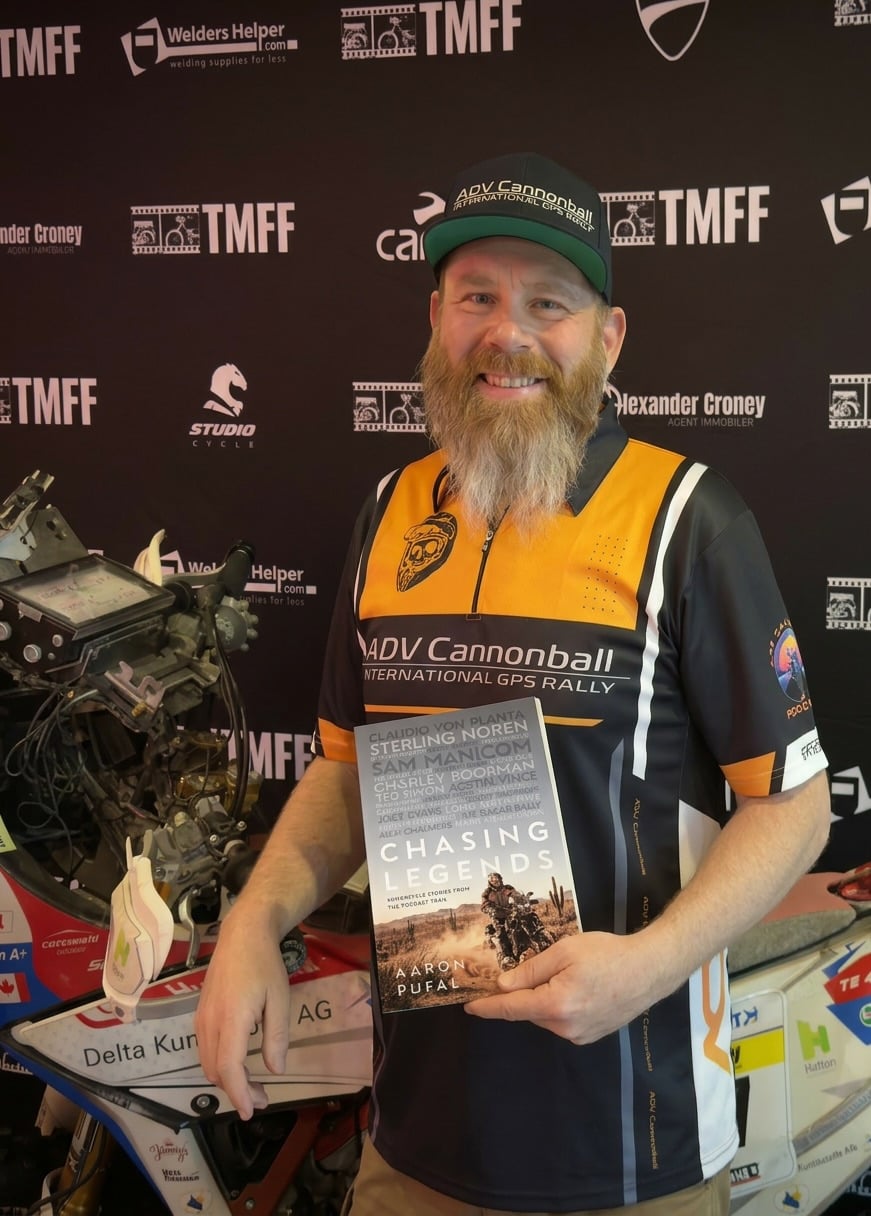
Well, when I’m not wrestling with my dyslexia and fighting Grammarly’s suggestions, I run a semi-illegal road rally called the ADV Cannonball Rally. And yes, I said semi-illegal, so we’ll leave it at that.
I also host the ADV Cannonball Podcast, which is really where all of this started. The podcast is the reason the book exists. It’s where I first connected with the legends in this community and started uncovering the stories that eventually demanded to be put into print.
The truth is, the lines between all of it have completely blurred at this point. The rally feeds the podcast, the podcast fed the book, and now the next book is shaping the podcast. It’s all one big interconnected beast that I somehow keep feeding. I wouldn’t have it any other way though.
How much time do you generally spend on your writing?
Far, far too much. It’s a giant time and money suck, and I say that with complete love and zero regret.
The writing itself is one thing, but people don’t realize how much of the work happens before you ever type a word. There’s the research, the interviews, the follow up conversations, the fact checking. Then you sit down to write and your dyslexia reminds you that it’s still very much present. So what might take someone else an hour takes me three. But the stories don’t care about my schedule or my bank account, and they’re not going to write themselves.
I think if I ever sat down and calculated the actual hours and dollars I’ve poured into this, I’d probably need a stiff drink. But then I’d pick myself up and get back to work because the next book is already calling.
What’s the best and the hardest part of being an indie?
The hardest part? I’ll be brutally honest. It’s watching one of your A-list podcast guests hand their story off to a ghost writer, publish a book, and watch it become a massive hit. Meanwhile, your book, the one you researched, wrote, rewrote, and bled over through every single page, hasn’t even covered the cost of the cover design or the voice actor for the audiobook. That’s cause to scream at the wall. And I have. More than once.
It’s a strange feeling when you’ve spent hours interviewing someone, uncovering their story, doing the deep work, and then their name and someone else’s writing outsells the labour of love you poured everything into. That’s the indie experience in a nutshell. Nobody is leveling the playing field for you. There’s no publishing house, no marketing machine, no safety net. It’s just you and the work.
But that’s also the best part, strangely enough. Everything I’ve built is mine. The podcast, the rally, the book, the community around it. Nobody handed it to me. Nobody ghost wrote it for me. Every word in that book is mine. And when someone reaches out to tell me that a story in the book moved them or changed the way they see this community, that hits different knowing I did it myself. From the ground up. With nothing but stubbornness and a refusal to let these stories go untold.
What’s a great piece of advice that you can share with fellow indie authors?
Run away, fast.
Would you go traditional if a publisher came calling? If so, why?
In a heartbeat. And I’ll tell you exactly why.
I’ve proven I can do this on my own. I’ve built the podcast, written the book, done the research, conducted the interviews, and put it all together with nothing but my own time and money. I know I can produce the work. That’s not the question.
The question is how much better could the work be with real support behind it. I’m already building the framework for my next book, and there is a huge story waiting to be told. But telling it properly means traveling for important interviews, getting access to people and places that cost money to reach, and having the time to do the deep research that these stories deserve.
An advance wouldn’t change my work ethic or my voice. It would just remove the barriers that are currently between me and the best possible version of this next book. The indie path taught me how to fight for every page. A publisher would give me the resources to stop fighting the budget and start fighting purely for the story.
So yes. If a publisher came calling, I’d pick up on the first ring.
Which writer, living or dead, do you most admire?
Ted Simon, Hunter S. Thompson, Neil Peart, and Anthony Bourdain
Which book do you wish you could have written?
Hell’s Angels