
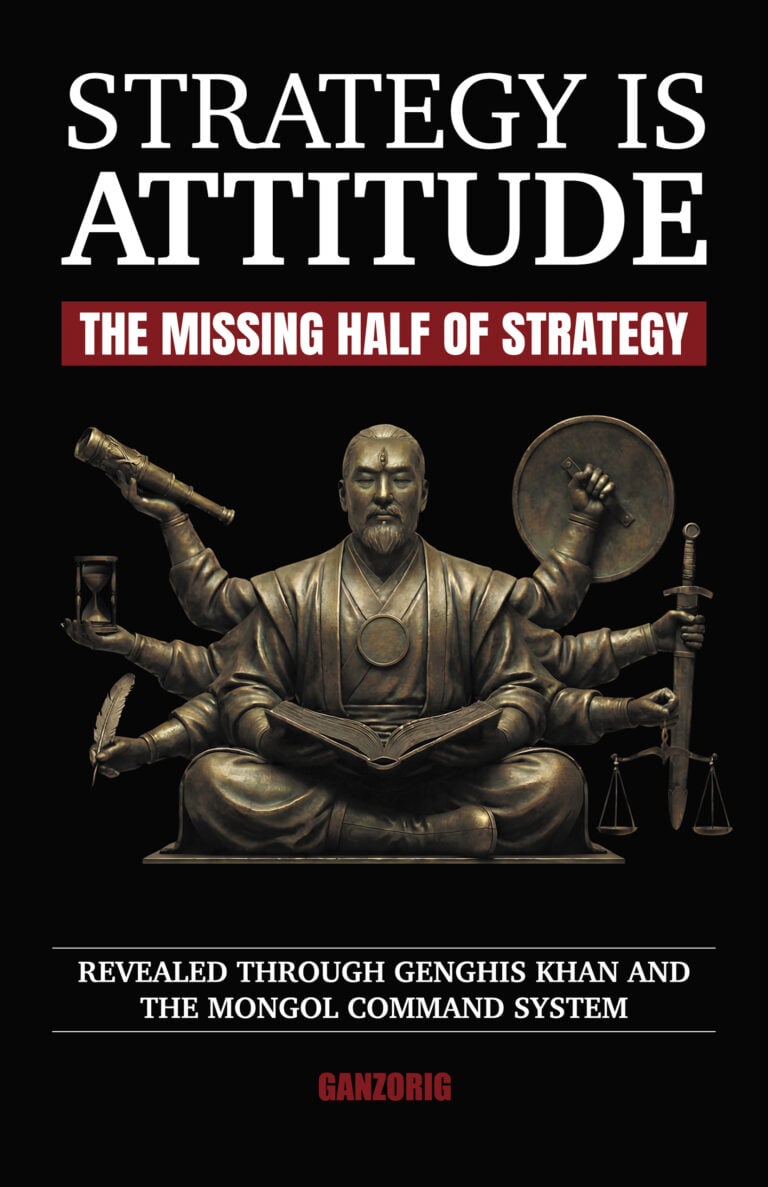

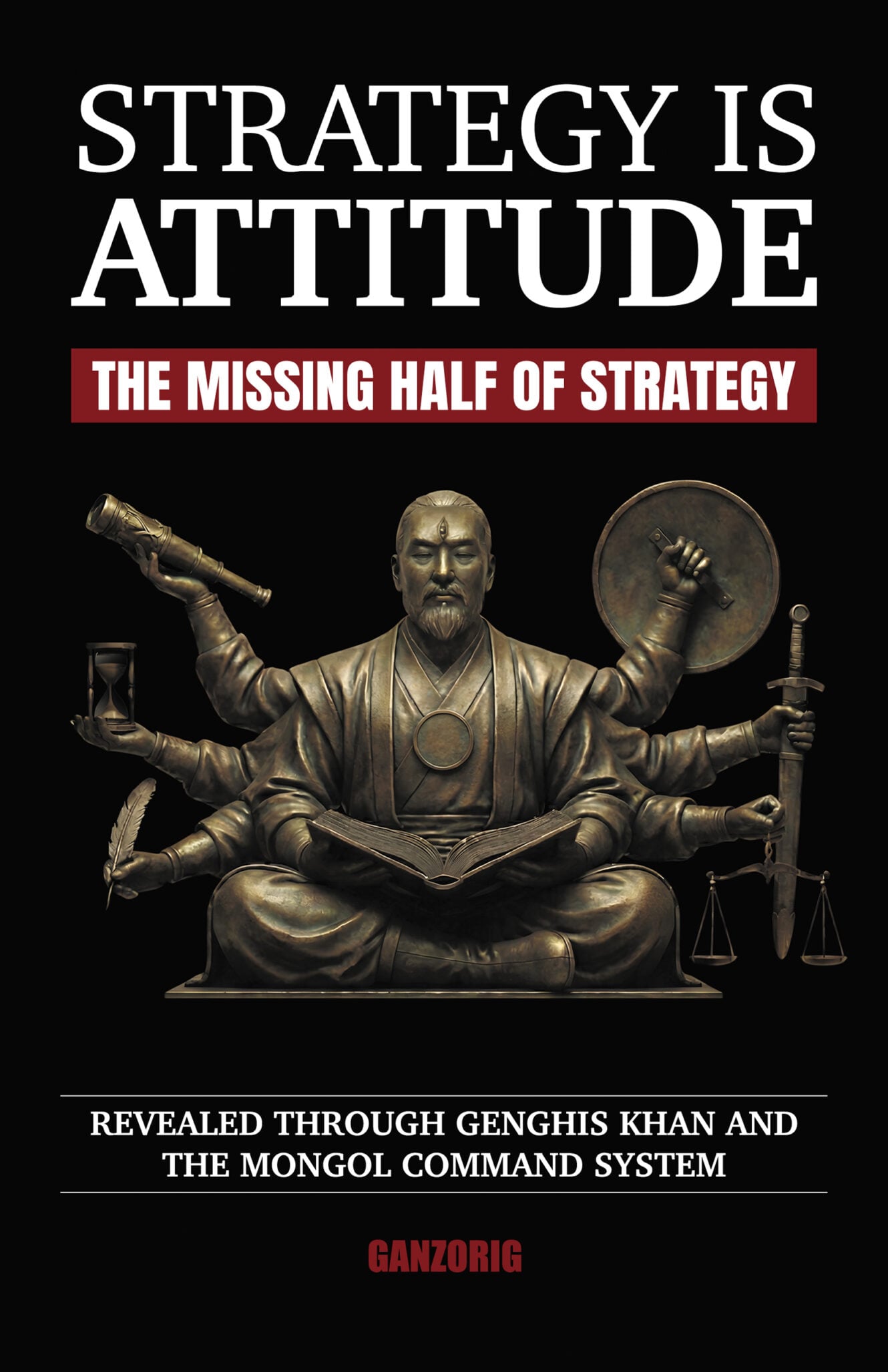
Modern business strategy is trendy. The number of books on it has exploded in recent years, as so many "leaders" on it get swept along in a wave instead of being one themselves. To Ganzorig, author of STRATEGY IS ATTITUDE: The Missing Half of Strategy, being the wave probably wouldn't even be enough: one should be the water instead. A company that adopts the concept of true strategy utilizes the alignment of time and demand that makes up fads but doesn't rely on them. Luck is not strategy.
The title might be a misnomer, as the focus is not on one attitude but three: customer perspective, giving, and productivity. While empathy is sadly missing in many business books, it's rightly stressed here. Being able to adopt the perspective of current and potential customers is essential to longevity. Businesses eventually implode without acknowledgement of outside perspectives—because of biases, failures to adapt, a loss of engagement, or a combination of all three. Without the customer's perspective, the other two facets of attitude that Ganzorig explores also break down. What to produce and how to give what is being produced to the consumer should align with the first perspective.
STRATEGY IS ATTITUDE is one of those rare books that offers a challenging idea and yet stays accessible. The style is elegant, and Ganzorig's voice balances approachable with competent. Along with Genghis Khan, many modern examples are woven in to punctuate the author's main points. The acknowledgement of how much luck, whether through birth or larger economic trends, has played a part in many modern success stories further make the book feel refreshingly unique. Complex ideas are pared down and easy to digest, sometimes through metaphors like the following: "The leaves vanish. What appeared formidable was seasonal. The essence of the tree remains unchanged. Data overwhelmingly describes the leaves."
Ganzorig's work only has flaws in a few key areas. While some backstory is worked in for Genghis Khan, much of the book seems to expect the reader to know extensive information already (including the names of many of his generals). Appendix A gives a very robust history, but no mention is made of that in the front matter, table of contents, or opening chapter. For greatest impact, readers without as much working knowledge of the Mongol leader should start there, then read the rest of the book. Lots of focus is placed on what strategy is and how it has worked in the past, but other aspects (such as how to utilize those principles) appear much less robust.
Business leaders aren't the only ones who should read STRATEGY IS ATTITUDE, as the central message is powerful for any unit of people—even families.
In STRATEGY IS ATTITUDE: The Missing Half of Strategy, Ganzorig's profound central message and polished delivery quickly establish what sets his work apart from other literature in the genre.
~ Lisbeth Ivies for IndieReader