
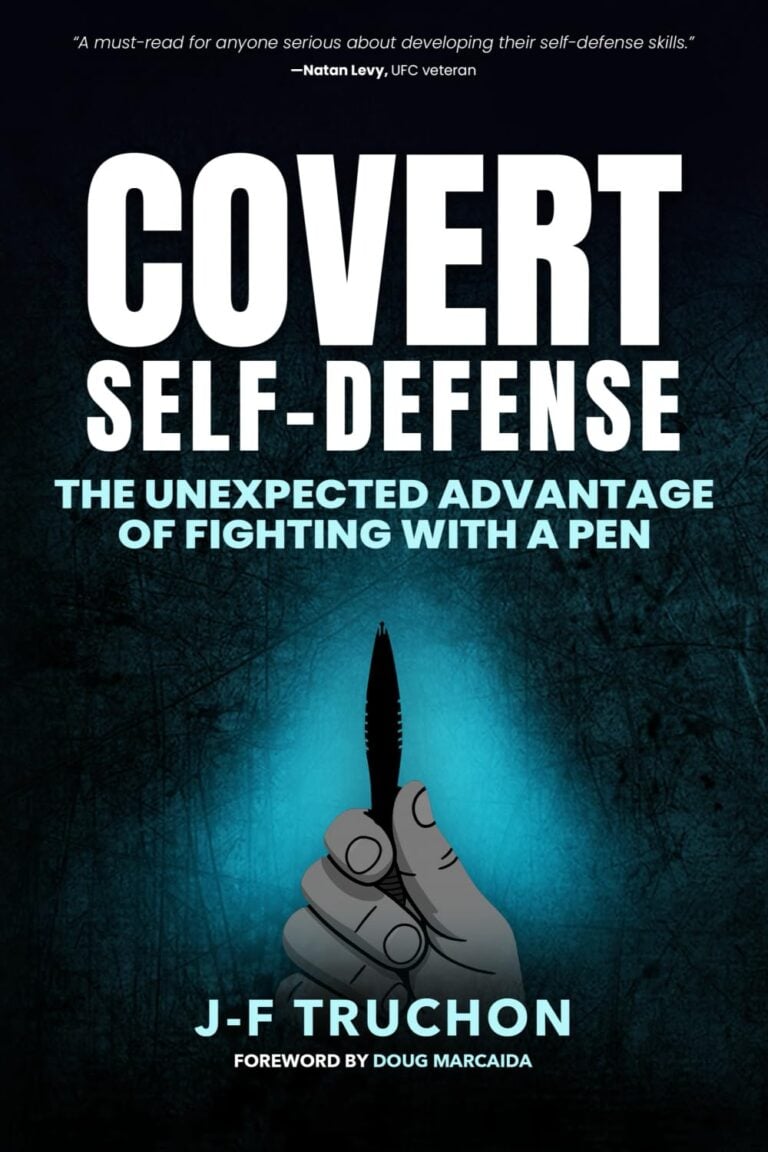

What if the most effective tool for self-defense is something you probably already have on you? That’s the concept that J-F Truchon outlines in COVERT SELF-DEFENSE: The Unexpected Advantage of Fighting with a Pen. The premise might sound niche, but the book quickly establishes itself as a serious examination of preparedness—focusing as much on prevention and awareness as on physical technique.
One thing that may surprise is how restrained the book is in its approach to self-defense. It would have been easy for Truchon to lean into fear or worst-case scenarios, but instead he spends much of the book focused on awareness, preparation, and avoidance. A significant portion examines how criminals identify potential targets, how to recognize warning signs before situations escalate, and how people react psychologically under stress. Even as someone who isn't particularly interested in carrying a pen for self-defense, one finds these broader discussions worthwhile and interesting.
One of COVERT SELF-DEFENSE's most valuable sections focuses on the legal realities of self-defense. Truchon is careful to remind readers that winning a physical confrontation doesn't necessarily mean avoiding legal trouble afterward. Through a series of real-world examples, he highlights how complicated these situations can become and why avoidance remains the best option whenever possible. The book also benefits from its strong visual presentation. Techniques are clearly illustrated, making the physical concepts easy to follow, while contributions from self-defense experts help reinforce the material's credibility. Plus, Truchon includes links to video demonstrations for even greater clarity.
At times, however, the book feels like it's working hard to convince the reader of its central premise. While the research and examples are insightful, some concepts are revisited often enough that the book begins to feel longer than necessary. Because so much of the material is devoted to psychology and situational awareness, some readers may find themselves waiting longer than expected to get to the practical applications of the pen itself. Truchon wisely includes chapter summaries throughout, so that sections can easily be revisited.
By the end, it's easy to understand why Truchon feels so strongly about carrying a pen as a defensive tool, and he makes a compelling case for its practicality. At the same time, many readers will probably walk away appreciating the information more than adopting the habit. The lessons on awareness, preparedness, and de-escalation are broadly applicable, but the idea of carrying a pen specifically for self-defense will likely appeal to a narrower group. That said, Truchon deserves credit for exploring a topic that most people have probably never given much thought to. Even readers who never carry a tactical pen will come away looking at personal safety differently.
COVERT SELF-DEFENSE is a thoughtful and well-researched guide that delivers exactly what it promises. Its highly specific subject matter won't appeal to everyone, but readers interested in personal safety will find plenty of practical advice worth considering.
Thoughtful, well-researched, and grounded in practical safety principles, J-F Truchon's COVERT SELF-DEFENSE: The Unexpected Advantage of Fighting with a Pen offers valuable insights into awareness and preparedness, even if its highly specialized focus may not resonate with every reader.
—Jason Munoz for IndieReader