
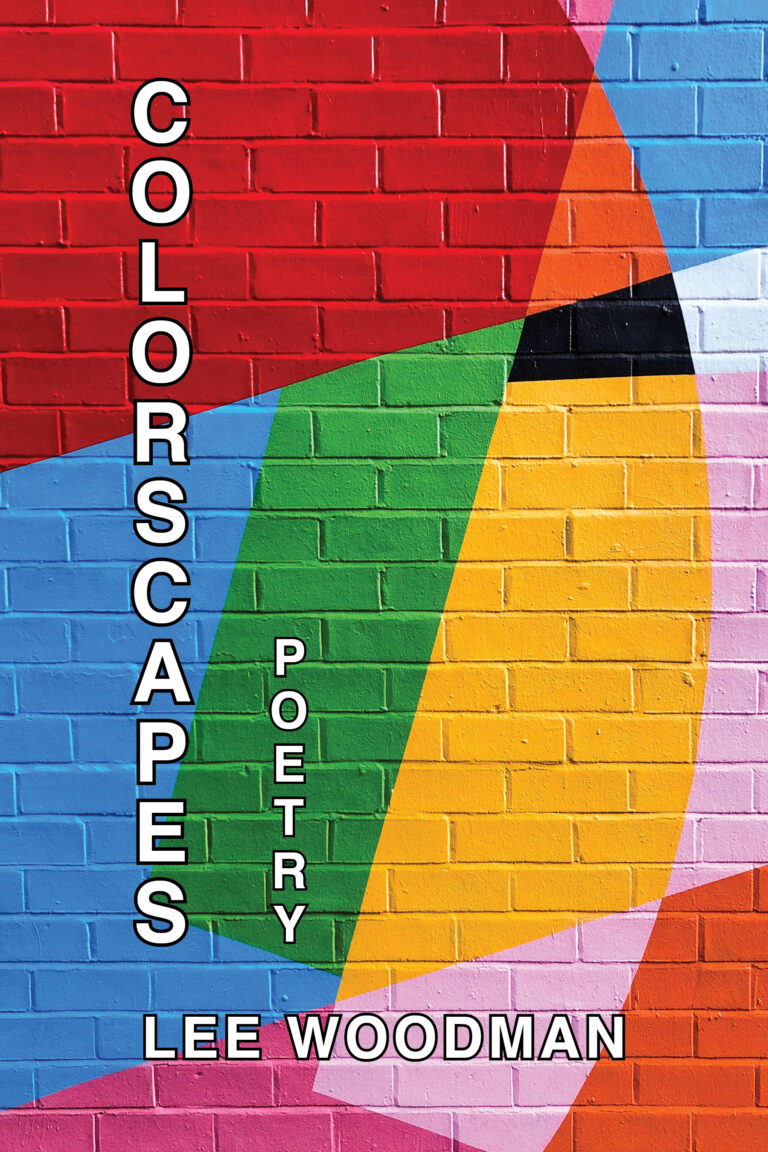
 COLORSCAPES
Winner of the 2026 IndieReader Discovery Awards in Poetry, Fiction
What’s the book’s first line?
“Black is not a Color”
What’s the book about? Give us the “pitch”.
Colorscapes is a poetry collection for artists, educators, designers, travelers, cultural advocates, and museum-goers. Having studied color theory and art all over the world, I did a deep dive into the sources of color (mud, insects, flowers, chemicals, screen graphics, and technology). Those discoveries led to investigation of the psychology of color both in medical, architectural and cultural contexts, and finally, the way artists through the centuries have hungered and tested ways to find the perfect yellow, blue, or violet. They have risked toxicity to their bodies, public scorn to their choices, and fame for their individuality.
From the time we are children, color holds deep joy and fascination. As adults, we revel in the colors of nature, and the effect colors have on our minds and senses. For ages, architects and designers have considered the way colors affect the way people enter spaces, and choose clothes, cars, and home décor. Many studies in color determine the way doctors, hospitals, and clinics choose color to provide calming environments for patients. Religious rituals and holidays use colors symbolically, and cultural celebrations worldwide burst with unusual color combinations. COLORSCAPES invites readers to join me on a poetic journey to see color in a brand new light.
What inspired you to write the book? A particular person? An event?
Growing up in colorful India and France, and a lifelong passion for art, theater, dance, and museums
What’s the main reason someone should really read this book?
Colorscapes is for artists, educators, designers, travelers, cultural advocates, scientists, dreamers, gamers, and the intellectually curious. Poetry slows us down, makes us think, encourages problem solving, offers new perspectives, shapes culture, inspires change. In addition, it spurs conversation, highlights injustices, and builds community. Poetry uses language to convey complex emotions and ideas, invites readers and listeners to think about shared experiences.
What’s the most distinctive thing about the main character? Who-real or fictional-would you say the character reminds you of?
Although this is a poetry collection, not a novel, the colors themselves are characters such as Provocative Pink, Contradictory Red, The Many Faces of Green, and Purple Passion!
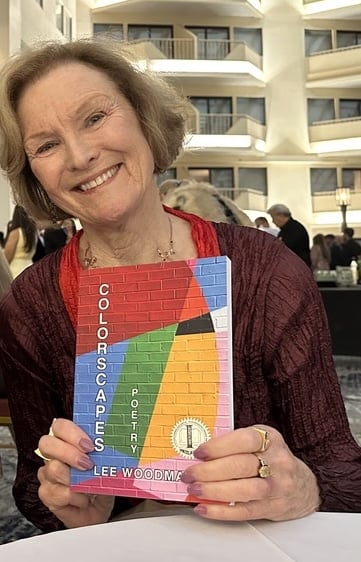 When did you first decide to become an author?
I started writing plays and family newsletters with my sister when we were about 6 and 8 years old. We’d invite parents and neighbors to be our audience on the front steps, and we’d perform in the driveway!
Is this the first book that you’ve written?
Colorscapes, published by Shanti Arts Publishing, is the sixth in a series of “Scapes” poetry books. Each book explores a singular subject: Lifescapes (love and relationships), Mindscapes (wishes, lies, and dreams), Homescapes (cultural identity and place) and Artscapes (artwork), and Soulscapes considers spirituality and “other ways of knowing.”
What do you do for work when you’re not writing?
I teach poetry in the BARD COLLEGE LLI program and workshops at various literary centers and conferences.
How much time do you generally spend on your writing?
Four hours a day
What’s the best and the hardest part of being an indie?
I like working closely with indie publishers; they are highly artistic and know the markets well. The hardest part is taking the time to do effective marketing alongside the publishers, but it brings great rewards.
What’s a great piece of advice that you can share with fellow indie authors?
Do your research well, both into your own content and into the ever-changing world of publicity and marketing.
Would you go traditional if a publisher came calling? If so, why?
Yes, so far the independent presses I work with are traditional. The difference comes in the world of poetry. Very few “Big Five” publishers work with poets, and there are still very few poetry agents, although that is slowly changing as well.
Is there something in particular that motivates you (fame? fortune?)
I’ve been writing for my whole career – radio shows, TV shows, museum scripts and strategic plans, but after I retired from the Smithsonian in 2014, I have been writing poetry exclusively.
My New England parents wanted to see the world, which gave me a childhood in India and France. Our family was passionate about art, dance, and learning just about anything: Dad worked in education for the State Department and the Ford Foundation, and Mom started her own ballet school. My literary career got its start with family newspapers and plays produced in the driveway with my sisters.
An undergraduate degree in Art and French and a graduate degree in Art Education led to teaching and performance in dance and drama groups. Next came a career in radio, television and film production. I was an early adopter of the Internet and interactive media.
I served as Manager of Multimedia and Executive Producer at the Smithsonian Institution, Senior Advisor to the Director of the National Museum of American History, President of Lee Woodman Media, Inc., and VP of Media and Editorial at K-12, Inc. (now Strive), an online education company.
Now I have found the perfect medium for combining all my interests: Poetry!
I believe poetry is a reflection of all creative expression: dance, music, drama, visual arts, and language. I do make royalties from my books, but my major motivation is performing poetry, not fortune.
I write poems to turn sound and images into emotion and story, and to share with fellow human beings the surprising turns our lives take. I use forms from traditional to contemporary—sestina, sonnet, villanelle, free verse and narrative. Scents, tastes, and textures inspire me.
I search and struggle to understand the territory of the heart, the fascination of nature, love, longing, fear, and rage. A moon, a turtle, a conversation with a mystic, a reggae lyric— all provide image and metaphor for considering what it means to be alive. Poetry can remind us all that fantasy and beauty—no matter how strange or different—can be found in unexplored alleys and unexpected corners.
Which writer, living or dead, do you most admire?
It’s too hard to pick one, but I love Elizabeth Bishop and Frank O’Hara
Which book do you wish you could have written?
I admire Ariel by Sylvia Plath and books by Li-Young Lee