
An Open Book with Kevin Dias
Awarded 4+ stars and the IndieReader Approved seal—here’s what the author has to say.
About the Book
In 150 words or less, give us your back-jacket summary — what’s this book about?
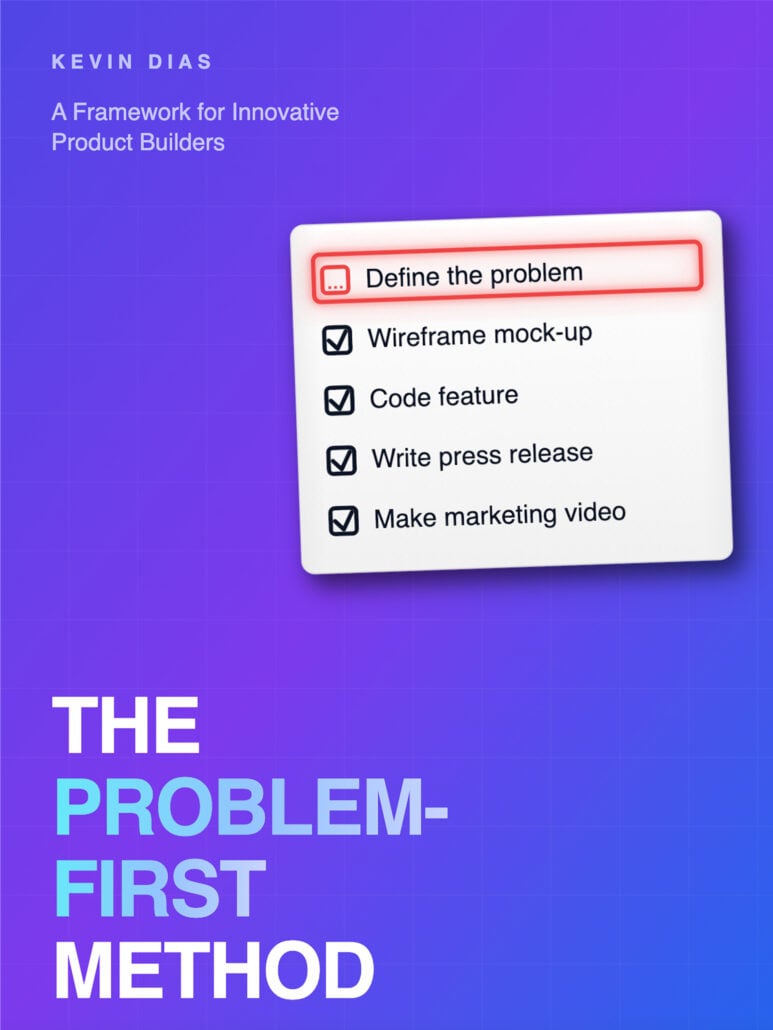
The Problem-First Method is a practical, story-driven business book about why smart teams often build the wrong things and how to avoid it. Written for founders, product managers, startup leaders, and software builders, it shows how customer requests, competitor pressure, and “obvious” solutions can pull teams away from the real problem. Through real product stories and case studies, the book offers tools like the Feature Alignment Document, discovery questions, stakeholder mapping, and validation checklists to help teams build with more clarity, discipline, and restraint.
What’s the book’s first line?
“Let’s start with an admission: this book isn’t revolutionary.”
What inspired you to write this book?
I wrote this book for two reasons. The first was my kids. I have a terrible long-term memory, and I wanted to leave them something that showed not just what I did for work, but how I thought, what I struggled with, and what I learned. The second reason was a difficult stretch at work. I felt daily pressure to make product decisions in a way that didn’t sit right with me. At first, I couldn’t fully explain why. Writing the book became a way to understand that discomfort and articulate my own principles: when to say yes, when to say no, and how to know whether we are solving the real problem or just reacting to pressure.
Make the case — why should someone read this book?
Someone should read this book if they have ever sat in a meeting where a customer asked for a feature, a competitor had something they didn’t, or the team felt pressure to move fast before understanding what was actually broken. The book is not about slowing teams down for the sake of process. It is about making sure speed has direction. It gives readers practical tools they can use immediately to clarify problems, challenge assumptions, and avoid building expensive features that nobody truly needs. It is written from the trail, not the mountaintop, by someone who has made these mistakes and is still learning from them.
Share a line from the book you’re particularly proud of.
“The most expensive feature you’ll ever build is the one that solves a problem nobody has.”
About the Author
When did you first decide to become an author?
I don’t think there was a single moment when I decided to become an author. I started writing The Problem-First Method in the fall of 2025 as a way to organize my own thinking. At first, it felt more like a personal exercise than a book. But the more I wrote, the more the stories started connecting. At some point, I realized I had something meaningful to say that might help other builders, founders, and product teams avoid a few of the mistakes I had made.
What else have you written?
This is my first book. Outside of the book, I write weekly essays on my personal website and share shorter reflections on LinkedIn, usually about product development, leadership, startups, software, parenting, and the lessons hidden in everyday work.
What do you do for work when you’re not writing?
I’m the founder of Ambiki, an EMR and practice management platform built for pediatric speech, occupational, and physical therapy practices. Before Ambiki, I was CTO of Sidekick Therapy Partners, where I helped build a bespoke practice management system that supported the company’s growth from about 70 to more than 180 clinicians in three years. My work is a mix of product strategy, software, leadership, customer conversations, and trying to understand messy healthcare workflows well enough to make them simpler.
What does your writing process look like?
I usually start with a real scene. A customer conversation, a product mistake, a hard meeting, or a moment where something felt off. I write the story first, then work backward to figure out what it taught me. I am not a strict outliner at the beginning. I tend to write my way into clarity, then organize and refine later. For The Problem-First Method, I gathered stories from real product decisions and mistakes, then shaped the book around the patterns that kept repeating.
What does being an indie author mean to you?
Being an indie author means ownership and responsibility. I liked having control over the book, the formats, the website, the pricing, and the relationship with readers. I am not a big-name author with a built-in publishing path, so independent publishing was also the most practical way to get the book into the world. It gave me room to experiment, too. For example, when someone buys the ebook or audiobook directly, I give them three free copies to share with friends or colleagues. That kind of flexibility matters to me.
What do you wish you’d known before you published?
I wish I had understood Advance Review Copies earlier. I was late to learning how important ARCs are for getting reviews lined up around launch. In hindsight, it seems obvious: people need time to read the book before they can review it. But I learned that lesson the way I tend to learn many things: by doing first and researching second. The editing process was also harder than I expected. I could smell the finish line, then got sick for about a month and lost momentum. That stretch was tough.
What’s a great piece of advice you can share with fellow indie authors?
My advice is to start with the thing you cannot stop thinking about. You do not need to know on day one whether it is a book. Write the story, the lesson, the frustration, or the question that keeps coming back. Also, do not underestimate editing. Drafting helps you discover what you think. Editing is where you figure out what is actually worth saying. And if you are self-publishing, learn about ARCs earlier than I did.
What are you reading right now?
Right now, I’m reading and rereading a mix of business, product, and leadership writing. I tend to gravitate toward authors who make complex ideas feel practical and human, especially writers like Jason Fried, David Heinemeier Hansson, Matthew Dicks, and Eric Ries. I also read a lot of essays and articles from people actively building companies, because I like writing that comes from lived experience rather than theory alone.
What’s next for you?
For now, I’m continuing to write regularly. I publish weekly essays on my personal website and share shorter reflections on LinkedIn. I may have another book in me someday, but I’m not forcing it yet. Writing The Problem-First Method taught me how much work a book really is, but also how valuable it can be to slow down and turn years of scattered lessons into something more lasting. So for now, I’m staying close to the habit: keep writing, keep noticing, keep reflecting.

This post may contain affiliate links. This means that IndieReader may earn a commission if you use these links to make a purchase. As an Affiliate, IndieReader may make commission on qualifying purchases.