
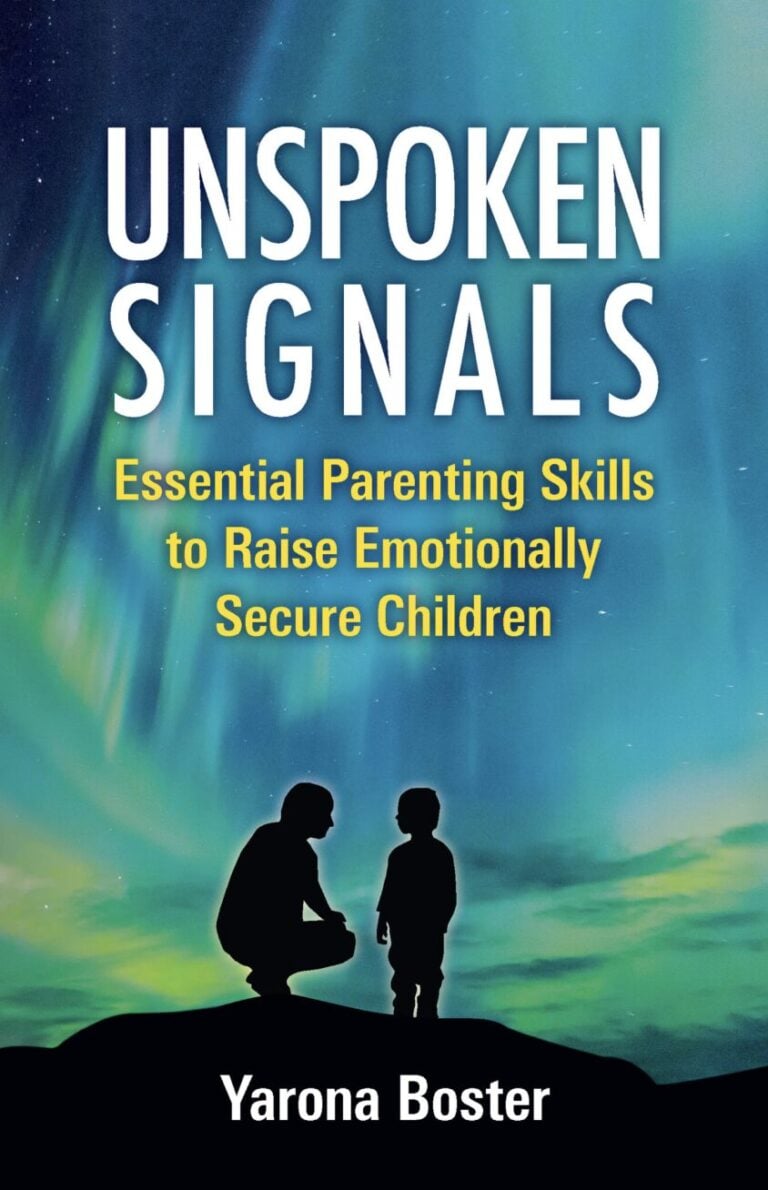
 Unspoken Signals: Essential Parenting Skills to Raise Emotionally Secure Children: Received a 4+ star review, making it an IndieReader Approved title.
 Unspoken Signals: Essential Parenting Skills to Raise Emotionally Secure Children: Received a 4+ star review, making it an IndieReader Approved title.
Following find an interview with author Yarona Boster:
1. What is the name of the book, and when was it published?
Unspoken Signals: Essential Parenting Skills to Raise Emotionally Secure Children
2. What’s the book’s first line?
Not sure if they want the first line of the Foreword, Preface or Introduction so here are all 3:
Foreword: “Success in parenting, much like success in life, is not Accidental”
Preface: “Before we step into the heart of this book, I want to talk about the unspoken communication signals of parenting.”
Introduction: “Imagine a world where every parent knew exactly what they were doing.”
3. What’s the book about? Give us the “pitch”.
Raising a happy and healthy human isn’t easy. There’s no class requirement or “official” manual. Being a parent, though, is the most important role you’ll ever have. How do you balance intuition with expectations? How do you ensure children are capable and connected? In Unspoken Signals, Yarona Boster provides practical strategies for navigating everyday life as a parent. Drawing on personal and professional experience, Yarona blends heartfelt stories with invaluable tools to help parents shift from reactivity to resilience. You’ll learn the psychology behind children’s responses, common parent pitfalls, parenting methods that produce the greatest success, and why creating a foundation for an emotionally secure child now makes a difference in the Future. For families in all stages, Unspoken Signals helps today’s children become confident, compassionate adults, and reminds parents that their growth is part of the journey, too.
4. What inspired you to write the book? A particular person? An event?
I was inspired to write this book because of the powerful intersection between my personal experiences with loss and my professional work with families over the last twenty years. As I navigated the deaths of my parents, I began to understand how their histories shaped the way they raised me. My father survived the Holocaust as a child, and my mother faced her own profound hardships. After they were gone, I found myself reflecting on who they were, what they taught me, and how their resilience lived on in me.
At the same time, in my work with parents, I kept seeing the same pattern. Parents were trying to shield their children from loss, struggle, and the speedbumps of life, believing they were protecting them. But in doing so, they were unintentionally removing the very experiences that build emotional security. The most transformative moments came during the deeper conversations we would have when parents realized that the real goal of parenting is not to prevent hardship. It is to prepare children to live whole and resilient lives long after we are gone. Watching that realization settle in, even for the most resistant parents, was often the lightbulb moment when everything shifted. This book grew from that truth. It is a guide for parents who want to raise emotionally secure children who can face the finite nature of life with honesty, strength, and support.
5. What’s the main reason someone should really read this book?
This book reframes what it means to be a parent. It helps parents move beyond the instinct to protect their children from pain and instead teaches them how to prepare their children for the realities of life. Through personal stories, professional insight, and practical tools, the book shows parents how to raise children who can face loss, change, and uncertainty without falling apart. It gives parents the confidence that they are not just loving their children well today, but equipping them for the future.
6. When did you first decide to become an author?
I think the desire had been quietly tugging at me for ten to fifteen years, but it became a real driving force about five years ago. That was when I started having the kinds of conversations with parents that created genuine lightbulb moments. I could see their thinking shift in real time, and I realized I had something important to say that needed to live beyond the walls of my coaching sessions.
7. Is this the first book you’ve written?
No. I have two coauthored books that both became international Amazon bestsellers. This is my debut solo book.
8. What do you do for work when you’re not writing?
I’m a parenting, life, and speaker/communications coach, as well as a podcaster and public speaker. My work centers on emotional intelligence, resilience, and helping people communicate with clarity and confidence.
9. How much time do you generally spend on your writing?
It ebbs and flows depending on the project. Some seasons are intensely focused, and others are more reflective and spacious. I’ve learned to honor the rhythm of the work rather than force it.
10. What’s the best and the hardest part of being an indie?
The best part is the creative freedom. I get to maintain full integrity over my message, my voice, and the way my work enters the world. The hardest part is that you carry the entire weight of the process. Every decision, every detail, every responsibility sits with you. It’s empowering, but it can also be overwhelming.
11. What’s a great piece of advice that you can share with fellow indie authors?
Treat your book like a longterm relationship, not a shortterm project. You are not just writing a manuscript. You are stewarding an idea into the world. Give yourself permission to move slowly, to revise deeply, and to stay connected to the heart of why you started. And surround yourself with people who believe in your message as much as you do.
12. Would you go traditional if a publisher came calling? If so, why?
Possibly, but it would depend entirely on the details of the offer. I’m very aware that traditional publishers often hold ownership rights, and I believe strongly in authors retaining control over their work. Creative integrity is nonnegotiable for me. I would need to know that my voice, my message, and my values would not be compromised by a larger entity’s agenda.
13. Is there something in particular that motivates you (fame? fortune?)
What motivates me is impact. I want to help parents raise emotionally secure children who can navigate the realities of life with resilience and honesty. If my work reaches the people who need it and genuinely helps them, that is the greatest reward.
14. Which writer, living or dead, do you most admire?
Dr. Jonathan Haidt. His ability to translate data and research into meaningful, accessible insights about human behavior is extraordinary. I’m a firm believer in grounding ideas in evidence, and his work does that beautifully.
15. Which book do you wish you could have written?
The Anxious Generation. It captures so much of what I believe about the emotional landscape children are growing up in today, and the urgency with which we need to address it.