
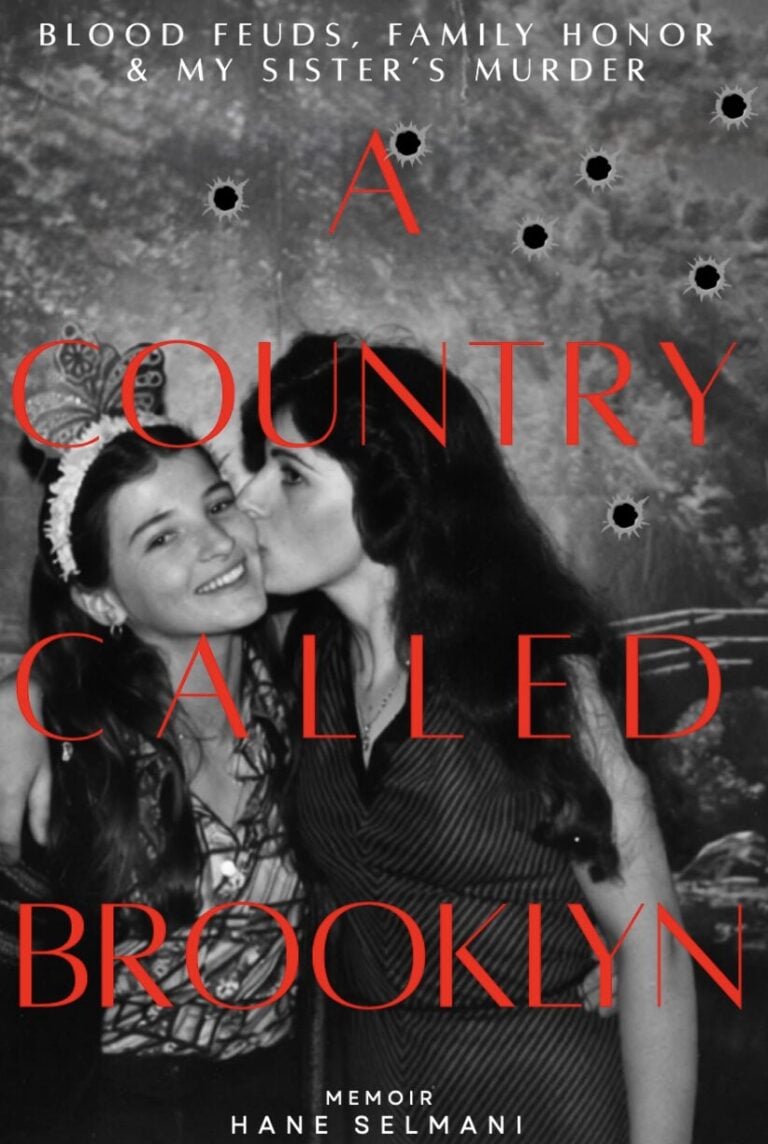
 A Country Called Brooklyn: Received a 4+ star review, making it an IndieReader Approved title.
 A Country Called Brooklyn: Received a 4+ star review, making it an IndieReader Approved title.
Following find an interview with author Hane Selmani:
1.What is the name of the book and when was it published? The name is A Country Called Brooklyn, and it was published on May 1, 2026. I announced my website on February 21—my sister’s birthday—and released the book about her life on my own birthday.
- What’s the book’s first line? “Who you marry and when you die is written on your forehead the day you are born,” my mother told me when I was little. It’s significant because my sister entered an arranged marriage with a man she didn’t love—the very man who would later kill her.
- What’s the book about? Give us the “pitch”. I grew up in 1970s Brooklyn believing in fate and ancient Albanian patriarchal codes. My world was perfect—until my sister was murdered by her husband, and a blood feud followed. Suddenly, nothing made sense. But good girls didn’t question—they obeyed. Thirty years later, I set out to learn what really happened. A Country Called Brooklyn is the story of one woman’s search for the truth—and the unraveling of everything she was taught to believe.
- What inspired you to write the book? A particular person? An event? I didn’t plan to write about my sister’s murder. I shared five pages about the night she was killed and was ready to move on to my own stories. But my classmates wanted more, and my teacher insisted I continue—because her death had forced me to question God and the honor codes I loved so much. I resisted doing so for years because I didn’t know anything about her life—or her death—other than that she died ringing our doorbell, and doubted that my family would talk about it. We believed that the drug dealers made him kill her. Her husband claimed it was an honor killing over an “affair.” If that were true, my family would be disgraced. I was convinced it was the drug dealers, and I set out to prove it so her children could finally know the truth. What I uncovered was far more harrowing than I could have imagined. Some family members didn’t want me to tell this story—they feared disgrace and asked me to cut parts out. I did. But when I decided to include everything I had learned, it became a moment of liberation. I was no longer willing to be silent or controlled. The desire to give a voice to the sister who died fighting for her freedom gave me the courage to break free—nearly fifty years later.
- When did you first decide to become an author? I was 31 when a journalist asked how my New Year’s went. I told him I’d fax it to him. What I sent was a raw, honest rant about my life. He called immediately and asked to publish it, saying, “People don’t know what it’s like for divorced Albanian women.”Naturally I asked my oldest brother for permission. He said yes—“just don’t use your real name.” My article, “Plight of the Albanian Woman,” was published in January 1994.Soon after, it was translated into Albanian, and I began hearing from others in the community. One woman encouraged me to go to college—something I wasn’t allowed to do growing up—and become a writer. That moment changed the course of my life.
- Is this the first book you’ve written? Yes it is. More are coming.
- What do you do for work when you’re not writing? I manage finance and operations for an actor and his family.
- How much time do you generally spend on your writing? When I’m on fire, I wake up, brush my teeth, make a cup of coffee, and sit at the computer until it’s time for bed—sometimes at 3 a.m. It’s an easy transition since I never took off my pajamas. I barely take breaks except to eat or reset with mindless television. The subject matter is heavy, so I’ve learned to listen to my body. Other times I can’t write a thing, and patiently wait months for the inspiration to begin again.
- What’s the best and the hardest part of being an indie? The best part is control—owning my story completely. The hardest part is everything else: learning the technical side of publishing across all platforms, formatting differences, eBooks, and marketing. It feels like there are a thousand things to do.
- What’s a great piece of advice that you can share with fellow indie authors? Don’t rush to submit your book for reviews or awards until it’s truly ready. I submitted too early. I received good reviews, but I know the book is much stronger now. Also—don’t chase perfection.
- Would you go traditional if a publisher came calling? If so, why? I had two agents over the past decade. They couldn’t sell the book—because, honestly, it wasn’t ready. I had the story, but my writing skills were lacking.An assistant editor at Crown once told me, after multiple revisions, that what fascinated her most was how I uncovered all the stories. That stayed with me for years. Eventually, I rebuilt the entire book around that idea of taking the reader along on the journey of discovery.
I believe this version could have been traditionally published. But by then, I understood that I would likely be responsible for much of the marketing—so why not do it myself and retain ownership? That way, if a publisher did come calling, I’d be negotiating from a position of power.
- Is there something in particular that motivates you (fame? fortune?) Not fame. Not money.Influence.Having been suppressed most of my life, I want to write books that empower others to question what they’ve been taught—and find their own truth.
- Which writer, living or dead, do you most admire? I didn’t grow up reading. In my world, reading and writing was for lazy people—something that distracted from learing how to clean and becoming a “good wife.”I came to books later in life. In my fifties, I began reading memoir and fiction, and I’d say Toni Morrison is my favorite to date.I’m still discovering new writers—and that’s exciting.
14. Which book do you wish you could have written? Beloved.