
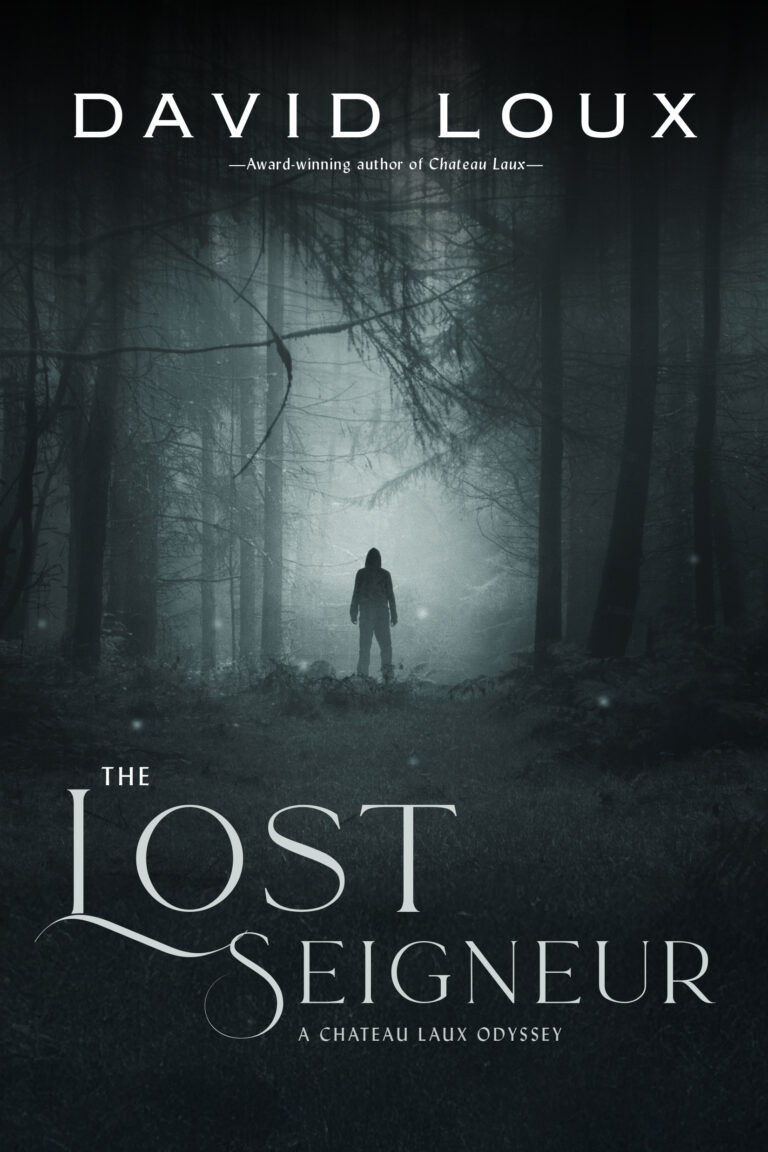

THE LOST SEIGNEUR (A Chateau Laux Odyssey)
Winner of the 2026 IndieReader Discovery Awards in Overall Fiction: Third Place
What’s the book’s first line?
“The afternoon turned the worn hue of an old silver coin as Magdalena began the daily ritual of closing up the lonely château, which sat on a plot of cultivated land in the new-world colony of Penn’s Woods, not far from the western frontier.”
What’s the book about? Give us the “pitch”.
The Lost Seigneur is a sequel to the award-winning Chateau Laux. It is the story of Jean-Pierre du Laux, a nobleman in southern France, who was wrongly imprisoned during a time of religious intolerance and subsequently endeavors to return to his family. Many years have passed since he saw them, and his long incarceration has broken his health. Any reunion would clearly have been impossible, without the unlikely help of a youthful companion that he meets along the way.
What inspired you to write the book? A particular person? An event?
The book’s prequel, Chateau Laux, which was based on a true story.
What’s the main reason someone should really read this book?
The Lost Seigneur is for readers who are interested in the decisions a family made to heal itself.
What’s the most distinctive thing about the main character? Who-real or fictional-would you say the character reminds you of?
One of the main characters is a Pyrenean mountain girl who refuses to be broken, and who subsequently made decisions that reshaped her destiny and that of those around her. She reminds me of anyone who follows her own lights in the face of adversity and dares to put her life on the line.
When did you first decide to become an author?
I wanted to become a writer when I read The Call of the Wild at the age of seven and didn’t want the story to end.
Is this the first book that you’ve written?
The Lost Seigneur is a companion book to Chateau Laux, which was my first published book.
What do you do for work when you’re not writing?
I consult for two winery businesses in Paso Robles, California.
How much time do you generally spend on your writing?
Writing is the background of my life, and I do it obsessively when I have the opportunity.
What’s the best and the hardest part of being an indie?
The best part of being an Indie is having greater control over the publishing process. The hardest part is limited access to the kind of markets that traditional distributors provide. It is not an unsolvable problem and I am working on it.
What’s a great piece of advice that you can share with fellow indie authors?
Be fearless.
Would you go traditional if a publisher came calling? If so, why?
I would of course consider a traditional offering along with other opportunities. That said, I am absolutely grateful for my experience as an indie author and would not hesitate to recommend it to another author, aspiring or otherwise, for any number of reasons.
Is there something in particular that motivates you (fame? fortune?)
What motivates me is the pregnancy of a story and the need to give it birth.
Which writer, living or dead, do you most admire?
My admiration goes to some of the more traditional writers because of the formative influence that they have had on me. Writers such as Jack London, who introduced me to the world of fiction. Then later Pearl Buck, who I had the privilege of knowing. Willa Cather, who turned lonely lives into art. Nathaniel Hawthorne, who revered the spirit. Paolo Coelho, who dared to dream. Ernest Hemmingway, who cut like a knife. Poets like Rainer Marie Rilke, who defied the night. And playwrites like Henrik Ibsen, who arrowed me in the heart with his take on life lies. The list goes on, and includes anyone who awakened me to something new and whose work had a lingering resonance.