
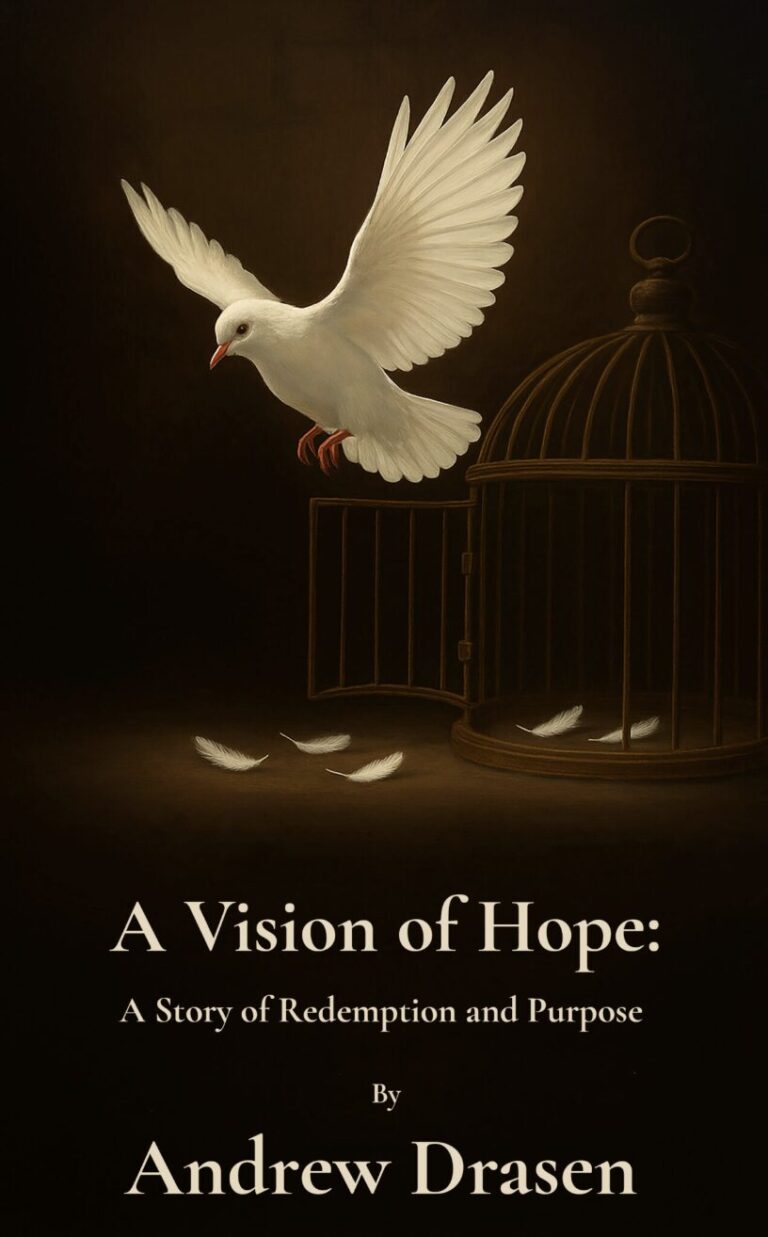
 A VISION OF HOPE: A Story of Redemption and Purpose: Received a 4+ star review, making it an IndieReader Approved title.
Following find an interview with author Andrew Drasen:
- What is the name of the book and when was it published?
The book is A Vision of Hope: A Story of Redemption and Purpose, published on December 2, 2025.
- What is the book’s first line?
“Hell’s Kitchen is on the TV, as an eclectic group of inmates are entranced by the glow emanating from the television set.
- What is the book about? Give us the pitch.
A Vision of Hope is a memoir that blends personal truth, systemic insight, and a message of purpose. It follows my journey through addiction, incarceration, and recovery, while also exploring the deeper work of rebuilding identity. Along with the raw honesty of lived experience, the book highlights how our justice and treatment systems fail people and how they can improve. It is a story about choosing purpose instead of despair and discovering that redemption is possible even in the darkest circumstances.
- What inspired you to write the book?
I wrote the book for survival. I had done a lot of time in my life, and during my final incarceration I knew I would be there for six to eight months. People had encouraged me to write a book for years, so the seed had already been planted. I wanted to tell my story honestly and without softening anything, so I wrote it while I was incarcerated and continued through my last treatment program. The book became a way to stay grounded and a way to finally speak the truth I had been carrying.
- What is the main reason someone should really read this book?
Because addiction and incarceration are often talked about but rarely understood. This book gives an unfiltered look into both while also offering a path forward built on compassion, responsibility, and purpose. Whether someone is struggling, loves someone who is, works in the justice or treatment system, or simply wants to understand the human side of addiction and reentry, the story shows that people are more than their worst mistakes and that change is possible.
- When did you first decide to become an author?
When I started sharing pieces of the manuscript during the writing process. The response was strong and sincere. People connected to the honesty and that encouragement helped me realize the story mattered and needed to be completed.
- Is this the first book you have written?
A Vision of Hope is the first book I wrote, but it is part of a three book ecosystem that all released on the same day. Alongside the memoir, I wrote A Vision of Hope: Reflections and A Vision of Hope: The Workbook. The three books work together. The memoir tells the story, Reflections creates perspective, and the Workbook turns those lessons into practice.
- What do you do for work when you are not writing?
I am the founder of A Vision of Hope Media. I develop curriculum, speak publicly, build the Skool community for readers and participants, and create virtual curriculum that supports programs focused on addiction, reentry, and identity restoration. My work centers on helping people rebuild their lives and helping communities rethink how we approach recovery and rehabilitation.
- What is the best and the hardest part of being an indie author?
The best part is the creative freedom to tell the story exactly the way it needs to be told. The hardest part is that indie authors take on the full workload from creation to production to marketing. For me, the control and authenticity make it worthwhile.
- Would you go traditional if a publisher came calling? If so, why?
Maybe. It would depend on whether the partnership aligned with the mission behind the work. If a traditional publisher could help expand the reach of the book, deepen its impact in educational and institutional settings, and support the larger purpose behind the project, I would consider it. Maintaining the integrity of the message comes first.
- Which writer, living or dead, do you most admire?
My favorite writer is Michael Crichton. His ability to blend knowledge with fiction allows readers to learn while being entertained. The way he presents complex ideas in an engaging way has always stood out to me.
- Which book do you wish you could have written?
I do not wish I had written anyone else’s book. It is not my story to tell. A Vision of Hope is the book I was meant to write. A memoir I connected with on a personal level was Tweak by Nic Sheff. I could relate to the chaos and the honesty he shared about addiction.