
![IRDA Winning Author Jenna Tico: "[I write] About fourteen seconds per day, or however long I can get before my eldest child spills juice all over my foot, and my youngest decides to eat the remote control."](https://indiereader.com/wp-content/uploads/2025/05/IRDA-stciker.jpg)
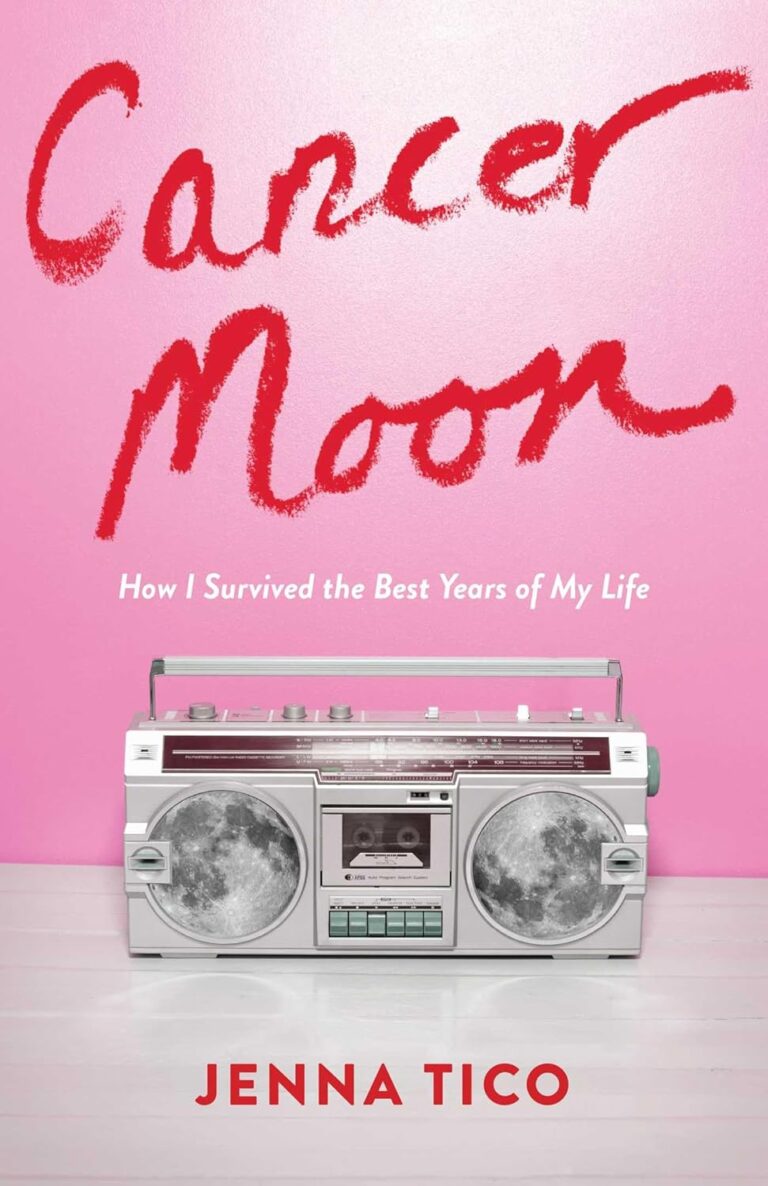
Cancer Moon: How I Survived the Best Years of My Life was the winner in the Coming of Age/Non-Fiction category in the 2025 IndieReader Discovery Awards, where undiscovered talent meets people with the power to make a difference.
Following find an interview with author Jenna Tico.
What is the name of the book and when was it published?
Cancer Moon: How I Survived the Best Years of My Life, pub date September 17, 2024
What’s the book’s first line?
“Come sit in the palm of my hand, and take rest for a while. It’s been a long life getting here, which I know, because I am here too. Take a beat. Try and relax. Or don’t try, and see what happens.”
What’s the book about? Give us the “pitch”.
Cancer Moon is a journey through the decade of my twenties, coming-of-age in a time and place where I was constantly told my feelings were too much to handle; and ultimately, not only claiming them, but owning them as an essential part of my power. The book is a collection of non-linear, non-traditional essays, poetry, and flash prose, all grouped according to the cycles of the moon (from new to full). It tracks my experience as a twentysomething woman navigating formative relationships, career and body identity, and the rocky path toward self-worth. It is humorous, cringey, sentimental, and—hopefully—relatable to anyone who has taken the brave step to own their own weird.
The official “blurb” is: Growing up in Santa Barbara, California, way too close to the Hollywood dream machine, Jenna Tico’s self-worth wanes to invisibility when her identity becomes enmeshed with validation from celebrities and spiritual F-boys . . . until she claws her way back to empowerment. Here, Tico shares vulnerable personal essays, stories, and poetry—all grouped following the cycles of the moon—chronicling her journey from late bloomer to full grownup. Observing the world of twenty-something relationships from perspectives as diverse as a bachelorette houseboat, a music festival afterparty, and the airplane ride to a death bed, she validates the experiences of women who feel like they have been abandoned by the generation that came before them. Her self-reflective stories encourage healthy life choices for young women without telling them where, what, or how to live their lives—and always with a healthy dash of humor on the side.
What inspired you to write the book? A particular person? An event?
Not long after becoming a mother for the first time, back in 2020, I felt this tugging—like, now that my life had changed so drastically, and I had taken on a new identity as mother, I needed to honor and pay homage to the era that got me there. From that point, I like to say that I didn’t write Cancer Moon: I collected it. Some of the content was written as far back as 2013, and sat in a folder until I enlisted the help of a wonderful book coach to help me identify the through line and do the difficult (yet satisfying) work of bringing the various essays together and writing the pieces that were still needed. I knew it would always feel like an amalgamation, a collection, because that is what the content of the book—and the years written about—felt like. Ultimately, that is part of the “why” behind writing it. I wanted people in their twenties, or at any transitional juncture, to know that the moment of change doesn’t have to feel linear or perfectly palatable to be beautiful.
What’s the most distinctive thing about the main character? Who-real or fictional-would you say the character reminds you of?
The most distinctive thing about the main character is that she is ME—spread out over the decade of my twenties, and not presented in any chronological order, but rather in a trajectory of growth and maturity. There is lovesick Jenna, confused Jenna, desperate-for-validation Jenna, longing Jenna, ecstatic Jenna, heartbroken Jenna… and of course, wise-adult-Jenna, who appears sporadically in the footnotes, and then rounds us out as the primary voice toward the end. Writing a piece of memoir about former versions of myself was an act of love and acceptance for those phases that I had a hard time forgiving or embracing myself for. The reason “I am all of my phases” became a Cancer Moon tagline is because the resounding message, and point, of the book is exactly that: to own all of the stages and phases that it takes to get to fullness, in organic timing, just like the moon.
What’s the main reason someone should really read this book?
Because I lay it all out there. Because it’s not perfect, nor prescriptive. I chose to keep many pieces as-is, written in the red-hot moment that they convey, without later re-writing to make them more palatable or “better”… because by inserting more of my “wise-adult” voice, I was losing something that could not be forced: the rawness of not knowing better yet. Of being lost, and being honest about it.
One of the things that makes Cancer Moon a fun read is that it is not one genre, and it is not linear. The period of growth, change, trial-and-error, and expansion that I experienced during my twenties did not feel like a linear progression—and to truly honor that time in my life meant acknowledging that growth is rarely, if ever, a straight line. Like I said, it felt vulnerable to avoid going back with a red pen and erasing the messiest parts—or the experiences I’m more embarrassed by—in order to make the narrative brighter or more triumphant; but ultimately, that is what I desperately wanted to read when I was in my twenties: books written by women who didn’t have it all “figured out.” This book explores the dark as well as the light, it’s messy as hell, and I hope this invites the reader to apply similar acceptance (and humor) to their own lives.
When did you first decide to become an author?
When I wrote a murder mystery about the Olsen Twins, complete with (abysmal) illustrations; and when I threw it away years later (in a fit of teen angst), my dad kept it, and still brings it up. Yay, attention!
Is this the first book that you’ve written?
I wrote a coffee table book about the Santa Barbara Summer Solstice Parade!
How much time do you generally spend on your writing?
About fourteen seconds per day, or however long I can get before my eldest child spills juice all over my foot, and my youngest decides to eat the remote control.
Which writer, living or dead, do you most admire?
Anne Carson, Adrienne Rich, Mary Oliver, Chelsea Bieker
Which book do you wish you could have written?
The instruction manual to my kid’s stroller. Because then I might actually know how to fold it.