
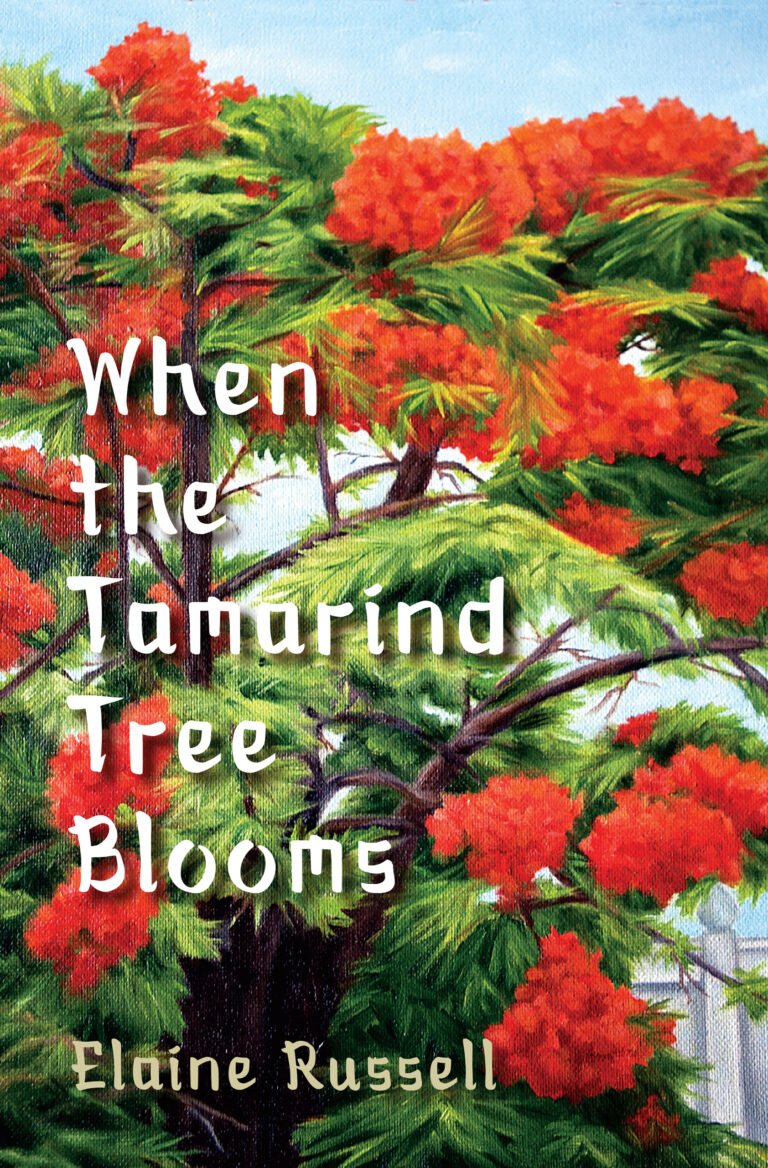

Elaine Russell delivers a quietly powerful coming-of-age tale layered with culture, grief, and discovery in her historical fiction novel, WHEN THE TAMARIND TREE BLOOMS. Geneviève Dubois has just turned eighteen, and while many turning this age look forward to a big celebration, she looks forward to her emancipation from the orphanage that has ‘shackled’ her since she was four. Set in 1931 French-colonized Laos, as a métis orphan (half French and half Laotian), she is subjected to scorn and discomfiting gazes by people who would rather discriminate against the children of the French soldiers lacking self-control while turning a blind eye to these soldiers’ indiscretions. In one instance she remarks, “We were inconvenient reminders of the illicit affairs no one wanted to acknowledge…I always thought I heard a communal sigh of relief as we left the parties and returned to our cloistered world.”
After years of cruelty and being denied any information about her past, she is about to be set free—but without any information to guide her quest to find her family. Especially her mom, who promised, “I’ll come for you when the tamarind tree blooms again.” With no other choice in sight, she takes a daring decision that rewards her with the discovery of a twin brother. However, this decision has dire consequences, causing her to rely on the hospitality of her former teacher for survival. With her newfound freedom comes the unfamiliarity of male attention and a need to decide whether to follow her heart or her head.
The book’s emotional resonance is anchored in Geneviève’s internal life: the ache of her orphanage years, the discovery of her twin brother, the loss of a friend, the tender growth of affection with a prince who takes an interest in her, and attention from a recently returned French adventurer. The vivid and immersive nature of the prose allows readers to feel present in the markets, temples, and riversides that shape the story’s world, as well as the symbolic weight of these places and events. For instance, “I passed two lovely Buddhist temples not far apart, with multiple sloping roofs and extravagant gold decorations that glittered in the fading light of day. The familiar, comforting sounds of the monks chanting, and the scent of sandalwood incense, greeted me.”
The tamarind tree, from which she annually awaits her mother’s return, is symbolic and an integral part of the book—grounding it in hope and rootedness, even amid loss and uncertainty. “Half the massive branches spilled over the wall, as if uncertain where they belonged, attempting to escape. I sympathized with the tree’s dilemma. I, too, questioned where I belonged: half and half, half French, half Lao, neither one nor the other.”
The book does falter slightly in its pacing. The middle sections stretch across long passages of domestic detail and correspondence that, while beautifully written, sometimes undercut the momentum. Also, a handful of plot developments follow predictable arcs; for readers steeped in this genre, some betrayals and revelations may feel familiar rather than surprising.
Nevertheless, Elaine Russell’s WHEN THE TAMARIND TREE BLOOMS’ strengths outweigh its limitations. Its cultural specificity (the métis experience, the orphanage’s secrets, colonial forces) is handled with sensitivity and authenticity. Geneviève herself emerges as a memorable and sympathetic protagonist whose hope, curiosity, and courage make readers root for her through every difficulty.
Elaine Russell’s WHEN THE TAMARIND TREE BLOOMS is a tender and culturally grounded coming-of-age novel that immerses readers in 1930s Laos through vivid settings, symbolic resonance, and the resilient voice of a heroine searching for belonging.
~ Gabriella Harrison for IndieReader