
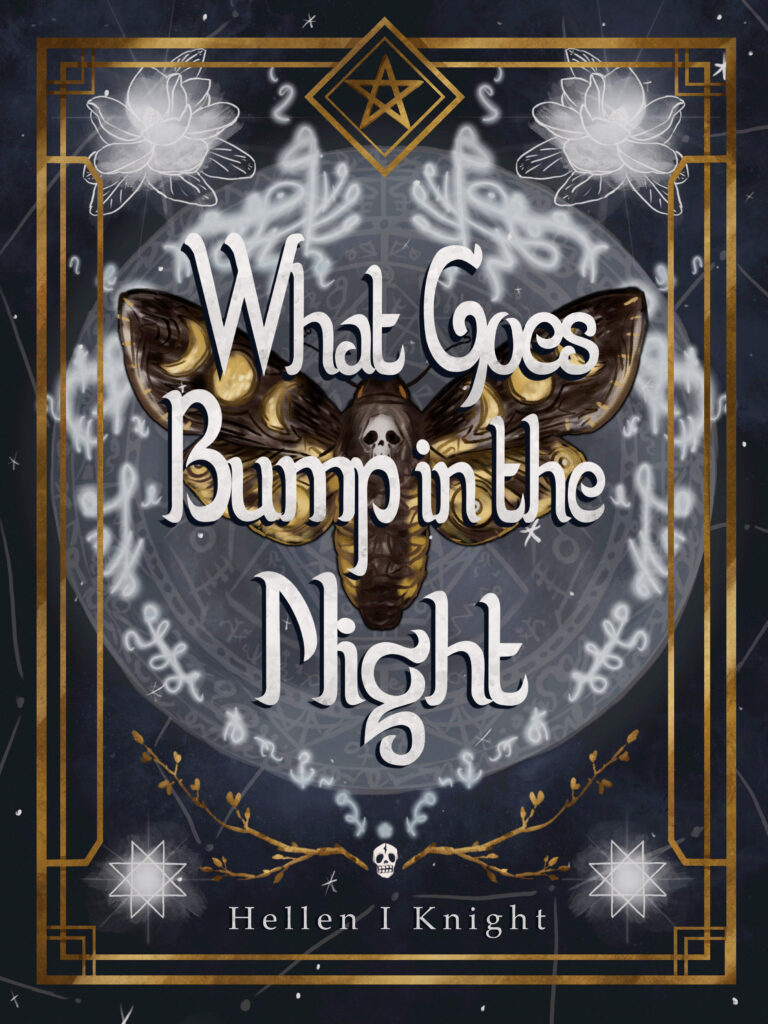

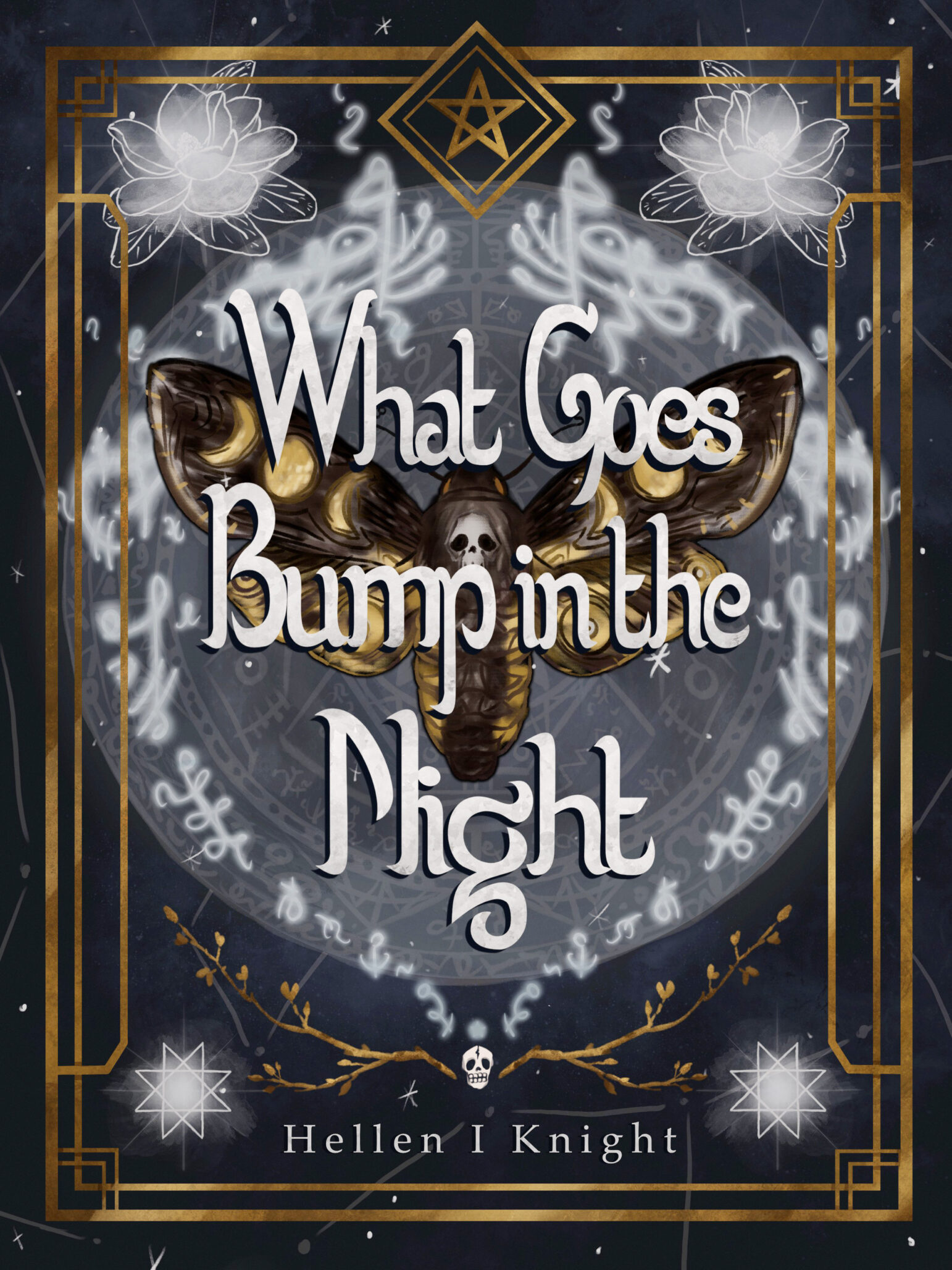
As an alchemy university in New Orleans pushes for integration with the traditional occult community, tension rises. And when the covens lose the vote with the city council, Etienne (a twenty-year-old apprentice witch and the heir to his family’s house) is forced to partner with an alchemist student for a mandatory "Arcane Diversity" program—to his great annoyance. The thing is, Etienne has always seen alchemy (learned magic) as inferior to his inherited magic, so he is immediately hostile and dismissive towards his assigned partner. This leads to a bet that requires them to find the hardest assignment possible, and if Nica (his partner) can’t keep up, they’ll kick him out of the program. If they can, he must participate fully.
Evidently, there’s an increasing global debate regarding cultural preservation versus progress, and Hellen I. Knight deftly mirrors this debate in her transportive and emotionally turbulent urban fantasy WHAT GOES BUMP IN THE NIGHT. The protagonist's conversations with Nica, including how they initially argue about everything, are full of personality. Etienne’s formal insults and Nica’s ramblings combine for memorable moments, like when one of them says, “Your wordplay is absolutely absurd an' witless, completely ridiculous as it is farcical, a weak willed attempt that's lackin' in ingenuity an' utterly gormless—" and the other interrupts, "Nah nah- hold up- gormless? No way that's- now you're just makin' words up you hypocrite!”
Using his cloak of arrogance, Etienne tries to mask such insecurities as his suffocating fear of disappointing his mother (a prominent figure in the occult community) and his companion-like self-doubt. It's this anxiety that makes him so relatable and authentic, even as he fights to suppress his feelings. However, his anxiety spirals often follow the same pattern, which (while realistic) can be a bit repetitive. Still, he shows a profound pride in traditions that stretch back centuries. While presenting a richly built world, Knight refrains from portraying the covens as purely noble—exposing the "claiming" of children from human families. This exposure casts a moral shadow that other characters, particularly a grieving construction foreman, force Etienne to confront. Unfortunately, some other characters, such as his sister and best friend, seem to exist mainly to deliver exposition or offer emotional support without actually being fully sketched out.
Consistent rules help this world feel lived in, as magic is both emotive and dangerous while alchemy requires an understanding of chemical structures. In the midst of this, Knight places a strong focus on mental health—showing that anxiety does not discriminate between heirs and outsiders, that healing is non-linear, and that asking for help is not a failure of one's bloodline but a quiet act of courage.
With a tenderness that is quietly radical, Knight conveys the beauty of being seen and accepted through Nica—who corrects their deadname in an enchanted notebook without a single word of explanation needed. This also happens through Etienne's asexuality and magic, which can be somewhat wild and embarrassing. However, it's treated not as a flaw to be fixed but as part of who he is. Their bond develops organically overtime and remains platonic, which makes this novel all the more refreshing.
Charting the uneasy alliance between a prideful witch heir who has everything to prove and an anxious alchemist who refuses to be dismissed, Hellen I. Knight’s urban fantasy WHAT GOES BUMP IN THE NIGHT is a heartfelt exploration of prejudice and the courage to change.
~ Gabriella Harrison for IndieReader