
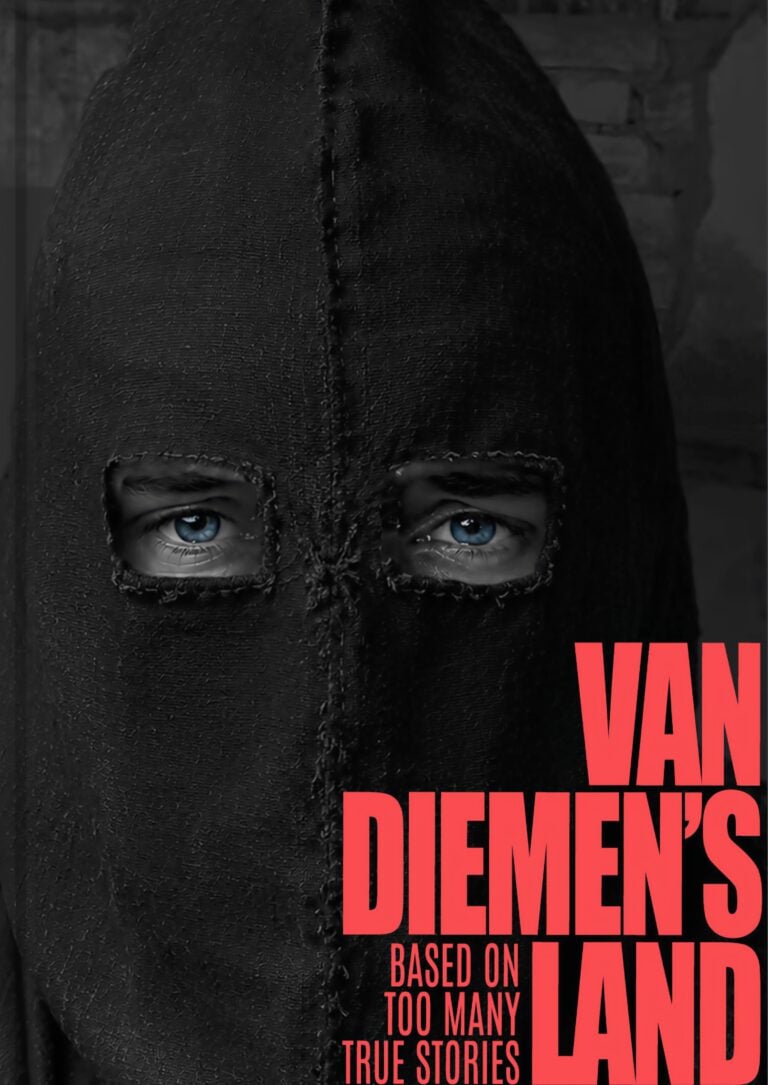

In Virgilio Russi’s historical fiction novel VAN DIEMEN’S LAND: Based on Too Many True Stories, Tuck (a former convict and successful shoemaker) lives a life of violence and suppressed desire in the town of Hobart. When his feelings for his young tenant John start to threaten both of their safety, he must do everything in his power to protect his lover.
In mid-nineteenth century Australia, the penal colony of Norfolk Island put men with diverse sexual tastes through unimaginable cruelty and torture in the name of correction. In this book, men with sexual preferences deemed unnatural and ungodly are thrown into separate prisons, beaten, and paraded with their heads covered. The prose, though inconsistent, succeeds at anchoring emotions through descriptions like this: “He learnt she liked the window cracked, even in cooler weather.” Likewise, the similes are poetic: “Once, in the shell of a half-built boat, ribs arching overhead like a carcass picked clean.” Halfway through the book, however, the style shifts—and not for the better. It becomes more invested in shorter descriptions and sentences (“Harsh stuff. Lye-heavy.” “Fingers prying, checking, indifferent.”), as well as vague similes (“The room smelt faintly of paper and bodies waiting” and “sunlight lay on skin like a benediction”).
Tuck’s relationship with Elisabeth is an apt depiction of marriage. Tuck’s efforts to make her feel more comfortable in his space, Elisabeth’s belief in Tuck’s skills, and Tuck’s instinct transforming from bracing for loss to protecting her, are very realistic ways in which marriage can change people. Meanwhile, the gay couples in prison tend to their secret vegetable gardens. John reads to Tuck at night. These details offer a tender exploration of intimacy.
The book also succeeds at world-building; mid-nineteenth-century Australia is depicted through exploitative penal settlements, changing laws, improving economy, and quoted news articles. Unfortunately, some subplots are dense and fail to justify their places in the narrative, such as the plot thread with Dr. Coverdale’s wife, Anne's death, and Paul’s investigation into John’s disappearance.
VAN DIEMEN’S LAND brings forth some important historical events, such as the colonial segregation of the Hijra (Transgender) culture in South Asia in 1871, which led to the exploitation and social exclusion of a community that still exists. In the end, this imperfect novel conveys society’s poor treatment of the LGBTQ community, a prejudice that still affects many parts of the world almost two centuries later.
Written by Virgilio Russi, VAN DIEMEN’S LAND: Based on Too Many True Stories is a tender exploration of intimacy, identity, and the historical denial of sexual diversity. However, narrative inconsistencies, a shifting style, and dense subplots undermine the reading experience.
~Maria Zafar for IndieReader