
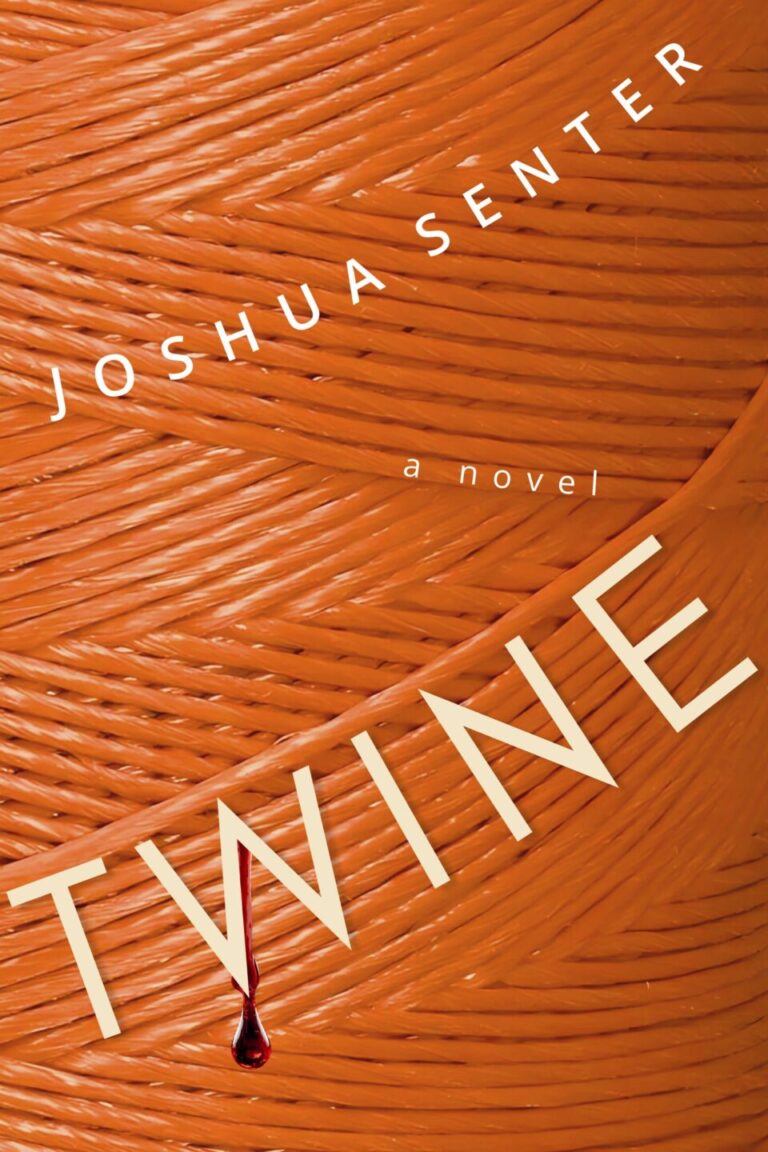

One year after smalltown newspaper owner Farnas last saw him, his ex-boyfriend Levi is found murdered. Farnas, who had an intense relationship with Levi, is an immediate suspect. While his associate editor Mallory investigates the crime for the newspaper, Farnas escapes into his memories of Levi. At the same time, young mom Evelyn wrestles with grief and abuse in secret.
Author Joshua Senter doesn’t hesitate to dive into characters’ psyches, beginning by probing Farnas’s backstory as a gay man who left his Missouri hometown to pursue journalism (only to return to care for his aging parents). While TWINE's murder-mystery plot takes place over just a few days, character profiles span decades. Some chapters contain superfluous histories of characters who participate minimally in the story, which slows the book’s pace. Simultaneously, the sheriff interviews Farnas off the page, so readers miss potentially pertinent information. It takes until the end of the book for Evelyn’s chapters to find a connection to the main plot, which makes her introspections feel extraneous until then. Action picks up toward the end to thrilling effect, though. The scene in which the killer is revealed is as bone-chilling as it would have been if they were caught with Levi’s body itself.
Pivotal scenes hinge on poignant wisdom that characters seem to realize just prior to making big decisions. Some choices have well-interwoven lead-ups, as when Mallory expresses her pent-up feelings to her coworker. Others introduce revelatory backstory immediately prior to a dramatic change in behavior, like what happens with Evelyn. The novel may have been better without her twist, as it shatters her otherwise empathetic portrayal and is not treated with enough scrutiny to match its gravity.
TWINE’s characters are complex and flawed, as easy to despise as they are to sympathize with. The town is fraught with jealousy, abusive behavior, and prejudice. Not even the calm, intelligent Mallory is off the hook; her naiveté and internalized racism preclude her judgment. The book's portrayal of Mallory as a Black woman includes some unlikely characterizations, and its portrayal of an overweight woman in a particular scene is likewise indecorous. Meanwhile, characters uniting to work through devastation make for high-intensity scenes that are often touching. In Farnas’s immersive memories, his relationship with Levi is a beautiful mess punctuated by “throwing punches" and "saying shit they don’t mean”—even as they're “bound to one another in the everlasting eyes of the grand totality.”
Through Senter’s piercing, sensory prose, the Ozarks town becomes a pastoral utopia under a “sky where the last wisps of sun-kissed clouds were being gobbled up by the night, which was coming on dark as spilled ink.” Analogies are uniquely vivid, as when Farnas “pulled a thick tongue of cash from an ATM.” These passages of lush, unflinching prose strike at the center of characters’ yearnings and fears.
In spite of the book’s slow start and some troubling characterizations, TWINE paints a raw, startling portrait of a small town with big problems.
Joshua Senter’s raw, startling TWINE paints a vivid portrait of a rural town full of complex characters, even as superfluous passages dictating backstory bog down the plot.
~ Aimée Jodoin for IndieReader