
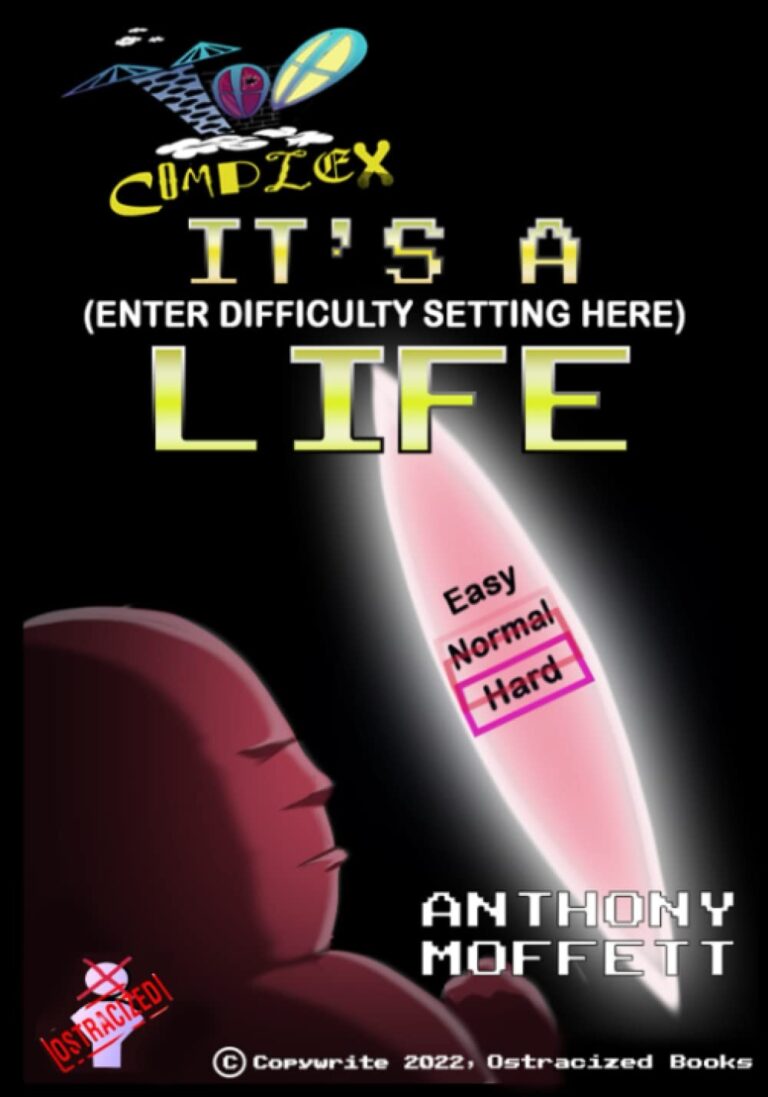

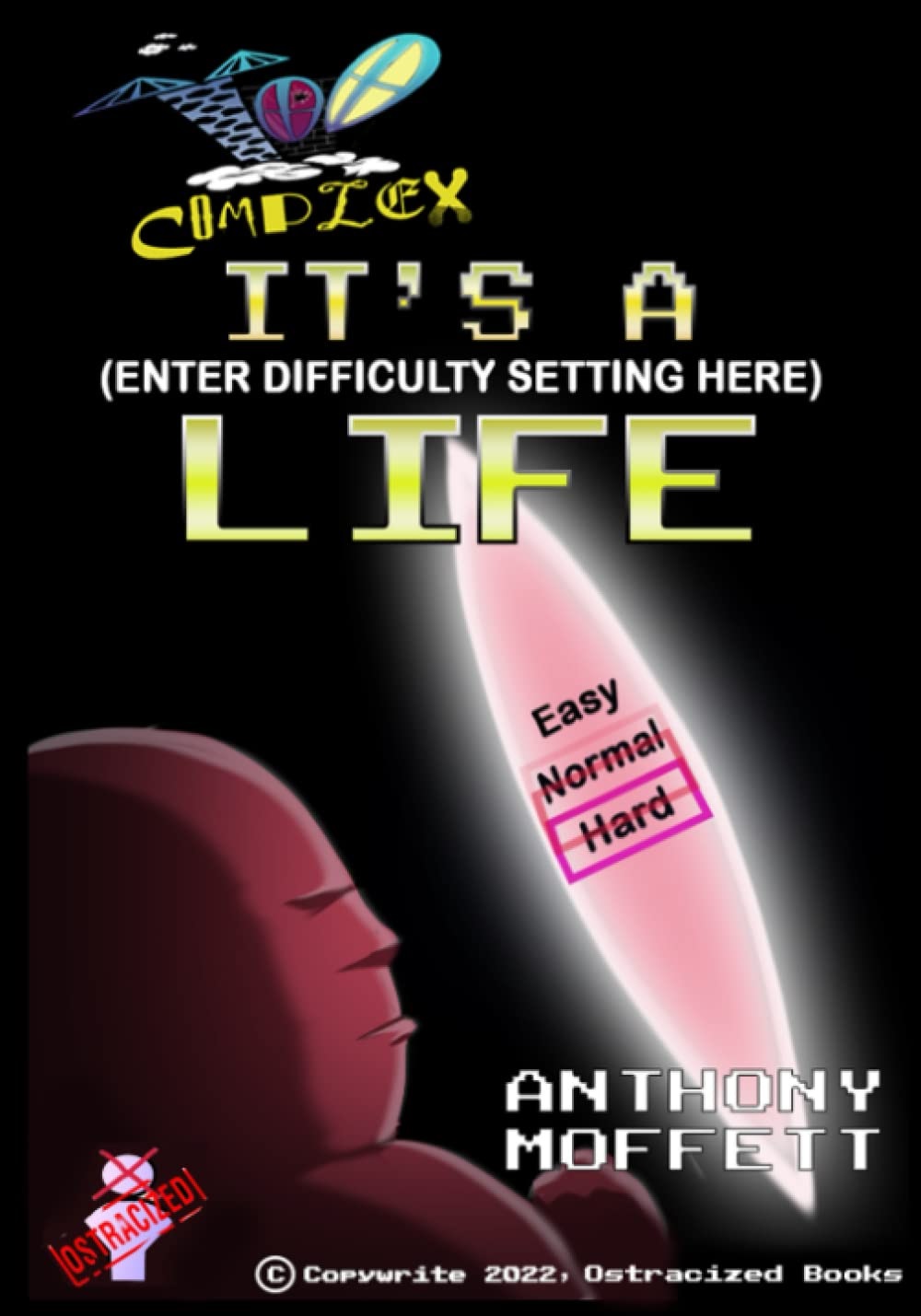
In TOO COMPLEX: It’s a (Enter Difficulty Setting Here) Life, Anthony Moffett highlights the adverse effects of online gaming addiction in a whimsical, dynamic, and fantastical narrative. Avid gamer Cody Redbond finds himself addicted to the online game Fantasy Estate. The Dopamine monster pushes Cody to achieve higher and higher ranks within the game—to the point that Cody loses track of both time and his life. The addiction transforms Cody’s life in a matter of weeks as he starts to neglect his pets, loses his job, and forgets to pay his rent and bills.
Cody’s landlord Corey and his lawyer Mavirna arrive at his apartment with an eviction notice and find themselves trapped inside a video game-like maze with otherworldly creatures, pests the size of rabbits, and no sign of Cody. Corey and Mavirna must fight the monstrous creatures, overcome obstacles, face challenges, and navigate the labyrinth that is Cody’s neglected apartment in order to rescue him. The book is constructed like a video game; our characters must overcome one hurdle after another, solve puzzles, and fight fungus monsters and rat-sized roaches to reach their destination. Cody’s apartment serves as a middle ground between the fantastical and the real, making it a perfect parallel for a video game-like universe.
Following Corey and Mavirna’s journey feels exactly like playing a video game. The descriptions of the creatures are vivid, which makes it easier for the reader to visualize them. For example, “Itch-Toe is a tall humanoid made of light brown fungus with a vertically stretched out head, and he has no nose.” The writing is very descriptive in some places; Mavirna tripping out after having questionable substances thrown at her by the humanoid fungi cousins is very well-written. The unpolished and animated illustrations reflect the light-hearted, fun narrative. Moffett even leans into metafiction in one place, where a character directly addresses the author: “‘Hey, Anthony! How long has it really been?’ ‘Read the first sentence on the previous page.’ I wrote answering Mavirna.” If executed well, such fractures in the narrative can create the illusion of letting the audience into the author’s mind. However, here it is done rather abruptly and might confuse some readers.
The book suffers from around a dozen glaring grammatical and punctuation mistakes. The sentences randomly shift between past and present. These mistakes, though only typographical, could impact the readability. The prose could also benefit from another round of editing and polishing. Meanwhile, the world-building remains on the weaker side, which could be helped by including more illustrations of Cody’s apartment; that would make it easier for the readers to place the characters in the given settings.
Flaws aside, however, TOO COMPLEX still winds up feeling like a well-paced and compelling story.
Despite TOO COMPLEX: It’s a (Enter Difficulty Setting Here) Life's typographical mistakes, Anthony Moffett has created an action-rich, compact, and captivating narrative.
~ Maria Zafar for IndieReader