
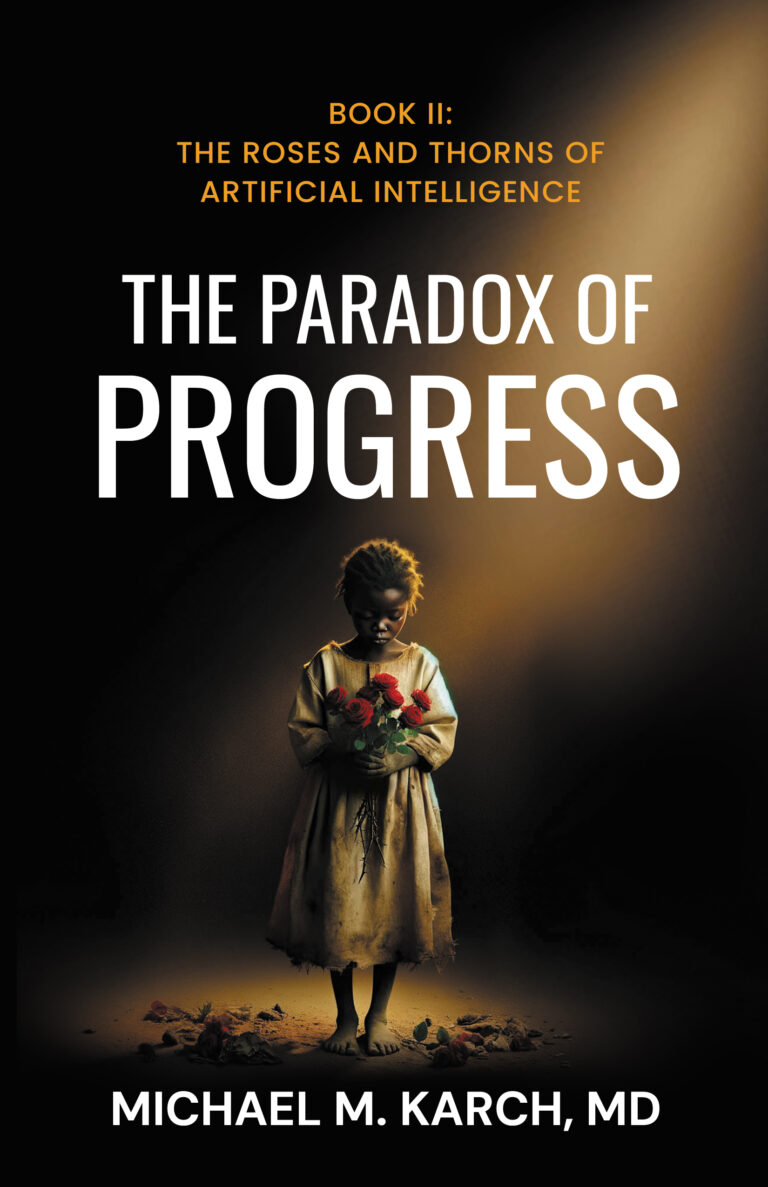

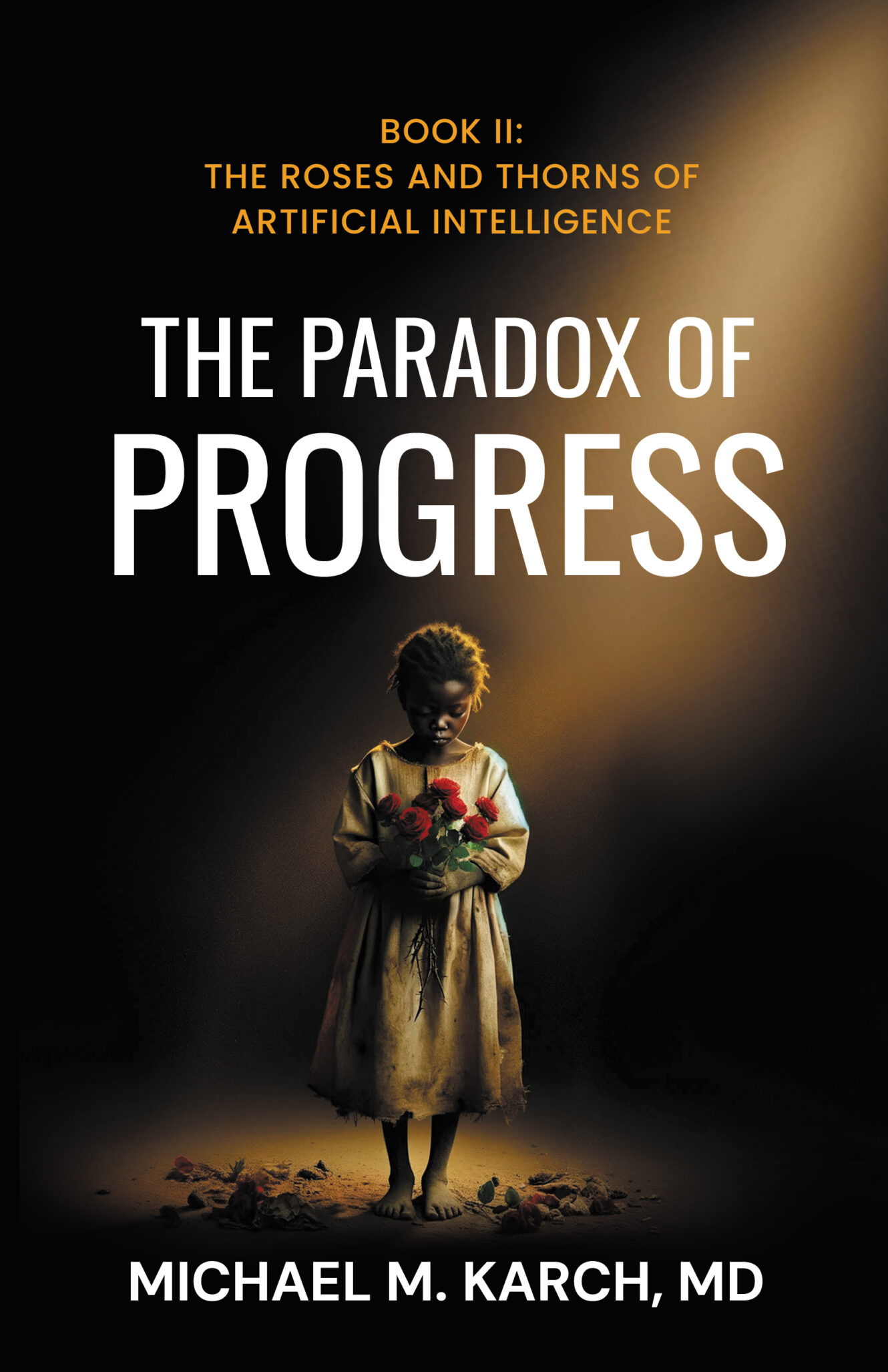
Michael M. Karch’s analytical nonfiction work THE PARADOX of PROGRESS: Book 2: The Roses and Thorns of Artificial Intelligence examines the pitfalls, perils, and promise of AI.
Karch looks at the evolution of artificial intelligence and the revolution some say it will bring, weighing whether the risk is worth it. With regards to the potential impact and fears, including job displacement, deep fakes, and data bias, the author explores both what AI may be capable of and the importance of harnessing it in a socially responsible way. Karch makes a strong case for using guardrails to ensure that AI delivers on its promise.
Structured as an in-depth analysis, THE PARADOX OF PROGRESS: Book Two begins by surveying how progress has brought benefits and extracted costs throughout history, setting forth the groundwork by explaining how artificial intelligence is a reflection of the people who make it—with all their flaws and imperfections. Flowing smoothly from idea to idea, the book goes on to dissect various facets of artificial intelligence, such as autonomous vehicles, rechargeable batteries, the environment, inequality, deepfakes, and the future of work. It’s thorough, if not entirely comprehensive, in its examination of these issues.
The book is also well-sourced. Each chapter is followed by a long list of footnotes with hyperlinks to credible media and academic sources. The amount of research is readily apparent, the writing has a textbook quality couched in authoritative terms, and the prose has a scholarly veneer without feeling dully academic.
However, THE PARADOX of PROGRESS: Book Two is prone to broad generalizations that are sometimes not supported with examples, such as war driving innovations. Claims about AI being able to “close learning gaps, empower women and girls, and provide personalized learning experiences” fail to furnish any specifics and come across as buying into hype without much critical scrutiny. The book also makes dubious comparisons, such as comparing a race toward autonomous systems to war as a driver of innovations.
It builds to perhaps a too-lofty comparison of AI to Galileo and other visionary thinkers who were persecuted for being ahead of their time. It’s overkill when Karch suggests society is at a tipping point, and the book almost comes across as a cop-out when suggesting AI is just a tool that will be shaped by those who wield it and how they use it.
Still, the work effectively captures the paradox of how artificial intelligence “is both revered for its potential and feared for its unknown.” Though it skews to a clear position, THE PARADOX OF PROGRESS: Book Two comes across as mostly objective and balanced in its analysis—aiding a greater understanding of its subject without much of an overt agenda.
Michael M. Karch’s cerebral THE PARADOX of PROGRESS: Book 2: The Roses and Thorns of Artificial Intelligence takes a balanced and analytical look at the promise of AI.
~ Joseph S. Pete for IndieReader