
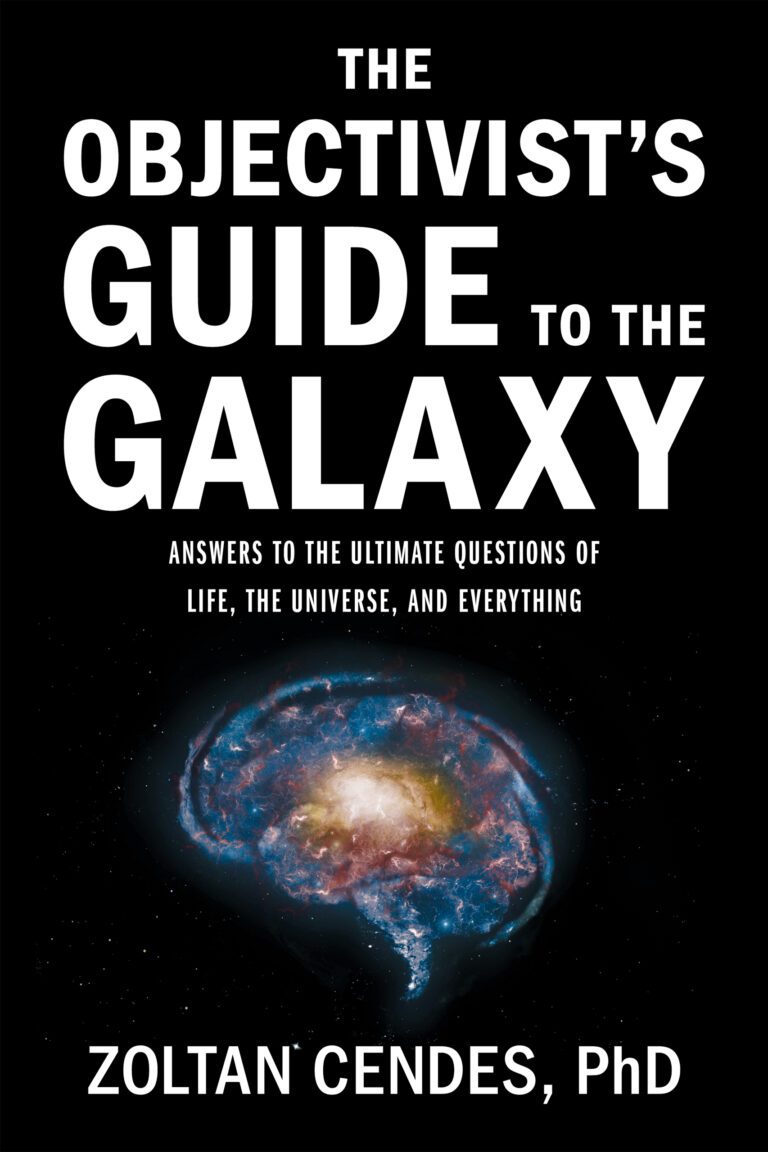

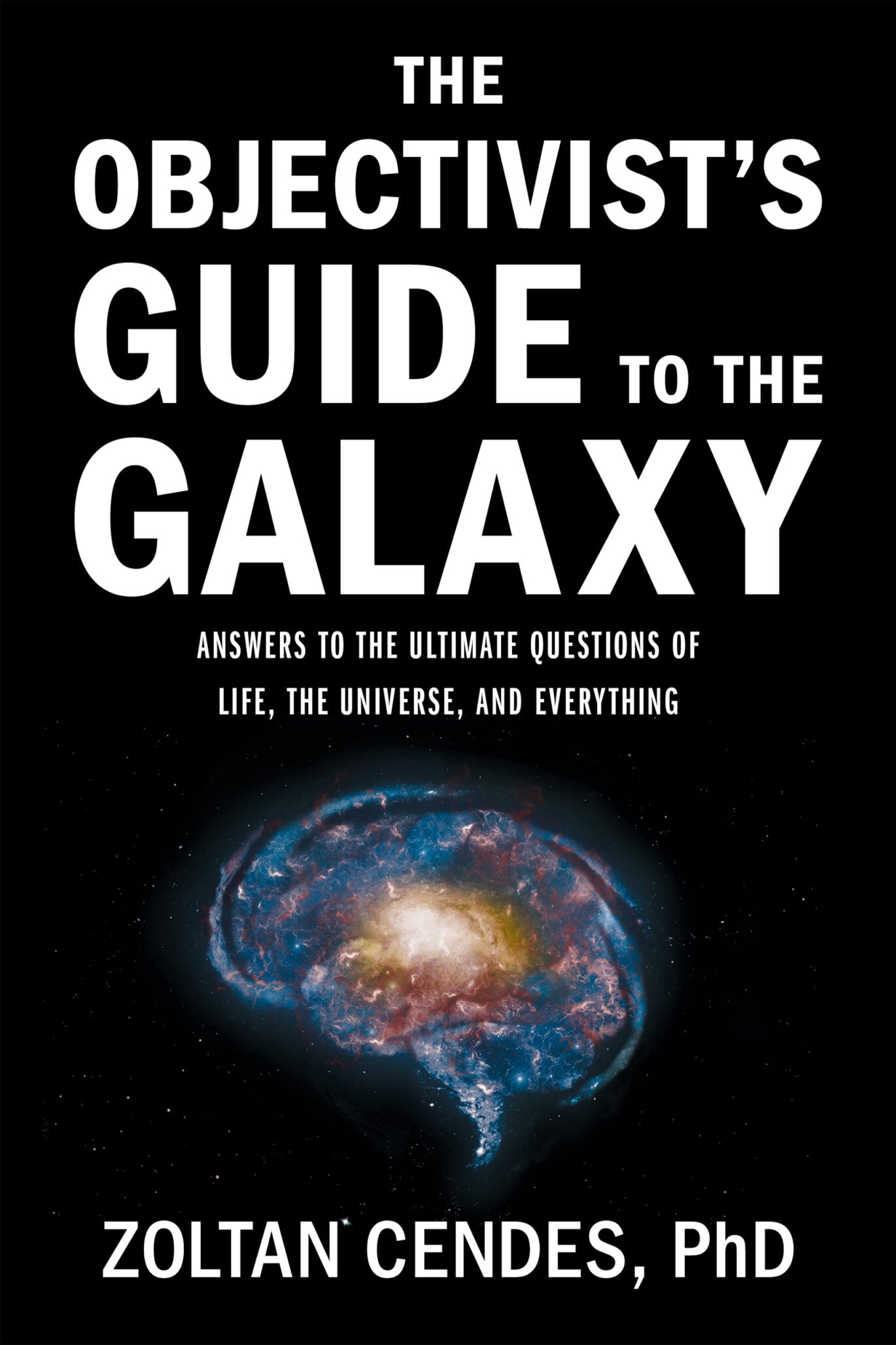
Zoltan Cendes’s THE OBJECTIVIST’S GUIDE TO THE GALAXY begins where Douglas Adams’s cosmic joke ends, offering serious, structured answers to the “Ultimate Questions of Life, the Universe, and Everything.” Leaning heavily on objectivist philosophy and modern science, the book walks readers through 42 foundational questions that range from “Why is there something rather than nothing?” to “What is the purpose of art?” Each question is framed and answered methodically, offering readers a philosophical roadmap of sorts grounded in reason and clarity.
Cendes wastes no time in establishing his stance: “existence exists,” and, from this statement, all else must follow. Echoing Ayn Rand’s metaphysical premises, he rejects mysticism and idealism outright, declaring that “thoughts cannot be true if they do not correspond to things that exist in reality.” Using that framework, he builds a case for consciousness not as a mystical faculty, but as a biological adaptation with survival value. “Consciousness is volitional control over awareness,” he explains, distinguishing animals from automatons like Boston Dynamics’s Atlas robot.
The book is arguably at its most compelling when Cendes applies objectivist logic to evergreen philosophical riddles like the mind-body problem, the nature of mathematics, or whether language can be meaningful without conceptual abstraction. Drawing on diverse sources like Kant, Aristotle, and modern robotics, Cendes adds valuable context to each argument with scientific examples. This is undeniably heady territory, but Cendes does his best to keep things as accessible as possible.
THE OBJECTIVIST’S GUIDE TO THE GALAXY is also incredibly well-organized, with each chapter delivering a nice, tidy synthesis of philosophy, cognitive science, and epistemology. Citations abound, reinforcing the book’s commitment to rigorous, source-driven arguments. For readers craving answers, not just questions, this is a pretty comprehensive intellectual journey.
Still, certain chapters (those dedicated to abstract mathematics come to mind) may pose a challenge for those without a prior passing familiarity with philosophy or science. This is, fundamentally, a college-level text. Cendes’s personal perspective is ever-present, and some readers may find the tone slightly dogmatic. The author rarely hedges or entertains alternative interpretations, but that (of course) is part of the objectivist ethos: reason reigns, and truth is not a matter of opinion. That all said, his confidence usually results in a clear, concise, and thought-provoking takeaway.
Part philosophical inquiry, part scientific primer, Zoltan Cendes’s THE OBJECTIVIST’S GUIDE TO THE GALAXY: Answers to the Ultimate Questions of Life, the Universe, and Everything offers a bold, rationalist, and occasionally challenging roadmap through some of life’s biggest questions.
~James Weiskittel for IndieReader