
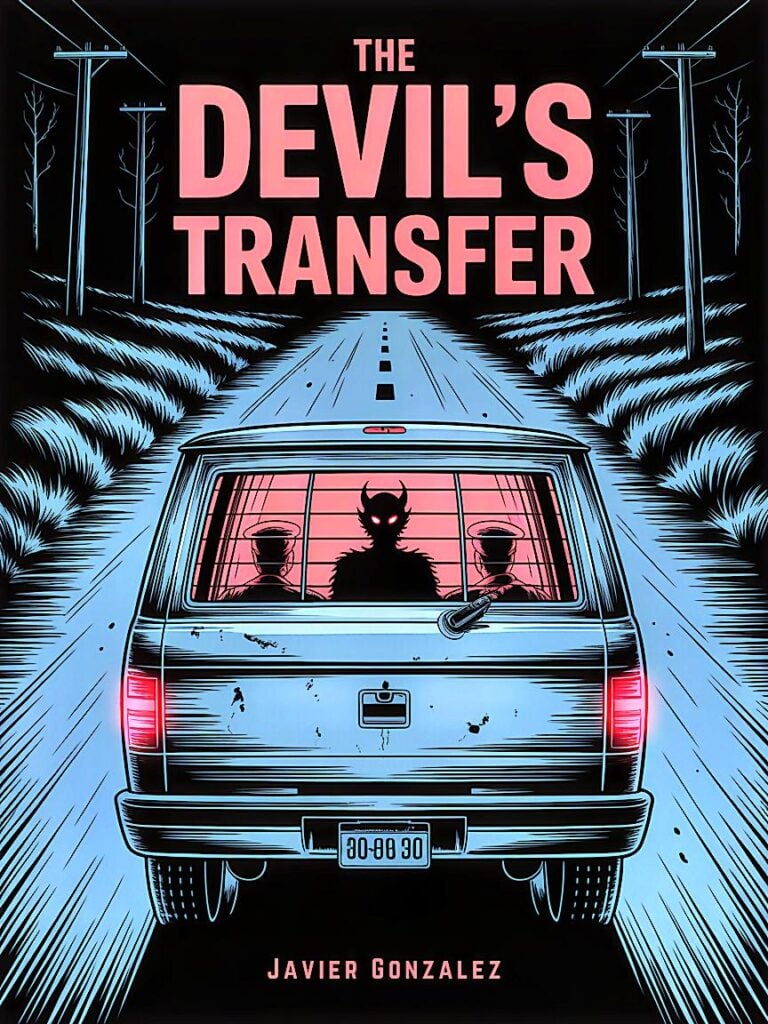


Transferring a volatile inmate mutates into a survival-driven detour when the moving van breaks down on a mostly deserted road in J. Gonzalez’s ambitious thriller, THE DEVIL’S TRANSFER.
The book begins with a chaotic prison scene, with riot shields clashing and smoke curling up toward the ceiling as Carter stirs up tension by barricading himself in his cell. An aggressive introduction, but it works; it’s clear almost immediately that whatever is about to happen will be violent and messy. So, while the transfer initially feels very normal and even routine, a sense of impending doom lingers. From the moment the van breaks down, this only worsens. Subtle signs of wrongness emerge: a gas station wired with surveillance monitors and a mechanic who lingers too long. The town that welcomes the officers initially seems warm, at least until Mark (one of the officers) overhears the mayor casually talking with the jailer about sacrifices and Lucifer’s “blessings.”
At the beginning, Carter appears to be a simply troublesome character. However, when reinforcement arrives later on in the book and he urges restraint, it becomes clear that he isn’t bloodthirsty; he’s only violent when he feels it’s necessary. He is also portrayed as observant and highly alert, taking charge of the situation when they risk being caught while trying to escape the evil plans of the townspeople. Gonzalez infuses danger easily into a seemingly routine operation, shifting from normalcy without being jarring.
The way characters think and feel is shown through action rather than internal processing. This keeps things moving briskly but leaves some unresolved emotional tension, especially when major deaths occur and there is little or no room for reflection or acknowledgement. While this keeps things engaging, there is also a sense of abruptness in the way some events conclude, such as in the aftermath of the arrival of reinforcements. Gradually the built tension shifts from unsettling to performative due to overused symbols, including a painted inverted cross and a cult gathering of a chanting crowd outside the mayor’s office. When Carter’s manner of speaking spreads to other characters, individual voices are flattened and become indistinct and performative rather than organic.
Nevertheless, the novel’s action scenes keep it engaging, and the banter between the officers and Carter adds a lighthearted touch.
J. Gonzalez shows the need for quick thinking and teamwork in his morally ambiguous thriller THE DEVIL’S TRANSFER.
~ Gabriella Harrison for IndieReader