
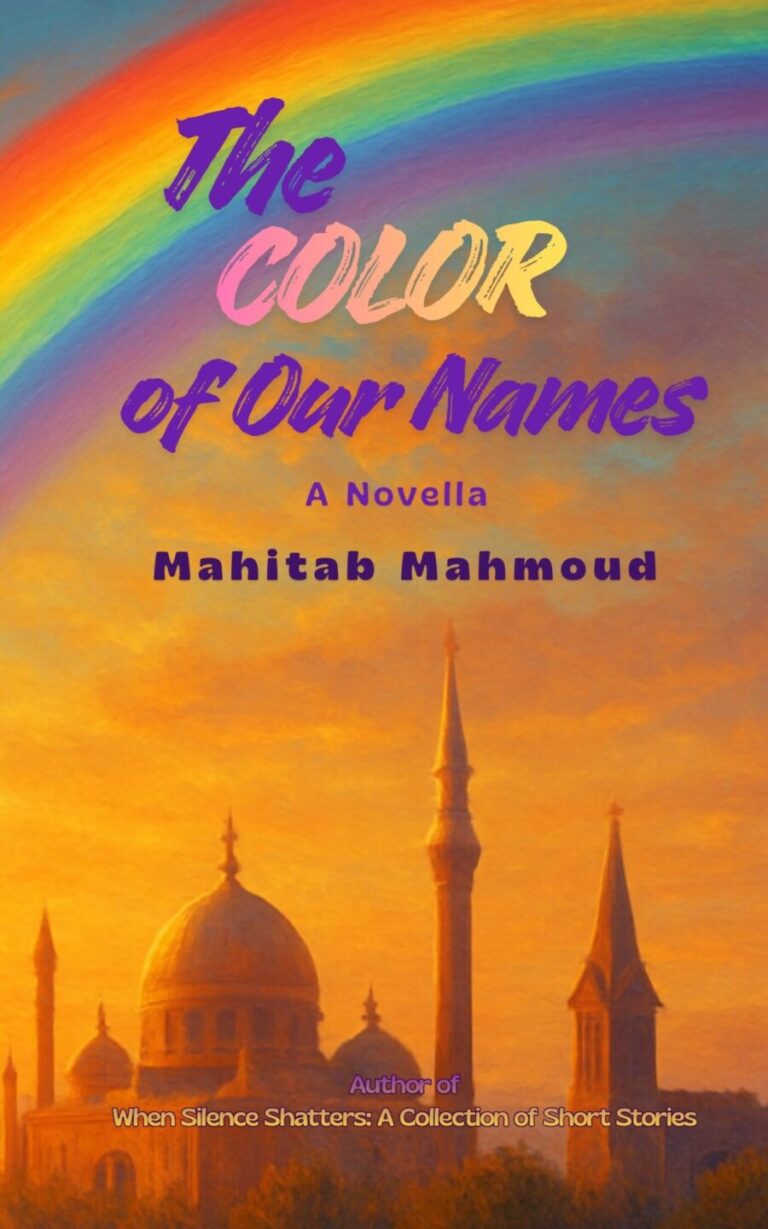

Mahitab Mahmoud’s THE COLOR OF OUR NAMES is a compact novella with an expansive emotional range, moving between Alexandria, Cairo, and New York to dramatize what it means to live “with two names in one heart.” The book is structured as a braided sequence of close third-person vignettes: Fareed, Nelly, Christina, and Nouran—each carrying a different kind of double-life, each negotiating the danger of being seen. That mosaic design is the novella’s greatest strength. Rather than leaning on a single protagonist’s arc, it builds cumulative pressure through parallels: family surveillance, community judgment, workplace microaggressions, and the constant calculus of concealment.
The symmetry of Mahmoud's structure is her strong suit. Without becoming repetitive, the characters' experiences reflect one another, and the changing points of view provide a broader perspective on monitoring from multiple angles: familial, communal, and institutional. Even when it leans into interiority, the writing never loses its grip on the reader or the story's trajectory. Rooms, workspaces, and quiet conversations convey more meaning than open conflict, which helps to ground the text in domestic realities. There isn't much explosive tension in the book. As time passes, it calms down. It remains.
The use of Arabic phrases and culturally specific references feels integrated rather than performative, grounding the narrative in lived context. Dialogue is measured and purposeful, particularly in scenes where affection and threat coexist. Mahmoud understands that tension often resides in what is implied rather than declared. However, at times the novella relies largely on contemplative internal passages to underline emotional stakes that have previously been established through scene work. Certain journal-like segments expand analogies or explore fears in ways that slightly disrupt narrative momentum. A more rigorous tightening of these portions might differentiate each voice's cadence. While the perspectives are thematically consistent, greater tonal rhythm difference could enhance character distinction.
The transition from individual narratives to a collective one about an area of support happens in a restrained manner. This approach avoids melodrama, instead depicting the relationship of solidarity as weak and temporary rather than triumphant. The methodical approach that Mahmoud takes to depict this type of support also gives the reader confidence in the decision-making process for the final scenes of the book. In many ways, THE COLOR OF OUR NAMES demonstrates success through the use of control. Mahmoud’s ability to establish a consistent emotional tone creates an atmosphere of purposeful structure, allowing readers to see the author's critique of social constraints being integrated into the characters rather than being overtly stated. Instead of attempting to create a sense of catharsis, the novella documents the act of enduring.
THE COLOR OF OUR NAMES is a culturally grounded and meticulously structured novella by Mahitab Mahmoud, providing a disciplined examination of identity in the face of adversity. The overall impact is strong and memorable.
~ Felix Metiagi for IndieReader