
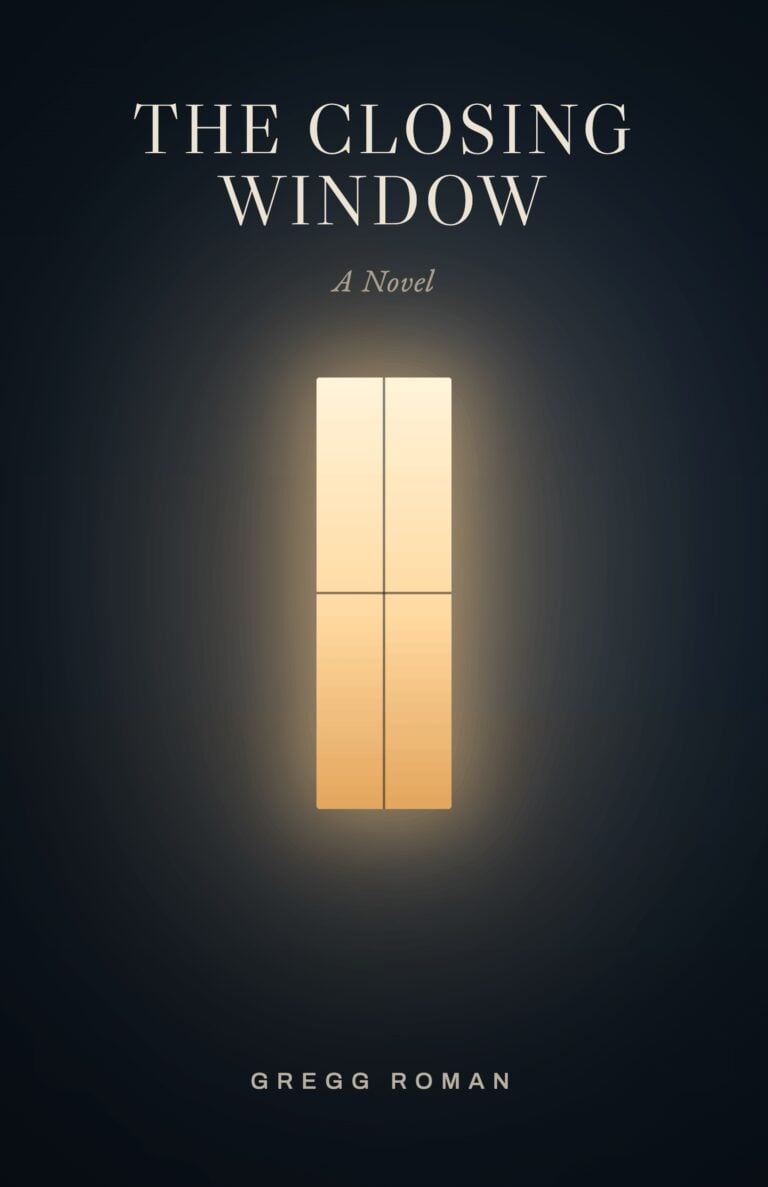

A Washington think tank that has spent sixteen years documenting the Iranian regime's machinery of repression and watching its meticulous reports gather dust decides to stop describing the machine and start acting against it. When a thirty-nine-day war ends in a sixty-day framework that promises peace, they discover that the deal isn't ending the killing; it's giving the regime time to walk backward through every door the think tank helped open.
Gregg Roman's THE CLOSING WINDOW is a geopolitical thriller about the cost of being right, and the way certainty becomes a kind of blindness. Roman gives readers three interlocking protagonists, each trapped by their own version of the same problem. There’s Jonah Keller, the institute's director, who can make any catastrophe sound manageable. Which means he can talk himself and others past the weight of their decisions. Ambassador Paul Renner is his exact opposite: a decent man who genuinely wants to stop the killing. However, his decency becomes his blindness; he cannot imagine bad faith because he himself is good. Between them stands Mina Ardalan, the analyst who sees the trap and can't prevent Keller from walking into it. "I keep hoping you can tell the difference," she tells him. "I keep being wrong about it."
Roman's prose is declarative and aphoristic, and it mostly works with such lines as "The dark isn't hiding the weapon. The dark is the weapon" and "A man with no exit makes his peace, eventually, with the room he cannot leave." But this relentless weightiness can become a bit mannered: more of a tic than a technique.
Colonel Nazari, the air-defense officer whose hand is forced by an order to suppress his own people, has a fully realized inner life. His running arithmetic is genuinely affecting. It involves always returning to his daughters and the protective list, including even the cost of disobedience. Even though Roman’s Iranian characters are slightly schematic, they’re also the most moving aspect of the book. Yalda, the nurse who counts the dead in a shoe so the regime cannot erase them, is almost saintly in her resistance. Roman presents a genuinely original and chilling critique of humanitarian intervention through Keller, who becomes so involved in the dispute that he basically creates his own faction against the government. The attempt to save people from a distance makes them targets.
The ending feels quite inconclusive, though, which is rather disappointing after everything. Some parts feel a bit too neat, while others feel like a return to square one. Despite this, THE CLOSING WINDOW asks a genuinely difficult question: what do you owe the people you tried to save when trying to save them made them targets? Roman draws attention to the difference between being right and being effective, and the tragedy of confusing the two.
What does it cost to be right when being right saves no one? Gregg Roman's morally charged thriller, THE CLOSING WINDOW, asks that question and refuses to provide a comfortable answer.
~Gabriella Harrison for IndieReader