
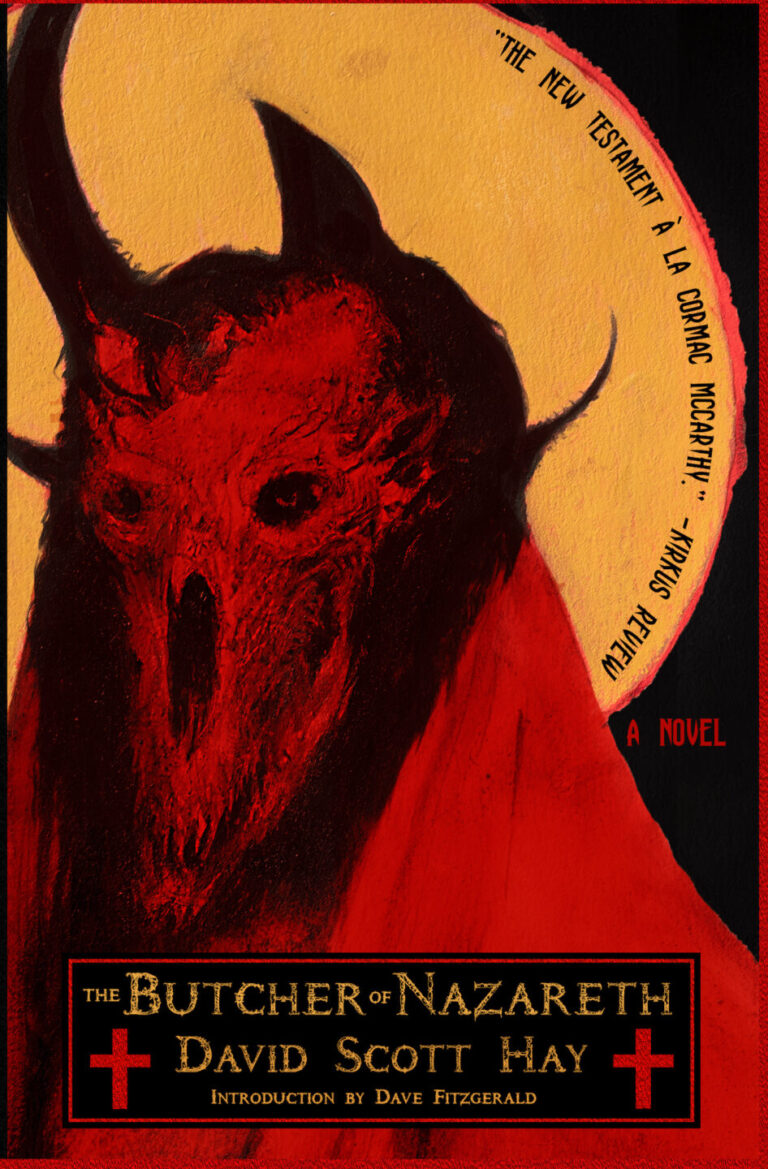

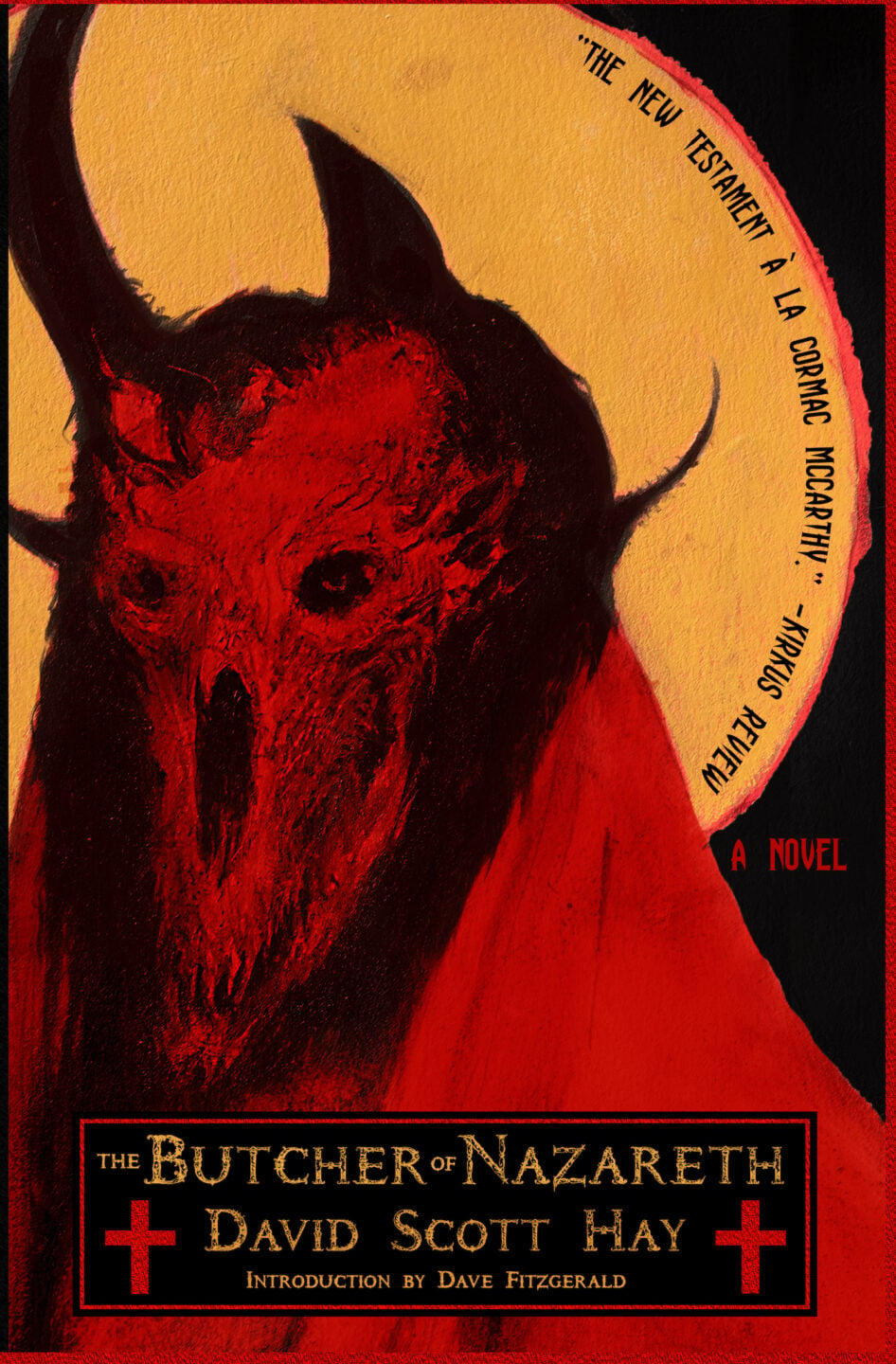
The Butcher was once, as his title suggests, a kosher butcher by trade. But the title has stuck, since he was forced by King Herod to assist in the murder of all baby boys around Bethlehem—for fear of a new-born king who will overthrow him. Now an old man, the Butcher is still wracked with guilt. There remains only one opportunity for redemption: the murder of the one baby boy who escaped the massacre.
As should be no surprise from the title, David Scott Hay’s THE BUTCHER OF NAZARETH revels in the body, adding plenty of meat to the thin narrative bones of the pre-gospel period of Jesus’ life. Jesus is, messianically, both sheep and shepherd; here, rambunctious goats—with their cloven hooves and monstrous horns—can kill by accident as well as by design. Herod’s massacre of the innocents is not just a story; it is a demographic fact for a community subsequently devoid of marriageable men. Acts that appear frequently in saints’ lives and martyrology are vividly imagined, stoning in particular. It’s obsessive, and played for horror here—but it simultaneously adds real, necessary depth to a reader’s understanding of the gospel narratives. The Catholic Church teaches that Jesus was fully human, as well as fully divine; and the fully human means eating and defecation, sex and death.
These meditations on corporeality shimmer in the text’s calm, visceral prose. THE BUTCHER OF NAZARETH is clearly enjoying itself in descriptions of “the waxy rivulets of frozen flesh” on burnt hands, or a wound which presents as “a giant mouth with ochre lips of fat.” At times, the Butcher’s professional reflections even allow some grim humor, as when he regards a particularly large man as “well marbled.” But the text is also full of sensual tactility. For every rusty sniff of blood or stinging pepper of desert dust, the Butcher tastes “date wine, extra figs, olive oil,” and more; waxy honeycombs drip all over the latter part of the text, and Jesus in particular is often spattered with droplets of food. These simple but constant reminders of his humanity effectively carry the thematic weight of the plot, in which birth and family intermingle with deterioration and decay.
Strongly imagined and relentlessly told, David Scott Hay’s THE BUTCHER OF NAZARETH stabs a dagger of horror into the murky years which preceded Jesus’ ministry.
~ Dan Accardi for IndieReader