
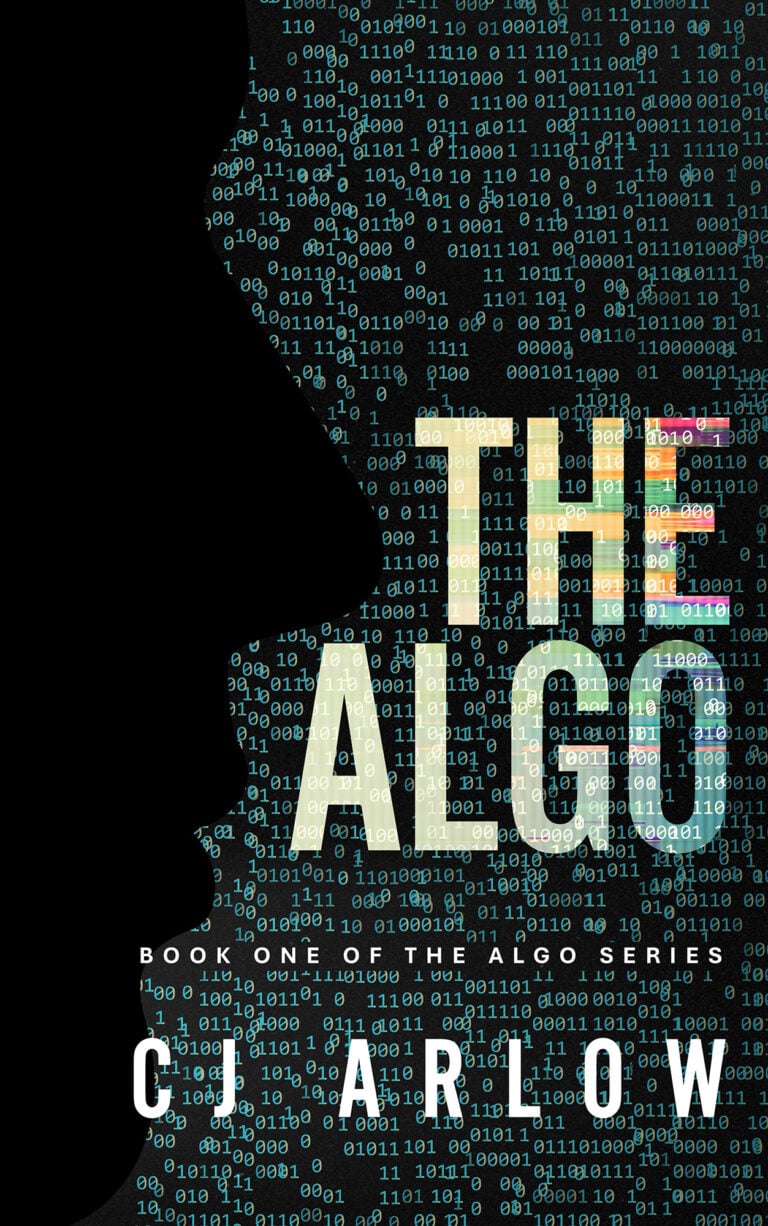

C.J. Arlow creates a highly optimized dystopia in THE ALGO: The Algo Series (Book 1). In Denver circa 2045, a highly successful data scientist named Jordan lives in the shadow of her dead mother, who helped create a world that strips its inhabitants of agency as they strive for maximum efficiency. Jordan begins to doubt the real motives of her mentor and the organization as she uncovers some hidden truths about her mother’s untimely death (as well as her own life).
THE ALGO is a book with a strong premise, drawing parallels between the main conflict presented in its highly optimized, thoroughly monitored dystopia and the current ethical concerns surrounding the algorithmic manipulation in the real-life tech landscape. The opening chapter is structured well, immediately introducing the timeline, location, protagonist’s conflict, and dystopian setting.
Some aspects of Jordan’s character are fairly developed. For example, her compulsive need for pattern recognition (even in the micro expressions of her colleagues) aligns with her training and skills as a data scientist: “His pupils dilated 2mm. Genuine interest, her training noted automatically.” On the other hand, she often reads too much into things: “His body still held the posture of someone who’d called on students mid-paragraph for decades.” Some paragraphs and phrases randomly repeat verbatim, such as "Jordan’s knees hit the floor” in the chapter "Something You Take," and “Thomas had trusted the system too" in "The Bottleneck." The language is consistently vague, too: “The room smelled like compliance" and “The cotton sat against her skin like permission" are just two examples.
The first half of the book is dense and shows little to no plot progression. It also fails to resolve some key plot points, such as Eleena Reese’s diary, which Jordan finds in Thomas’s apartment. Meanwhile, the book doesn't establish a few key aspects of the genre; the apocalypse is best described as “The Freeze." The world-building is subtle and inconsistent in places. For example, the food is described as ultra-processed and synthetic, but Jordan is surprised by the absence of cooking aromas in her missing colleague’s apartment. It is established in the early chapters that the environment, air quality, and temperature are controlled; however, no explanation is offered as to how the resistance can survive inside the tunnels without temperature optimization. The science is explained vaguely as “architecture” and “fail-safes.” The painting by Jordan, made with primary colors, is loosely depicted in a digitally created image. In fact, the book includes three digitally created pictures that do not add much context to the narrative.
Hopefully the subsequent entries in the series will flesh things out more, as this first installment falls short of its concept's potential.
C.J. Arlow’s THE ALGO: The Algo Series (Book 1) mirrors the ethical concerns surrounding our real-life tech landscape in a fictional dystopia. Unfortunately, structural weaknesses, plot inconsistencies, and vague world-building undermine an otherwise intriguing premise.
~ Maria Zafar for IndieReader