
Publisher:
Black Rose Writing
Publication Date:
05/09/0219
Copyright Date:
N/A
ISBN:
9781684332588
Binding:
Paperback
U.S. SRP:
15.95
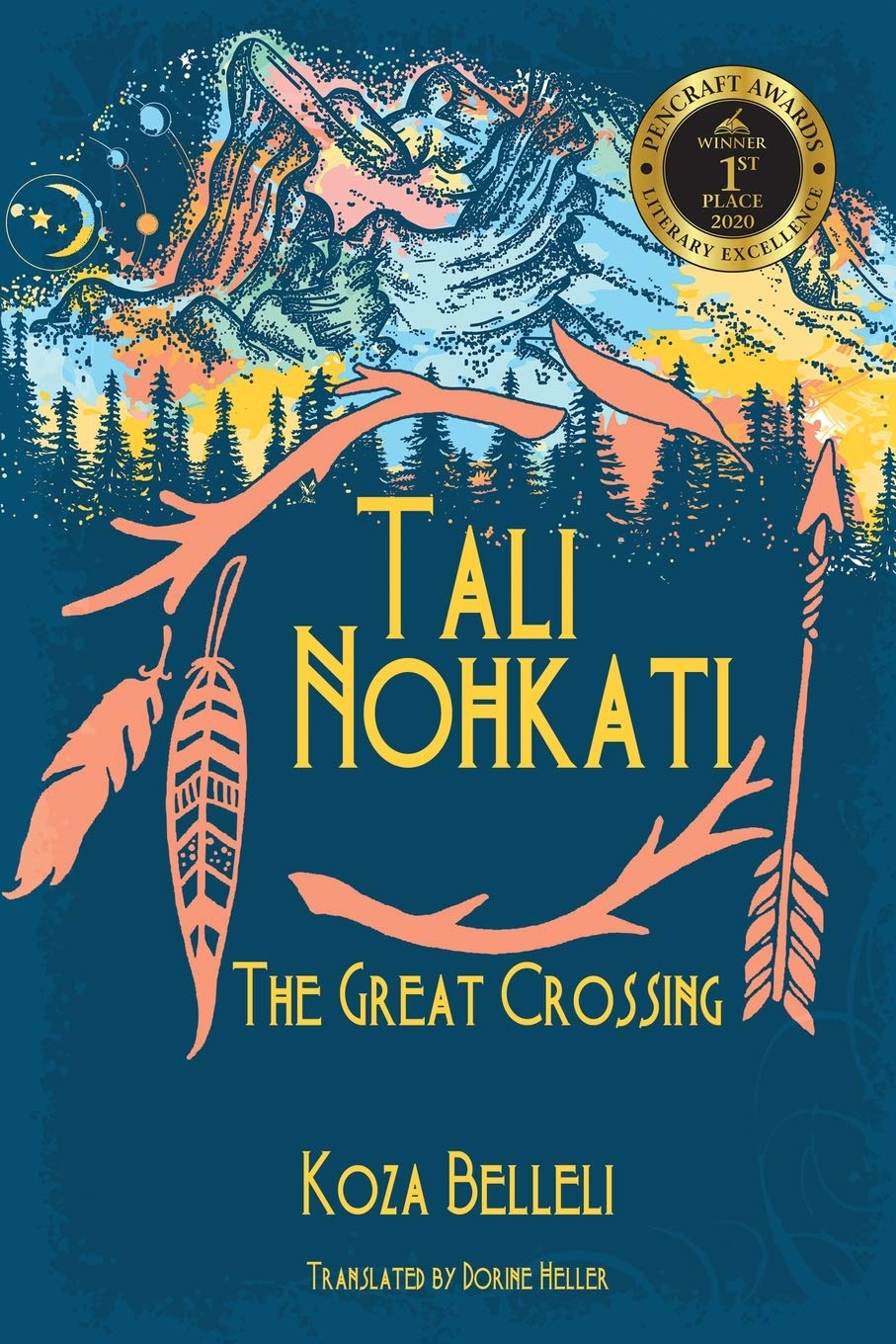
TALI NOHKATI: The Great Crossing
By Koza Belleli, Translated by Dorine Heller

- Posted by IR Staff
- |
Written by Koza Belleli and translated into English by Dorine Heller, TALI NOHKATI: THE GREAT CROSSING is a lyrical, fable-like novel that blends myth, spiritual allegory, and survival narrative into a deeply human story about growth, loss, and belonging. Structured as a series of episodic crossings through frozen wastelands, oceans, forests, and plains, the book follows a child named Tali Nohkati as he is shaped, taught, and tested by the natural world and the creatures who temporarily become his family.
From its opening pages, the prose announces its mythical ambition and tonal sincerity. The language often leans toward the poetic, as in the quiet, resonant line: “Life went on, peacefully. But, alas, it happened.” This simple turn of phrase sets the emotional pattern of the book: beauty, rupture, transformation. Each section introduces a new guide: Yupik the she-bear, Atii the whale, the wolves. Later comes Atsina the bison, who offers both protection and a hard lesson about survival, sacrifice, and impermanence.
One of the novel’s greatest strengths is its emotional clarity. The relationships between Tali and the animals are not sentimentalized, but they are deeply tender. When Yupik tells him, “In the White Country, loneliness is deadly. You would not survive it,” the book states one of its central truths plainly: survival is communal, and isolation is a form of death. Similarly, the sequence inside the whale Atii is both imaginative and strangely intimate, transforming danger into sanctuary and reinforcing the story’s theme that safety can come from unexpected places.
The prose is consistently vivid and painterly—especially in its descriptions of ice, sea, sky, and open land, which often feel more like scenes from a living mural than conventional narrative backdrops. Early in the journey, as Tali crosses the frozen regions, the landscape is rendered in luminous, almost hallucinatory detail: “Its translucent walls shimmered in the sun, draped in glints of blue…the turquoise and the indigo crashed together, creating iridescent patches…Frozen inside these ice cubes, they looked like captive pearls in a glass box.” The setting is not merely described but composed like a visual tableau, turning the natural world into an active, emotional presence (instead of a passive backdrop). The language embraces a deliberately lyrical, incantatory rhythm, allowing key emotional moments to echo and deepen through repetition. This stylistic richness feels purposeful and well-matched to the book’s mythical tone, echoing the traditions of oral storytelling and timeless legend.
With its poetic voice, emotionally resonant episodes, and mythical structure, Dorine Heller's translation of Koza Belleli’s TALI NOHKATI: The Great Crossing delivers a beautifully told coming-of-age journey that explores survival, sacrifice, and the meaning of belonging with grace and imagination.
Megan Parker for IndieReader
Publisher:
Black Rose Writing
Publication Date:
05/09/0219
Copyright Date:
N/A
ISBN:
9781684332588
Binding:
Paperback
U.S. SRP:
15.95
- Posted by IR Staff
- |
TALI NOHKATI: The Great Crossing by Koza Belleli , translated by Dorine Heller takes readers on an epic, story-rich adventure, combining Indigenous-referencing folklore, striking scenes from nature, and a constant thread of survival and the search for belonging. With its lyrical tone and allegorical sweep, the book will especially appeal to readers who enjoy spiritual adventure tales and oral-storytelling-style narratives.