
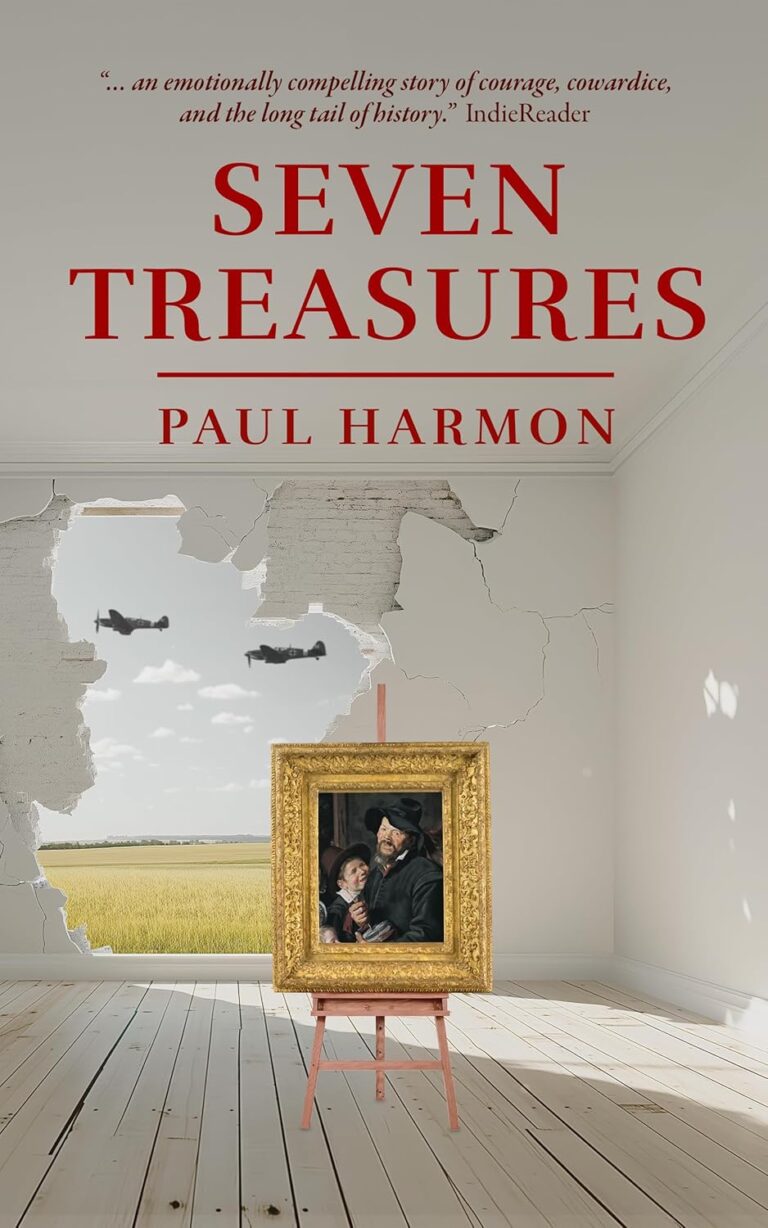

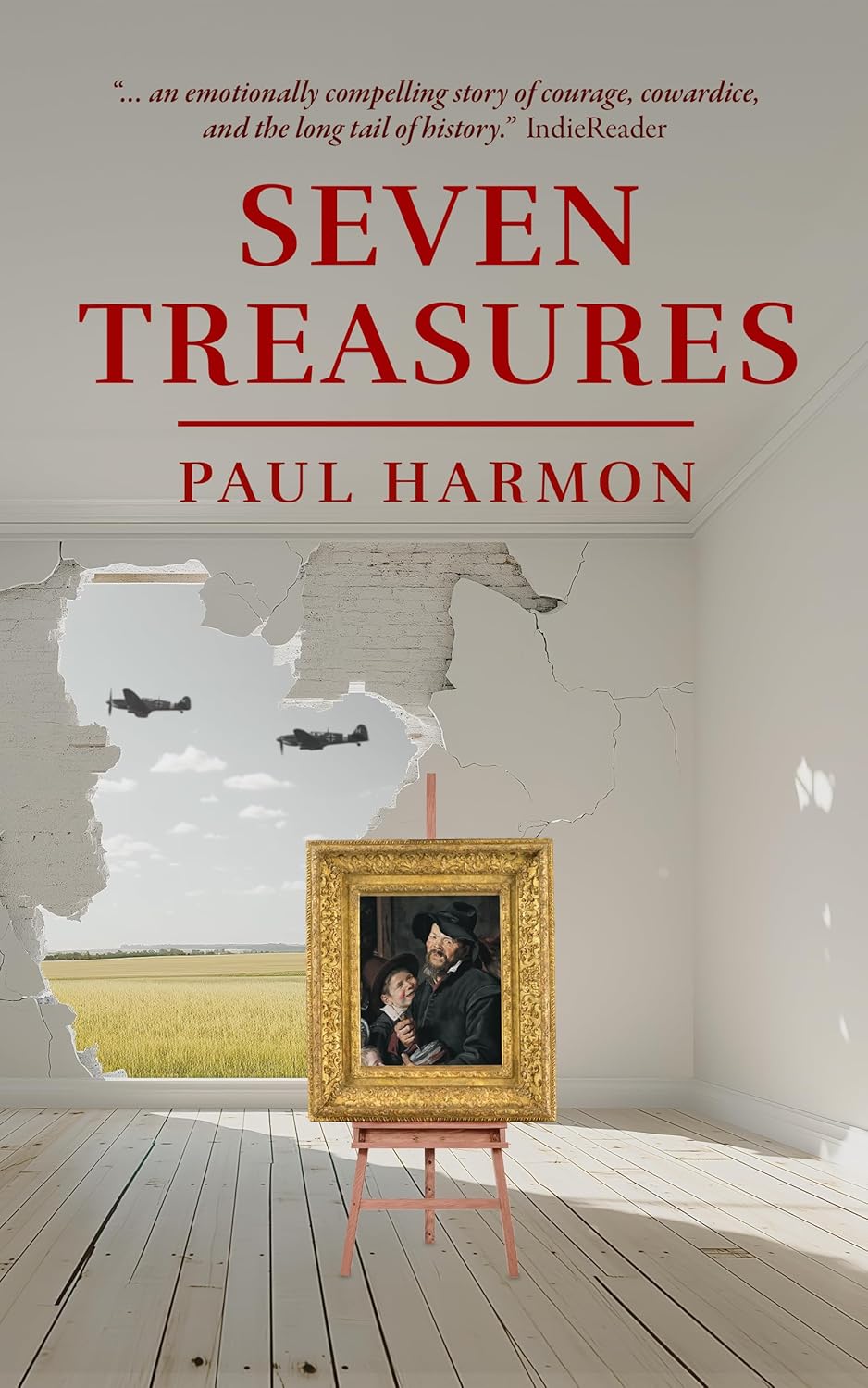
In 2018, Australian Mark Hytner is going through a bit of a midlife crisis. Newly divorced and finding his relationship with his grown children strained, he purchases a grand house in the French village of Villemont and moves there to try and refresh his creative side. He discovers several dusty works of art hidden in his attic and sells several at a local flea market. The village is cautiously welcoming, and Hytner’s efforts to find out the history behind his new home are met with a strange reluctance from the residents. He’s also unnerved by the Syrian immigrants, who can be found around town hoping for work but held at arm’s length by the mildly xenophobic French.
Decades earlier, the Liebermans (a Jewish family) flee Germany for Villemont and buy the same house. There they work hard to assimilate, changing their name to Lavasseur, and have some success being accepted—unlike their more orthodox peers. In Germany, an art student named Josef is drafted into an army unit looting priceless artworks from Jewish families for Reichsmarschall Hermann Göring. Josef is sickened by the work he is forced to do and the violence he witnesses against innocent people, but he fears for both his life and his mother’s back in Germany, and thus swallows his feelings.
In SEVEN TREASURES, Paul Harmon weaves these stories together with skill. The mystery of how the Lavasseur’s home was taken from them, how the seven priceless works find their way into its attic, and the village’s culpability and shame are all revealed in patient episodes that find the humanity at the center of one of history’s darkest times. The fate of each treasure is explored in short chapters that demonstrate the power of art, even when it is divorced from provenance and history. These tangents are interesting and consequential, even though most are separated from the main narrative—mirroring how art changes depending on who is interpreting it and how they view the world. Some see nothing but monetary value; others see nothing but beauty.
The novel suffers from some overly-familiar elements. Josef’s story in particular follows beats seen in many other World War II-set stories: the good, decent person swept up in the horrors of Nazi Germany and forced to compromise until they can no longer do so. It’s written well, and Josef is an engaging second protagonist, but his trajectory is likely predictable to anyone familiar with similar stories.
One frustrating aspect of the book involves the Syrian refugees haunting the village in the modern day. Clearly intended as a shadow of the experience Jewish refugees had there eighty years before, they’re never given enough attention and time to become meaningful. It’s a swing at the parallels that falls a bit flat. Here, too, overly-familiar elements detract as Mark befriends a young Syrian boy who barely registers as a character and ultimately serves more as a symbol than a person.
Those flaws aside, the central mystery pays off here, as Mark’s efforts to identify his painting begin to tug at the threads of the village’s long-held secrets. His burgeoning love affair with a younger woman is less interesting, but their amateur detective work tracking down old records and former owners is great fun. As the different narratives converge, a pleasantly fast-paced rhythm is established. In the end, the answers are satisfying in this flawed but highly enjoyable novel.
Paul Harmon writes with confidence and control in SEVEN TREASURES, moving smoothly between timelines and crafting an emotionally compelling story of courage, cowardice, and the long tail of history.
~Jeff Somers for IndieReader