
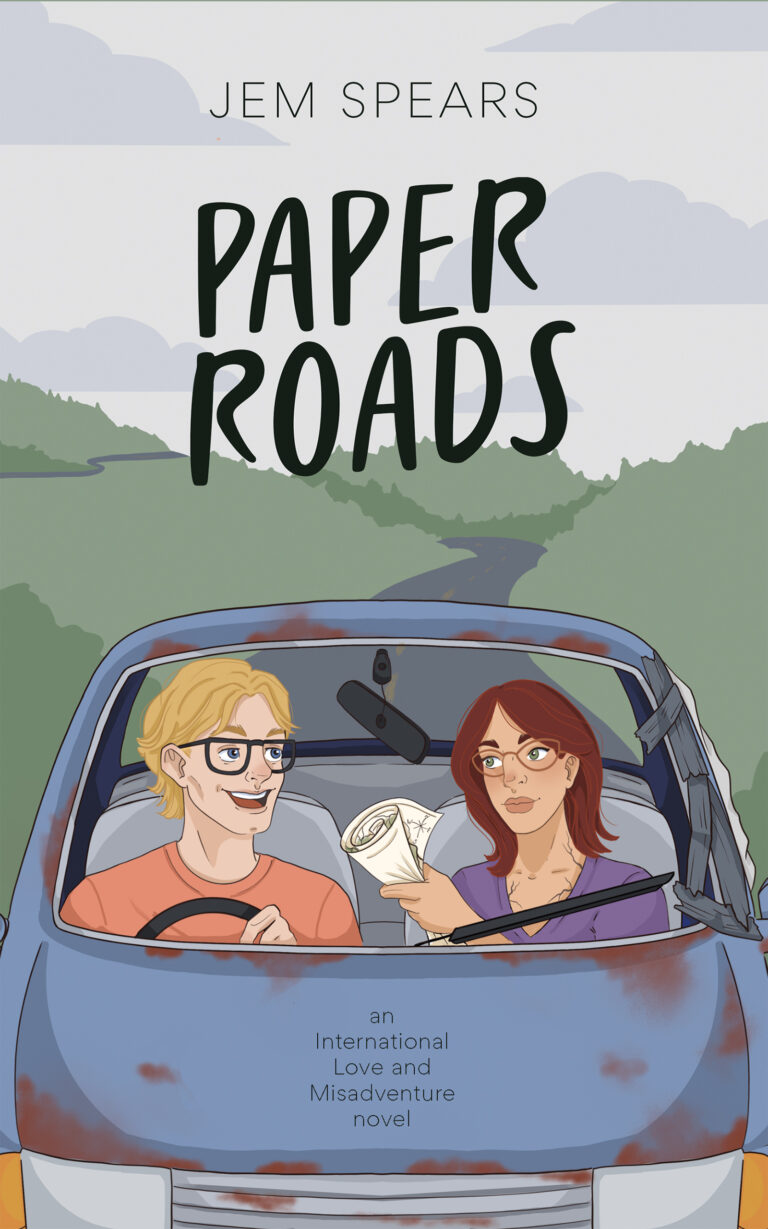

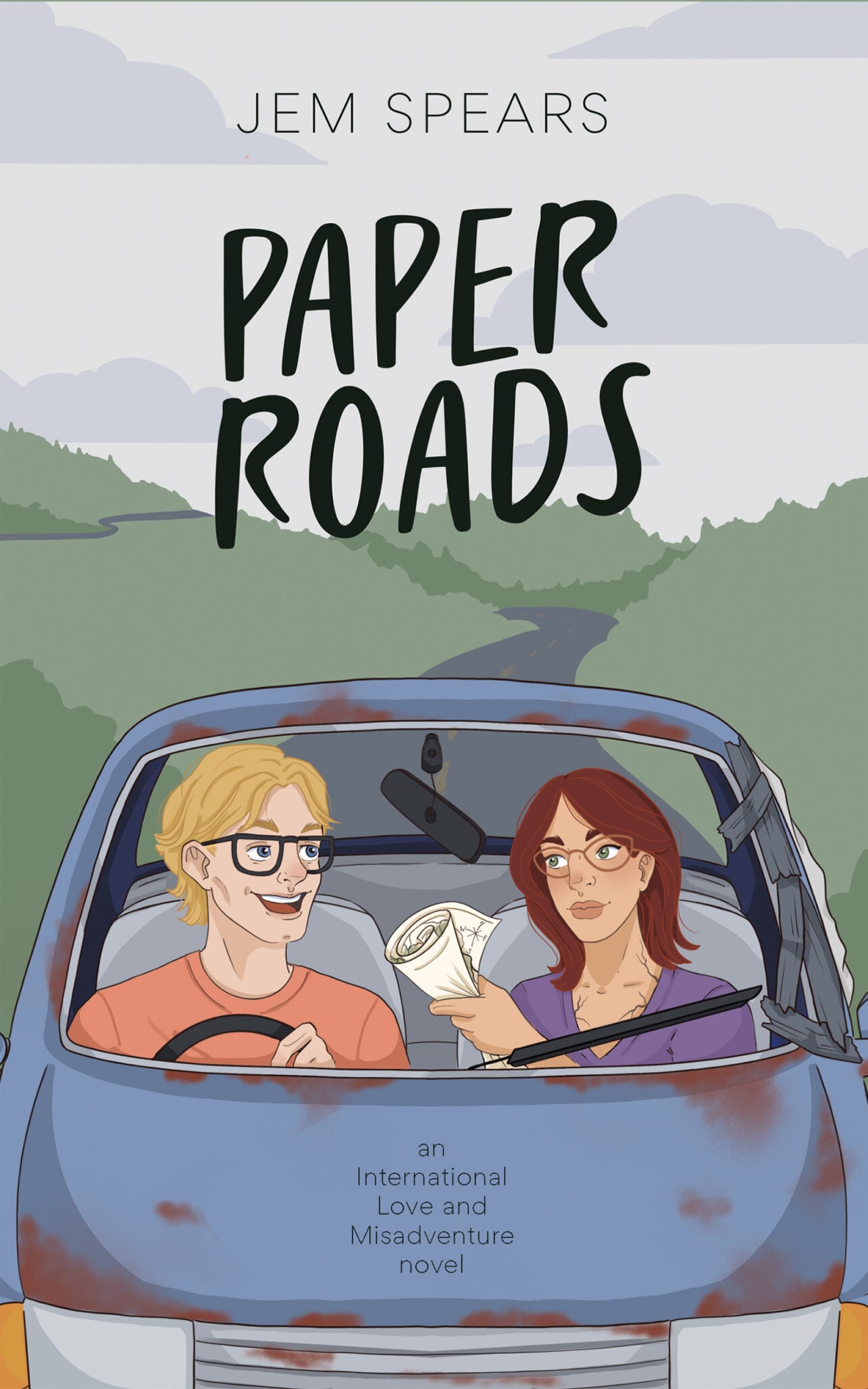
In PAPER ROADS, Jem Spears delivers a warm, emotionally intelligent second-chance romance that blends quiet humor, reflective introspection, and the gentle momentum of a road-trip narrative into something deeply human and quietly affecting. Told through alternating points of view, the novel follows Rin and Luke—exes whose breakup was shaped less by lack of love than by timing, stress, and the slow erosion of stability—as they reunite by chance and set out on a journey that becomes as emotional as it is geographical.
Spears excels at writing characters who feel fully lived-in. Rin is pragmatic, guarded, and emotionally overextended while Luke is warm, earnest, and chronically self-sacrificing—both shaped by responsibility and loss in believable ways. Their connection is not framed as destiny but as something chosen, again and again, despite fear. As Luke reflects, “It felt right to be anywhere with them,” a simple line that captures the emotion underpinning their relationship.
The first-person prose is understated but often quietly beautiful, especially when it lingers on emotional or sensory detail. Rin’s perspective is particularly rich in introspection, carrying lines such as “I had a failure-proof way of dealing with discomfort, and that was to pretend not to care"—which neatly encapsulates both their emotional armor and the central tension of the story. Meanwhile, the novel’s title becomes more than metaphor when Luke jokes about navigation and connection: “No need for GPS. This pre-internet treasure shows all the roads… printed on something called paper,” a moment that mirrors the book’s broader theme of choosing slower, more intentional paths—both in travel and in love.
Structurally, the story balances present-day travel with carefully placed flashbacks, allowing the reader to see not just why Rin and Luke broke apart but how deeply they once fit together. This layering gives their reunion genuine emotional weight, rather than relying on nostalgia alone. Just as importantly, the book resists easy romantic shortcuts, allowing trust, vulnerability, and communication to rebuild at a believable pace. The emotional progression feels earned, not rushed, and the journey itself becomes a meaningful extension of the characters’ internal growth.
If the novel has a minor weakness, it lies in occasional pacing softness in the middle stretch, where reflection slightly outweighs forward motion. Still, this never derails the story’s emotional pull, and many readers will likely welcome the extra time spent inside the characters’ thoughts and emotional landscapes.
With PAPER ROADS, Jem Spears delivers a heartfelt, mature, and emotionally resonant romance that blends reflective character work with a gently immersive journey. It's a rewarding read for fans of second-chance and relationship-driven fiction.
~ Megan Parker for IndieReader