

The novelette is a most maligned literary format, and, outside of the fantasy and SF genres, something of a rarity these days. This is a pity. Shorter prose offers the appeal of the tableau, the snapshot—offering no less profound subtexts than longer works in a fraction of the space.
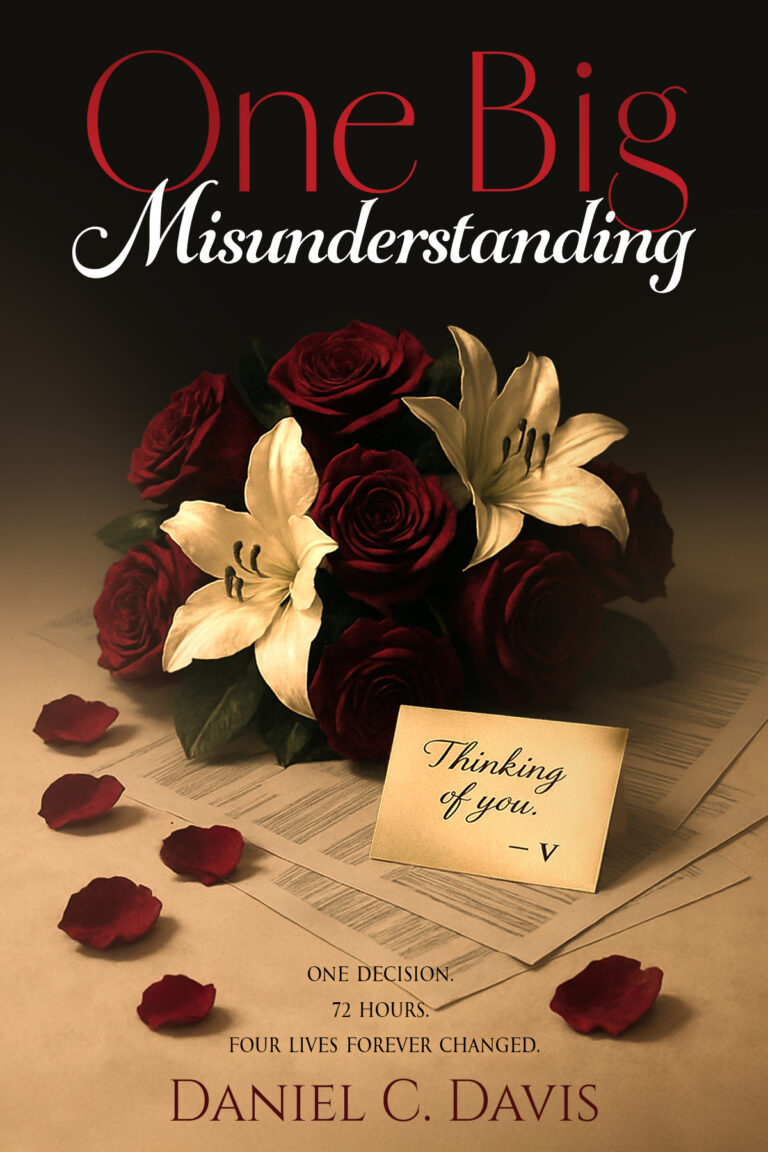
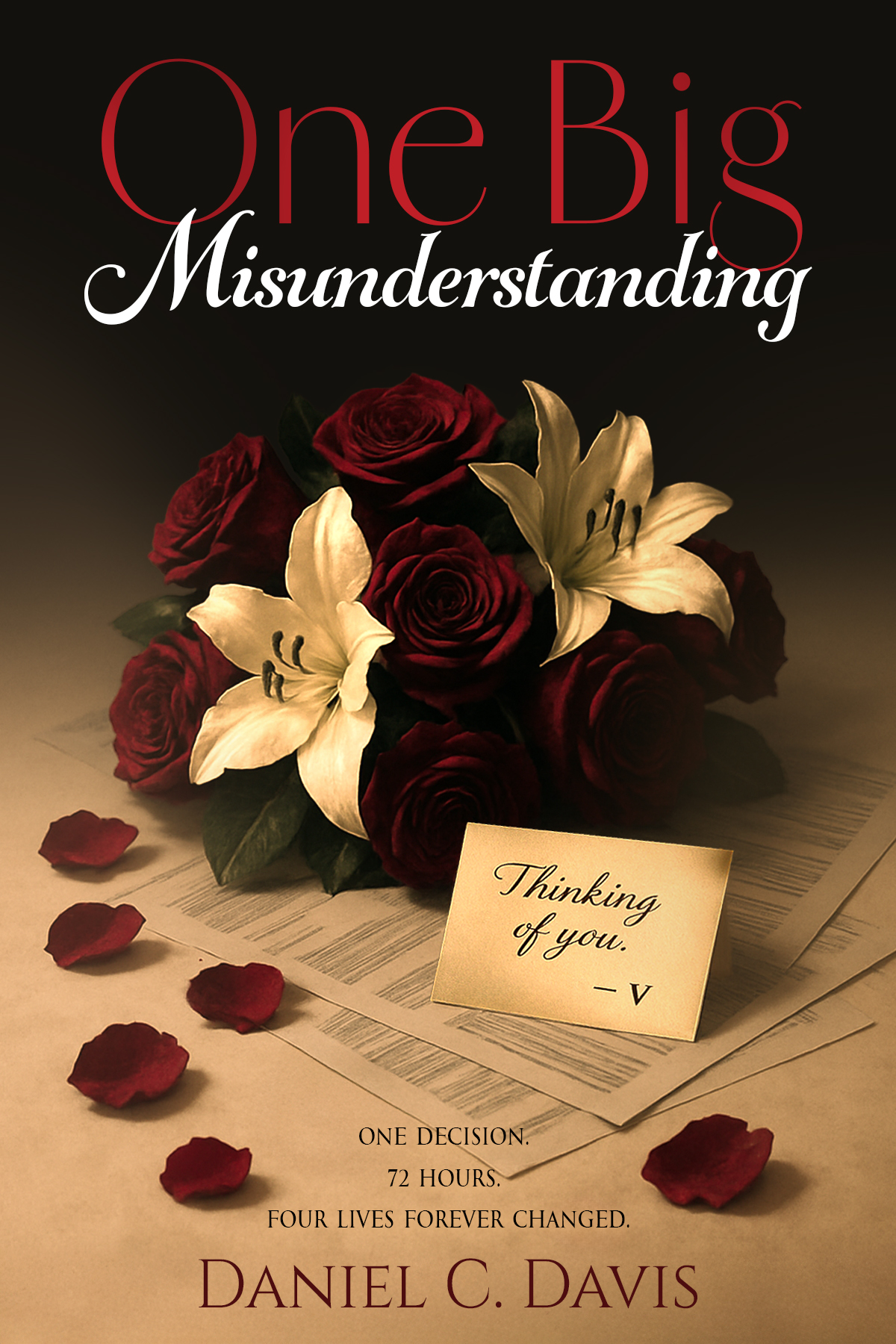
ONE BIG MISUNDERSTANDING is a great example of that. In it, author Daniel C. Davis crafts a truncated but effective drama. Victor’s assistant Ethan feels gipped due to what turns out to be the merely temporary withholding of a performance bonus, so he sends a bunch of flowers to his boss’s affair-partner Sarah. This simple, spiteful act unravels not only Victor’s life but Sarah’s, whose husband David discovers the bouquet and sues for divorce. Not to mention how this affects their young daughter and (potentially) Victor’s blameless wife.
What comes through very clearly is the fact that everyone in the story is suffering, but for different reasons. The trauma visited on Victor and his wife, no less than the wedge inserted between David and Sarah by the vicissitudes of the work-life balance, gnaw away at them. But the underlying message is equally clear: this suffering is exacerbated by a lack of communication. Everyone talks, but no one listens. Davis has an excellent ear for conversation, as the characters’ voices have an authentic ring. Take this quote from Victor, explaining to Ethan about bonuses: “Loo
The only fault is that the plot is somewhat telegraphed. Without wishing to give away details, the transformative nature of the denouement is all too easy to guess at; and the succession of hand-wringing episodes that the characters embark upon in the second half of the book seem to offer less emotional release than one would think. No reader will want ill to happen to any of the protagonists in this ensemble piece, all of whom are guilty of common human shortcomings (poor judgment, a momentary surrender to intrusive thoughts, emotional distance, or a simple inability to juggle work and home life). But at the same time, the ambiguous ending cries out for something more definite. In a word, closure.
In that sense, ONE BIG MISUNDERSTANDING’s offbeat finale doesn’t quite match its narrative substance. Nevertheless, Davis’s keen sense of characterization and plotting still makes it a worthwhile read.
Daniel C. Davis’s ONE BIG MISUNDERSTANDING turns a single act into a fine-grained examination of the consequences of bad faith.
~ Craig Jones for IndieReader