
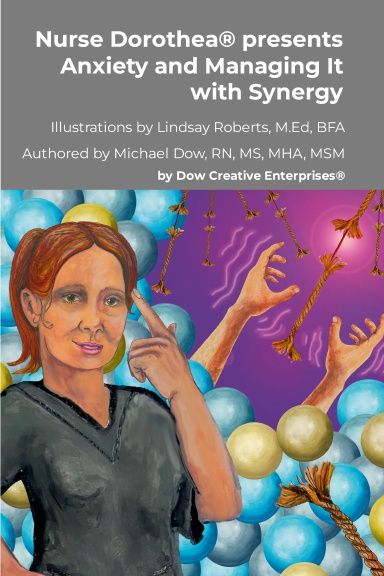

Michael Dow’s NURSE DOROTHEA PRESENTS: Anxiety and Managing It with Synergy offers clear and accessible information on anxiety, its symptoms, and techniques for managing it. The book’s encouraging and supportive tone respects the different ways anxiety manifests and the different solutions necessary for a variety of people.
Summary: A text designed for teaching elementary and middle-school students about anxiety and a range of methods to cope with it.
Full Review: Michael Dow’s NURSE DOROTHEA PRESENTS: Anxiety and Managing It with Synergy is a book aptly described by its title. The setting involves a nurse named Dorothea (for Dorothea Dix, the well-known mental health advocate and practitioner) who talks to students gathered for a mental health-focused after-school club. These students are not given a clear age range, but given that some talk about romantic relationships or championship sports tournaments, it’s likely they’re at least middle school and probably high school students. The language used, however, is clear and simple enough that a reasonably intelligent elementary student should be able to grasp it.
Nurse Dorothea gives a basic description of anxiety and its symptoms, bolstered by examples volunteered by the listening students, and then goes on to list ways of managing it. She suggests that most people will benefit from the synergy involved in using multiple strategies: deep breathing, aromatherapy, grounding techniques, meditation practices, and weighted blankets may work for some; others might require medication and more serious therapy as well. Her students’ anxieties range from doing well on tests and sports competitions to facing trauma triggers from a difficult past in a war-torn country, and she responds to each with supportive counsel.
The book’s suggestions are useful enough: she is very clear that different people with anxiety require different solutions, and that some will be more dramatic than others. She offers a range of useful techniques, as well as some instructions on how to practice the simpler ones. Of course, for deeper anxiety treatments like professional therapy or medication, it’s important to consult expert help; and she offers some guidance on where to find such help. The book is deliberately short to make it available cheaply, but that also makes it helpful for those with ADHD or other symptoms often co-existing with anxiety. The print is large and readily accessible for those with vision problems (or for those who find their vision blurring due to anxiety and stress), and the pictures, though not terribly varied, are colorful and pleasing to look at. This book is not intended to be very complicated or in-depth.
This is a surface-level, beginner’s guide to anxiety—not a textbook or a detailed resource for treatment purposes. But this is plenty to get someone started on the road to identifying their anxiety and finding treatments or solutions to manage it.
~ Catherine Langrehr for IndieReader