
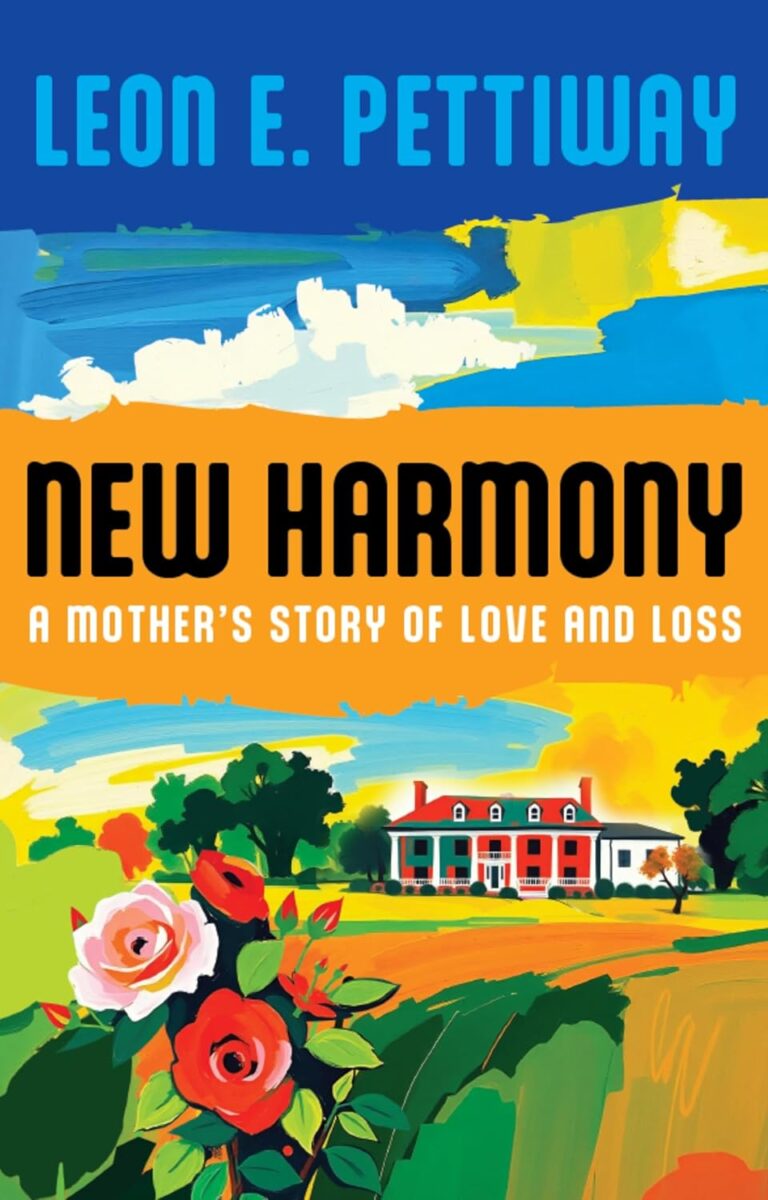

When Thad is murdered, his mother Margeret is consumed by pain and the oppressive injustice of it all. Even the preacher’s sermon at the funeral can’t soothe this gnawing ache. As she zones out of what feels like a surreal event, she is pulled into her past: her childhood on the plantation, time spent working in the Demmings’ Big House, the early and humiliating lessons on racial boundaries, betrayals, and the oppressive power of the Demmings family— which seems to touch nearly every aspect of her story. By the end, this journey into pleasant and unpleasant memories becomes a necessary reckoning with generational pain and buried secrets.
Leon E. Pettiway’s NEW HARMONY: A Mother’s Story of Love and Loss is set in the rural South of the 1900s, South Carolina specifically. The setting shines in domestic detail (from the daily realities of sharecropping life to the oppressive heat of the tobacco fields to the opulent, intimidating interior of the Big House), town descriptions, class markers (the Big House vs. the cabin), and social rituals (church, gossip, etc.). Although it might pose a slight barrier to readers unfamiliar with the dialect, the vernacular strengthens the narration. It represents the oral tradition of the Deep South while remaining emotionally precise, with common phrases such as “madder than a mule chewing on a mess of bumblebees.” The community is visibly divided by class and race in a way that feels all too real, clearly depicting the social arrangements of the Jim Crow era. In one instance, Margaret remarks, “Like most colored folks, though, I only caught glimpses of her schoolhouse ’cause nary one of us could set even our little toe inside that piece of whiteness.”
Pettiway harmonizes past and present events. Through this, he shows how events can build up until they eventually explode in the future. Moments such as threats on the phone, the rationalization of shooting people based on their race, and perceived slights feel historically and psychologically credible. Indeed, emotional resonance is one of the book’s greatest strengths.
While the arguments are persuasive, they’re sometimes stated too plainly in a social cause-and-effect format that explains rather than allows readers to infer nuances of motive. This softens the story’s immediacy and creates a bit of a lull. That said, NEW HARMONY uses the unwavering voice of a grieving mother to aptly dissect how generational relationships and decisions make racial violence possible.
Set in the Jim Crow era, Leon E. Pettiway’s NEW HARMONY: A Mother’s Story of Love and Loss exposes the painful web of actions that precede racial violence.
~ Gabriella Harrison for IndieReader