
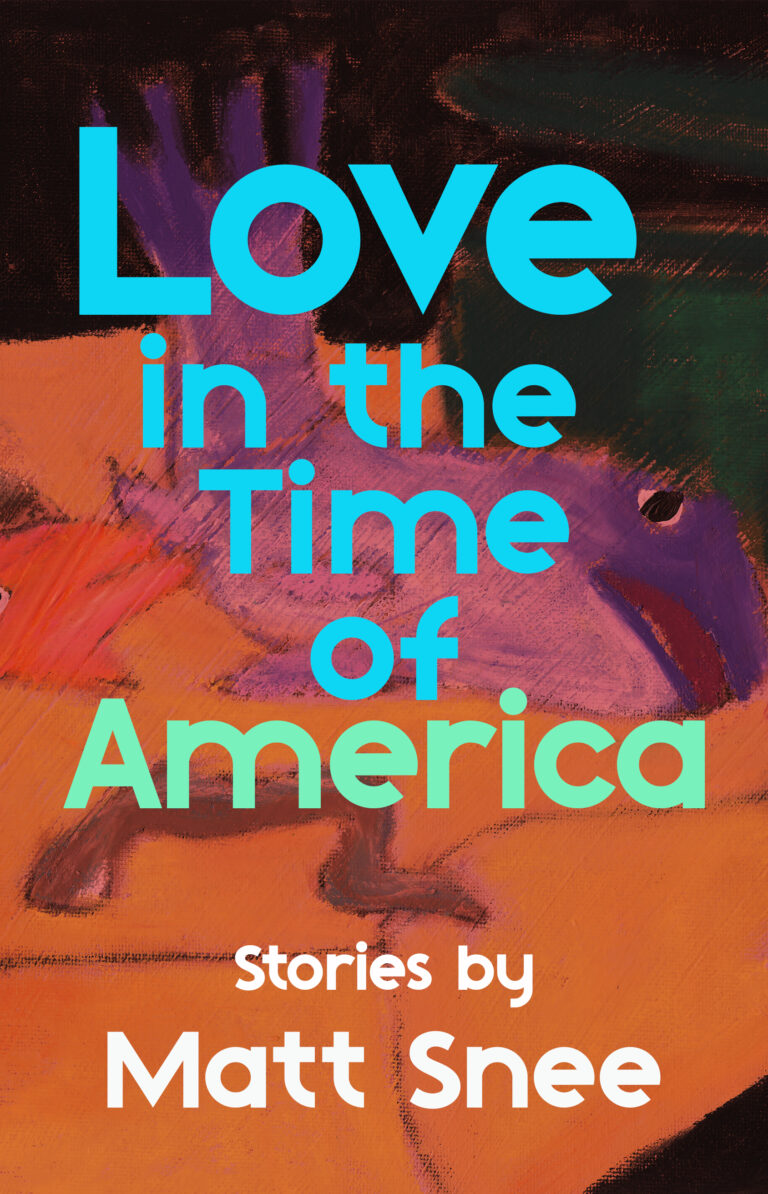

Matt Snee’s LOVE IN THE TIME OF AMERICA is a collection of five stories that range in time period and genre. The first three are set in the past, while the final two imagine separate futures (one with a cyberpunk setting and one post-apocalyptic). Their settings are fully believable, as these protagonists seem completely immersed in their respective surroundings—products of both their time and circumstances.
In “A Great Assembly,” thirteen-year-old Alex attends summer camp and develops a crush on his bunkmate. The “drab olive canvas tarp” and insects singing in trees imbue the camp with the nostalgia of exploratory tweens sticky with sweat and yearning for freedom. The story features more telling than showing, yet the closeness of the narration yields a strong emotional payoff. While it’s in third person, the depth of Alex’s joy and despair make it feel like first person.
Characters range in both personality and likeability. In “The Misapprehensions of John Wayne,” the famous title character’s lack of accountability is off-putting—even as he expresses adoration for a sick infant. In “Princess,” the main character’s father is a conservative talk show host: “a master sophist nightly preaching to a rapt but somnambulant audience addicted to indignation” who is cartoonishly villainous yet a prescient, exacting caricature of real-world figures. Narrator Margie makes a life-changing decision that prompts deeper self-awareness, reflected in her reply to her mother when asked how she can throw away everything she worked so hard for: “I never really worked very hard.” In “Princess,” especially, erudite and allegorical descriptions strengthen the narrative: “The three of us are inextricably linked in discord, crashing pendulums in a nebulous illusion of ‘family.’ Our bellicosity is only limited by the hours of the day.” The final tale, “We Thought We Would Find Beauty in the Rubble,” adopts a more distant, reflective tone that makes the narrator’s search for survival all the more powerful when he simply states, “I am alive.”
“A Great Assembly” and “The Misapprehensions of John Wayne” both end with a brief retrospective: in the first, now-adult novelist Alex composes a story that rewrites his childhood trauma with acceptance instead of oppression; and in the second, John Wayne dreams of sharing a meal with a Black man and seeing him smile. Both juxtapose the characters’ hopes with their realities, conjuring places where culture aligns with their values to inspiring effect.
All five tales conclude with hope, though some are more convincing than others. In “While Neo-Tokyo Weeps,” David “has never felt so optimistic,” a sentiment that falls flat without reasons for his previous despondency. When considered alongside the book’s title, the stories take on new meaning; each character displays the optimism of the American spirit, even when all feels lost. Circumstances can always improve, the protagonists believe—even America’s divisive culture. That the otherwise unconnected stories are organized in chronological order (1957, 1962, 2009, near future, and distant future) demonstrates the pervasiveness of the American Dream through time. In the end, these five historical and futuristic stories delight and aggrieve as they discover hope in the most unlikely of places.
The five striking short stories in Matt Snee’s collection LOVE IN THE TIME OF AMERICA share a diversity of vibrant settings, time periods, and character struggles. At the same time, they are united by hard-hitting themes of identity, grief, and hope.
~ Aimée Jodoin for IndieReader