
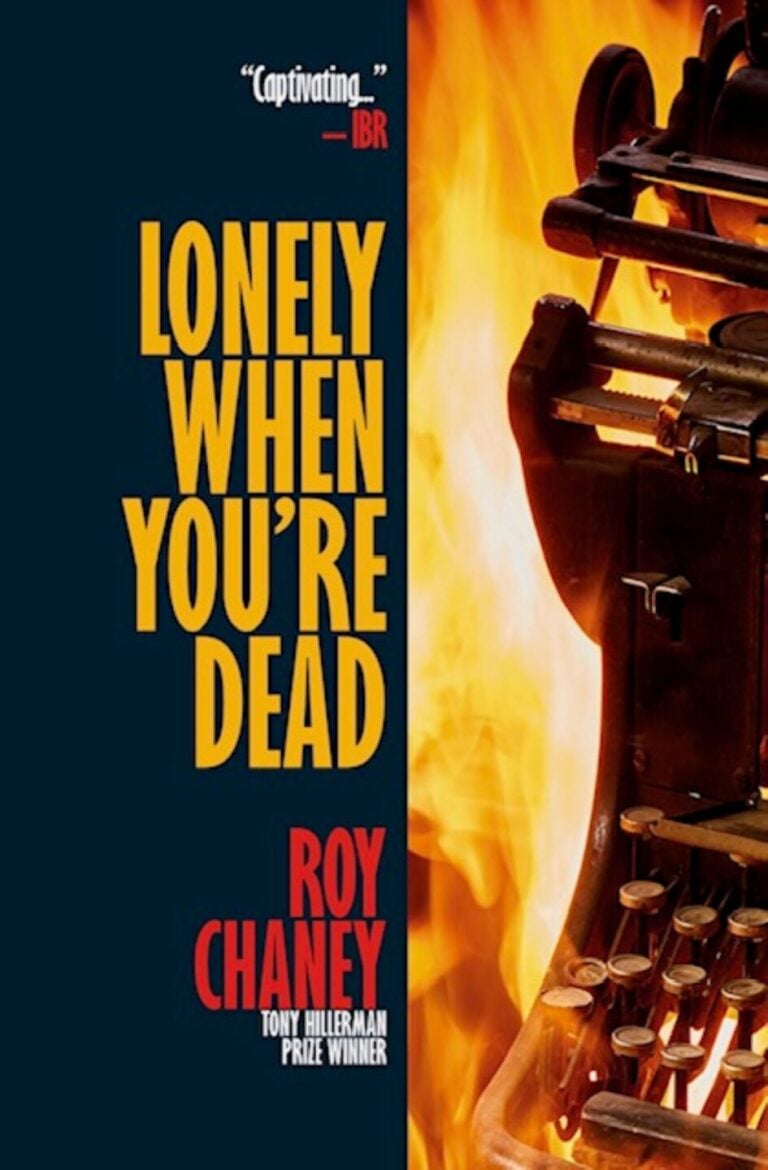

How dangerous could a poetry festival be? Well, in the world of Roy Chaney’s LONELY WHEN YOU’RE DEAD, it's a dirty business.
Strapped for cash, investigative journalist Claude Murphy accepts an assignment from a small, edgy publication to travel to Quebec for a four-day poetry festival that's featuring two “big-name” writers. The festival starts off on a suspicious, almost eerie foot when the event organizers can say nothing about either poet. Meanwhile, the phone line to one of the publishers has been disconnected. It’s clear from the jump that Murphy is anything but prepared for his introduction to the world of poetry.
Because this isn’t the “world of poetry” in the sense of calm, dimly lit readings, delicate hors d'oeuvres, and opportunities to purchase signed copies of poetry collections and handmade broadsides. Instead of stepping into a world of hipster clothing, favorite pens, and cloth tote bags, Murphy slides into a world of “wanton destruction. Molotov cocktails. A police action that felt like martial law. A corpse, then another corpse,” which might even sound poetic if the observations weren't so horrifyingly unexpected and militant. Murphy isn’t just worried about making a deadline and getting a paycheck this time; he’s worried about walking out of this thing alive.
LONELY WHEN YOU’RE DEAD more than delivers on its mystery-thriller elements while stepping into the world of absurdity and satire. The book immediately feels suspenseful when Murphy stumbles upon multiple bodies, and it becomes increasingly political as he becomes entangled in a messy web of unrest. The world that Chaney creates constantly keeps the audience guessing, as it's clearly fast-paced, surprising, graphic, and the farthest thing anyone would expect from well-read poets. His writing leans heavily into political tension, particularly as Murphy gets caught up in the world of the separatists while questioning (story intact or not) what he’ll have to sacrifice to escape.
Chaney embraces satire and the absurd in a way that's reminiscent of Tim O’Brien’s America Fantastica and Mike Stetz’s Don’t Stop the Presses, specifically in his portrayal of the writers. The book’s commentary on the preconceptions of the poetry community is spot-on, and sometimes hilarious in its callouts. Transforming it into something grungy, rebellious, illegal, and dangerous (characteristics that typically do not go beyond the poetry itself) is intoxicatingly refreshing. The result is a cast of characters who behave less like a literary community and more like a motorcycle gang with MFAs, and the friction between that image and our cultural expectation of intellectuals is where most of the novel’s satirical voltage lives.
LONELY WHEN YOU’RE DEAD allows poetry to continue existing as this individually sustained and personally interpreted thing, while brilliantly giving the art form a chance to dip its toe into the literally dangerous. It’s simply a joy to explore.
Roy Chaney's LONELY WHEN YOU’RE DEAD is a whip-smart satirical take on the literary world that's perfect for those who like to read stories about writing with characters and genres that push past expectations.
~ McKenzie Lynn Tozan for IndieReader