
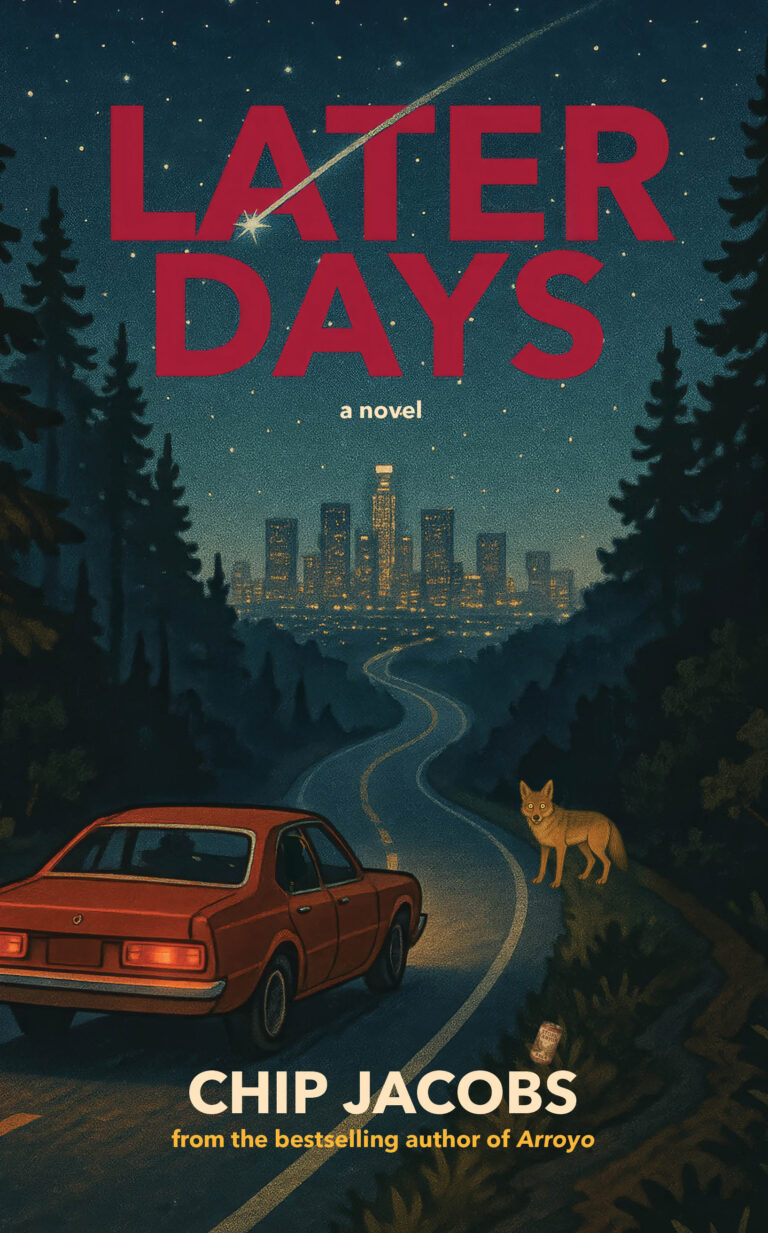

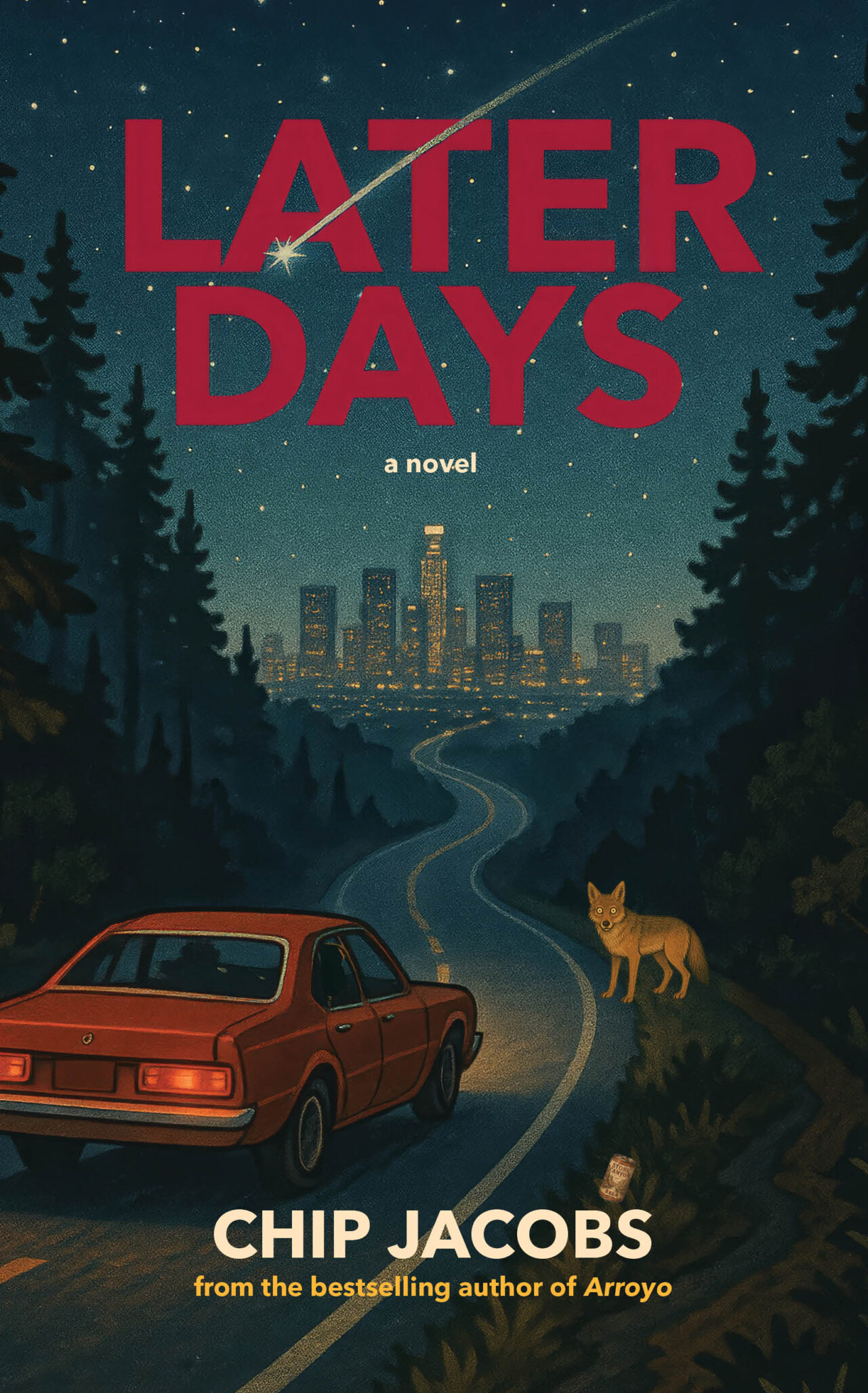
Coming-of-age stories about alienated high school kids tend to come in one of two flavor profiles: sentimental and nostalgic; or bleak, cynical narratives of psychological torment and systemic cruelty. Chip Jacobs’s LATER DAYS falls in the latter camp. A prep school novel in the tradition of A Separate Peace, this story relocates John Knowles’s adolescence-as-Hobbesian-battleground premise to the sun-bleached, smog-choked haze of 1970s Southern California.
The story chronicles the volatile, lifelong friendship between Luke Burnett and Denny Drummond, students at Stone Canyon Preparatory—a cauldron of institutional violence and casual cruelty that’s one-part Dead Poets Society and two-parts Lord of the Flies. The latter is a key thematic touchstone referenced throughout the novel; at one point, Luke spells out the metaphor explicitly: “The Lord of the Flies wasn’t merely a future reading assignment about a fictional island of shipwrecked-boys-gone-tribal. It was an echo of what we lived.”
Luke (a bookish and anxious freshman reeling from the death of his mother and terrorized by a vicious bully named D-Rex) bonds with Denny (an intellectually gifted “space cadet”) after Denny orchestrates the bully’s downfall. The dynamic between them is a study in codependency; like two sides of a tarnished coin, one is defined by anxiety and the other by a self-destructive genius. The pair engages in a flurry of reckless behavior against a turbulent backdrop of family drama and devastating grief.
Readers anticipating the familiar beats of the coming-of-age tale will find Jacobs subverting those tropes at every opportunity. There are no wise mentors here; the adults are just as lost and damaged (if not more so) than the kids. A climactic “big game” fizzles out with a mass caffeine overdose rather than a triumphant victory. Jacobs perfectly captures the specific textures of the era—characters reference Mork & Mindy and drive Pintos and AMC Gremlins—without indulging in That ’70s Show’s cartoonish nostalgia. Most significantly, the novel rejects the typical coming-of-age arc of redemptive suffering. Characters survive trauma rather than transcend it; they simply grow older without learning profound life lessons. This resistance to genre conventions won’t exactly be satisfying for everyone, but it feels true.
The novel’s most original (and possibly most contentious) twist may be its sporadic detours into surreal, absurdist territory. Denny’s father, for instance, becomes obsessed with an apparently immortal lab rat named “Lazarat” that causes his decline into alcoholism. There’s also an out-of-left-field development late in the book that dives headlong into the paranormal. This mystical turn may confound readers who’ve invested in the novel’s otherwise grounded realism, but it serves Jacobs’s larger theme about how deep human connections defy rational explanations.
LATER DAYS can be a frustrating read, given its rejection of conventional tropes and refusal to sentimentalize adolescence. It is, however, an honest, emotionally rewarding exploration of institutional violence, the complex bonds of friendship, and the long shadow of un-redemptive trauma.
Written by Chip Jacobs, LATER DAYS subverts coming-of-age tropes and refuses to transform adolescent suffering into wisdom or institutional cruelty into meaning. Instead, it creates an honest, devastating portrait of trauma without redemption.
~ Edward Sung for IndieReader