
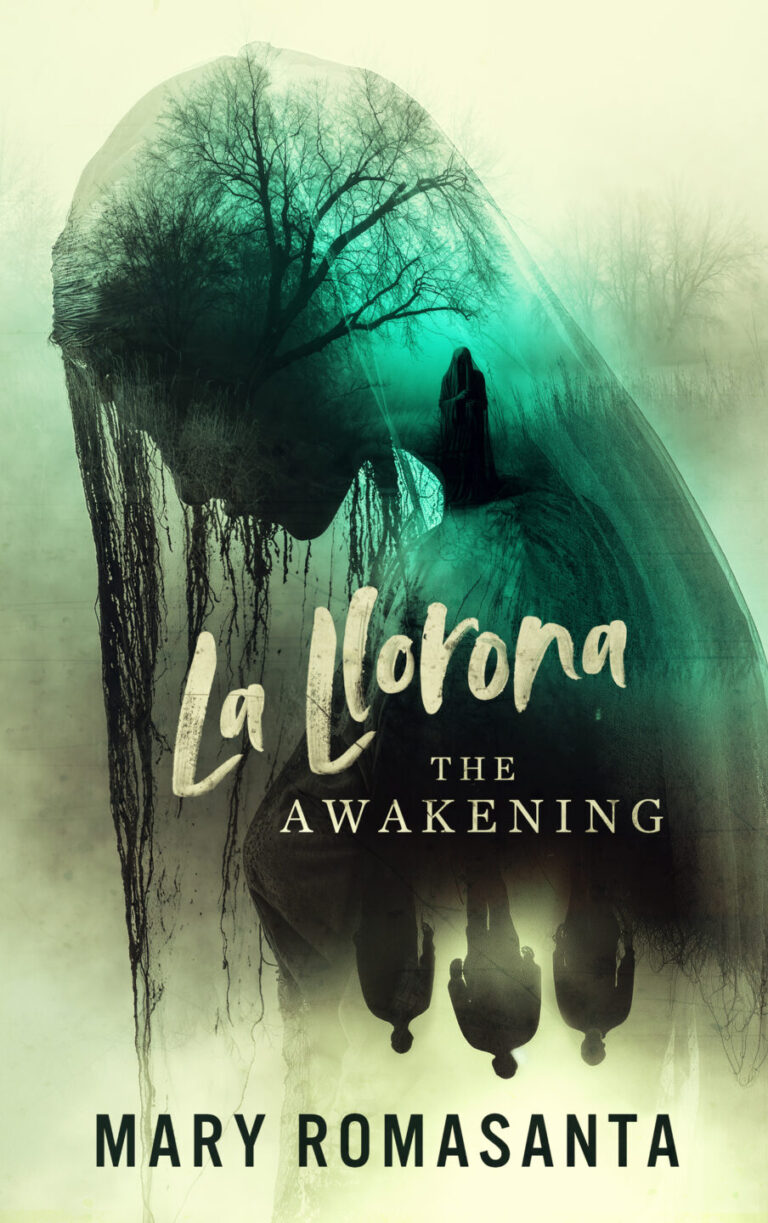

Thanksgiving can be a stressful affair, but the Thanksgiving right after Ruth’s mother-in-law Mi-Ra has lost her husband is marked by additional tension: Mi-Ra’s bottled-up grief escapes in snippy bursts, most often aimed right at Ruth. Soon a missing dessert ingredient kicks off a chain of events that leave Ruth’s husband John dead. Because Ruth knows that John would want her to care for his mother, she puts her own pain aside and moves in with Mi-Ra, whose despair begins leading her into increasingly dangerous hallucinations and situations.
Author Mary Romasanta masterfully blends multiple genres in this contemporary retelling of the Biblical story of Naomi and Ruth: women’s fiction, folk-based horror, psychological thriller. Most fascinating is the way water is used throughout the book to tie these strands together. It is at once a lifeline and a liability, with the sensation of drowning serving as a metaphor for grief. The delirious appearances of La Llorona (a vengeful spirit who haunts waterways from Mexican legend) and Mul Gwishin (malevolent Korean water ghosts) feed into the theme while leading readers to question what is real and what is in the characters’ heads. The overlap of Mexican and Korean folklore here also serves as a mirror for Ruth and Mi-Ra, who share many experiences but have trouble overcoming their animosity enough to see that common ground.
Ruth and Mi-Ra are both complex characters who have faced tragedy even before John’s death. Whereas Ruth is driven to protect people around her to prevent any more loss, Mi-Ra shuts down in an effort to protect herself. This creates an engaging push-and-pull dynamic while exploring multiple expressions of grief. Romasanta excels at capturing both the very visceral ways mourning manifests in the body and the detached numbness it can create. She also treats the topics of depression and suicide with care and understanding, weaving in cultural considerations related to mental healthcare and support resources. At one point, Ruth pulls in her quantum technologist friend to adapt surveillance technology originally designed for monitoring babies’ health—leading to very invasive devices, as well as some ethical conversations about how far to go to save someone.
Overall, though, LA LLORONA is more emotional than philosophical. Romasanta has created a fascinatingly layered, heart-wrenching story that will appeal to many types of readers.
Mary Romasanta’s LA LLORONA: The Awakening is a thoughtful examination of loss that explores complicated family dynamics. Readers who seek intense emotional journeys paired with psychological suspense are sure to get sucked into it.
~ Cameron Gillespie for IndieReader