
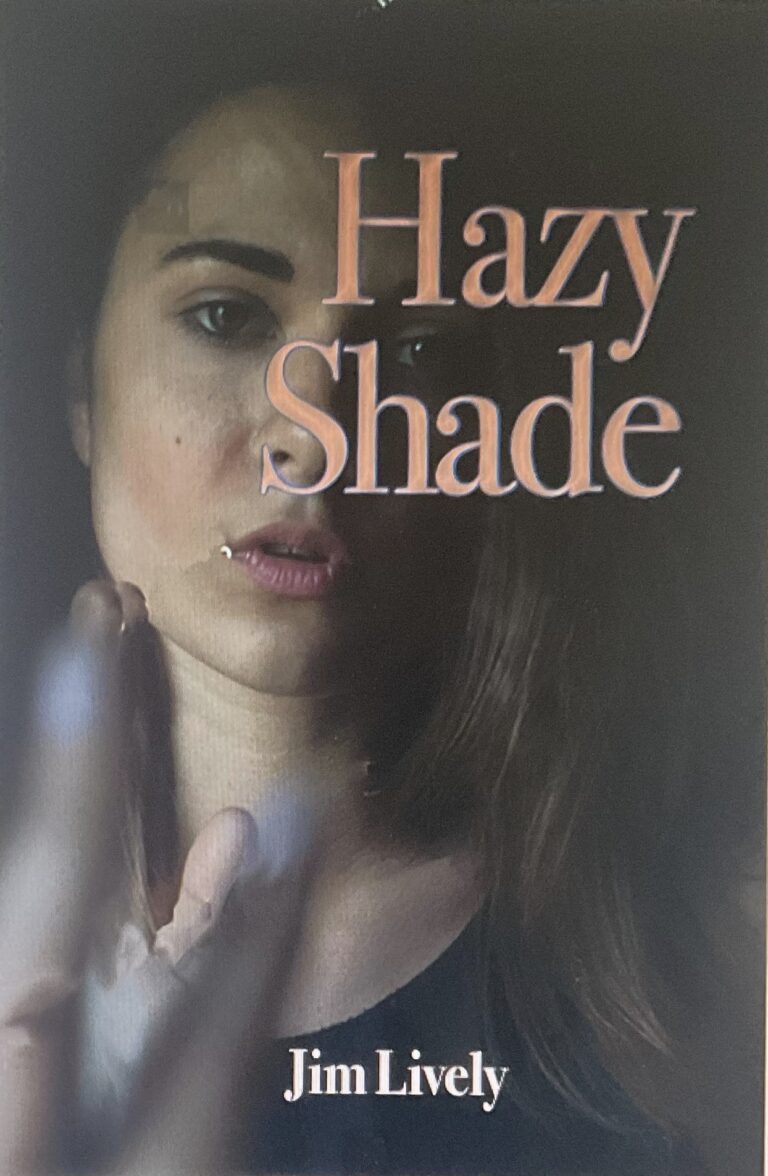

In Jim Lively's slow-burning psychological mystery HAZY SHADE, Simon is a successful lawyer nearing retirement when he takes on an old apprentice as his law partner. Meanwhile, Simon is quietly battling alcoholism. Worse, strange things are happening at his neighbor’s house, and they're making it difficult for him to distinguish what's real from what's not. With his mental health and his legal practice at stake, Simon chooses to stand his ground (even when his own therapist refuses to believe him) and decides to get to the bottom of the mystery that's ruining his life.
Lively sets up the mystery in the opening chapter of his novel by cleverly avoiding lengthy backstories and flowery prose. The simple language helps pull the reader straight into the mysterious premise, which is the most important requirement of this genre. The stylistic choice of giving detailed, repeated accounts of the protagonist’s routine creates a psychologically charged, claustrophobic experience that mirrors the protagonist’s state of mind and his unusual obsession with his neighbor’s house. Despite the lack of sensorial details and vivid character descriptions, Lively manages to keep the narrative compelling through repetitive, mundane mental struggles. For instance, Simon coming to terms with his drinking problem is communicated well here: “Simon glanced over at the bottle of Zinfandel. It was almost empty. He sighed and shook his head in disgust at the thought of drinking almost an entire bottle of Zinfandel.”
Lively takes risks, using unorthodox plot devices that could make the book feel dense to unseasoned readers. He also gives us the same detailed accounts of one strange event taking place at the neighbor’s house multiple times. These accounts do not give the reader any new information about the plot, but they do reveal Simon’s psychological struggles and obsession.
However, some of these experiments don't work. The protagonist’s inner monologue, for example. In a psychological thriller, this can be used to provide deeper insight into a character's mental struggles. Lively unfortunately fails to capture this opportunity, as Simon’s inner monologue revolves only around what he wants to do in the very next moment: “Oh hell, I’m going to stop and get a bite to eat at La Calle Doce and pick up my prescription before I go to my office.” Along with about half a dozen small grammatical mistakes in the book, HAZY SHADE could benefit from another round of editorial polish.
That said, Lively's unorthodox stylistic choices make the overall narrative feel like a claustrophobic, well-written account of battling a mental disorder while feeling alone and isolated.
Jim Lively manages to create a gripping, true-to-genre psychological thriller in HAZY SHADE.
~ Maria Zafar for IndieReader