
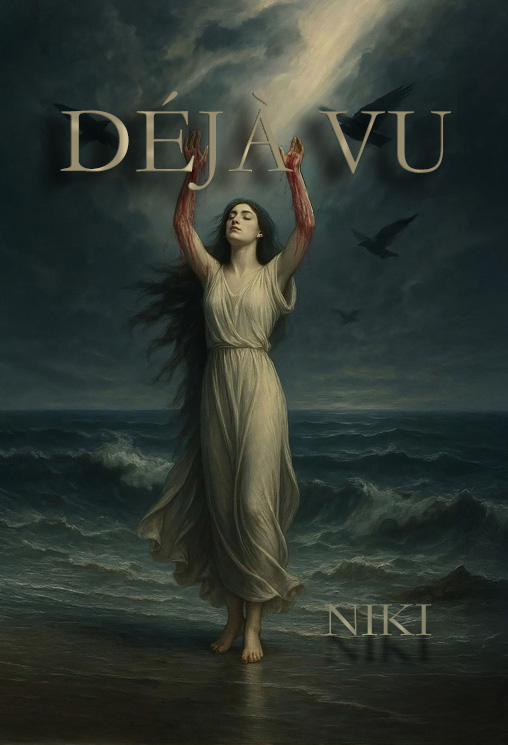

Written by Niki C., DÉJÀ VU is essentially a prose version of an epic poem, almost Homeric in its scope. It draws from Greek mythology and imagery to paint an incredibly painful and powerful portrait of a trans woman’s struggle with her own identity, with her emotions in a body that feels like a stranger’s, and with a world that rejects her, abuses her, and repeatedly tries to break her for the crime of being different.
The shape of the story takes the form of progressing through the underworld, in which Zenia must confront both supernatural entities (Persephone, Hecate, Charon) and figures from her past (her brother, her lost friend, her abusive lover) in order to atone for the sin that covers her hands in blood. She strives to lay claim to her rightful identity and find the resolution that both life and the afterlife seem determined to deny her. As the reader follows her journey, her past unfolds—both the good and the bad—while she gives voice to resentment, anger, and grief. There is also love, the desire for connection, and her own fierce determination to be free, whole, and happy at last. The intention is to immerse readers so deeply into Zenia’s narrative that they experience the memories of her past and the emotions they evoke.
This isn’t only from Zenia’s point of view; people she encounters are given voices, too. Sometimes cruel, sometimes kind, sometimes seemingly indifferent, sometimes wrestling with their own internal conflicts. Zenia’s struggle to retain her agency, her freedom, and her right to her own self against a pitiless fate determined to bind her to a predetermined narrative is the powerful driving force throughout the book. To the novel’s credit, it’s very difficult not to sympathize with her or cheer her on.
DÉJÀ VU’s language is eloquent and flowery: “Her form surrenders to the rhythm of the wind swirling tenderly around her,” for example. While aesthetically pleasing, the prose leans towards excessive and sometimes repetitive wordiness. It’s a long book, which can make the emotional intensity hard to maintain. No doubt it was incredibly cathartic to write, and it may be quite cathartic to read—especially for those in similar situations (trans people and abuse victims in particular). But if this were pared down to its emotional essence and presented as the series of poems it is positively crying out to be, it might be even more powerful and emotionally effective.
Written by Niki C., DÉJÀ VU is a profoundly moving and beautiful piece of prose poetry, as well as a formidable cry of overwhelming pain and fierce resistance.
~ Catherine Langrehr for IndieReader