

The surprise success of the 2020 Netflix series The Queen’s Gambit, coinciding with the enforced lockdown of the COVID-19 pandemic, created a real “moment” for chess. Suddenly, the classic game was rediscovered as a means of connecting online across a virtual board when face-to-face meetings were outlawed. That the game was comparatively easy to learn and very difficult to master added to its appeal, as did the fact that it had such a rich history with many fascinating characters to be discovered by those new to the checkered board. A whole new generation fell in love with chess.
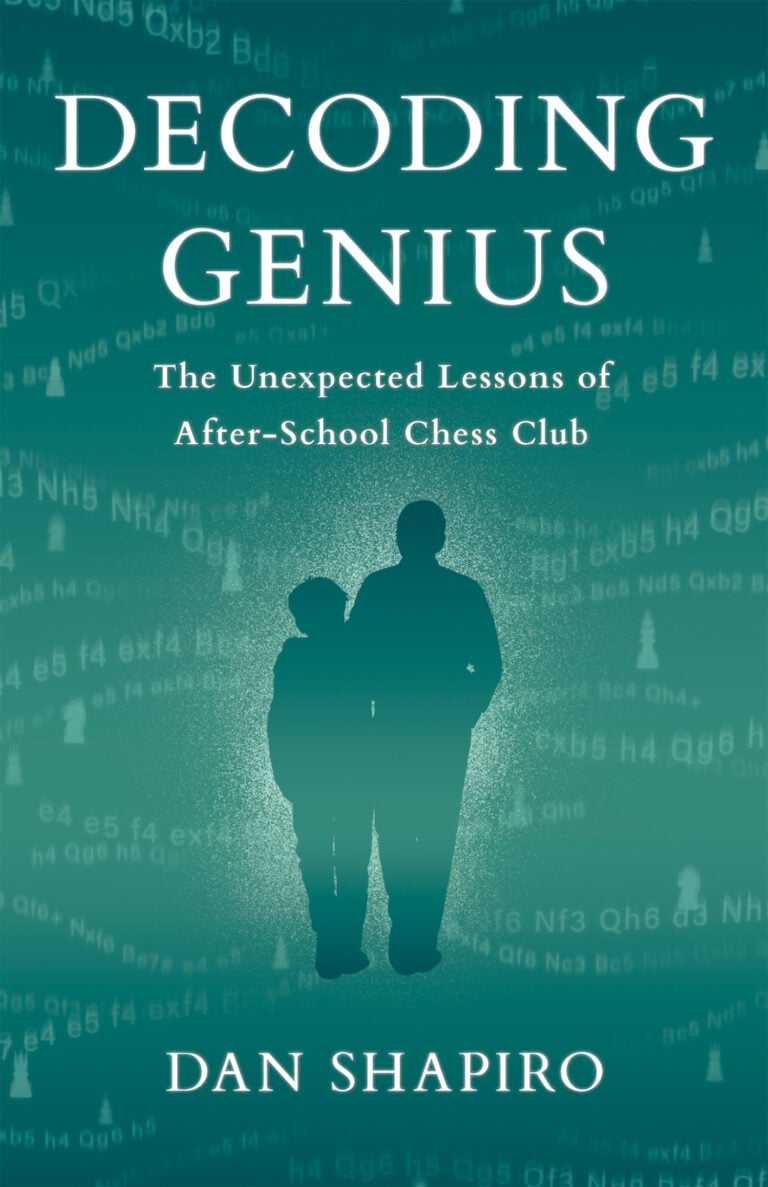
Dan Shapiro’s engaging DECODING GENIUS: The Unexpected Lessons of After-School Chess Club is a personal family story, with chess as the backdrop. Shapiro’s son Harry had been diagnosed as “remarkably bright but with serious social, emotional, and learning challenges.” The young man was both “exceptionally talented and exceptionally challenged.” Looking for ways to help their son grow after the COVID restrictions were lifted, the family enrolled Harry in a chess club. In order to support his son, and with his own interest in the game piqued, Shapiro started learning too.
DECODING GENIUS touches on the origins of chess whilst investigating its maverick superstars and its use as a propaganda tool during the Cold War. It’s not a manual or a strategy guide; more like a cultural appreciation inspired by the positive effects the author has seen in his own family. Shapiro writes clearly on the major developments in chess over the centuries—taking in the Gupta Empire, the aforementioned Cold War, and chess’s place in the race for computer-versus-human showdowns (particularly pertinent as AI looms over everything).
There are many more thorough books on chess history, but where DECODING GENIUS comes into its own and earns its spot on the chess bookshelf is when Shapiro steps away from the board and highlights metaphorical chess moves in other areas of life. These include Captain Sullenberger landing his plane at the so-called “Miracle on the Hudson” and Ali’s rope-a-dope victory at the “Rumble In The Jungle” in 1974. Shapiro identifies ways that strategies learned in chess can help in everyday life. a holistic approach that makes for an illuminating read.
Dan Shapiro’s DECODING GENIUS: The Unexpected Lessons of After-School Chess Club intriguingly takes the positive effect that chess has had on the author’s son and uses it as a catalyst to find ways in which the game could help others.
~ Kent Lane for IndieReader