
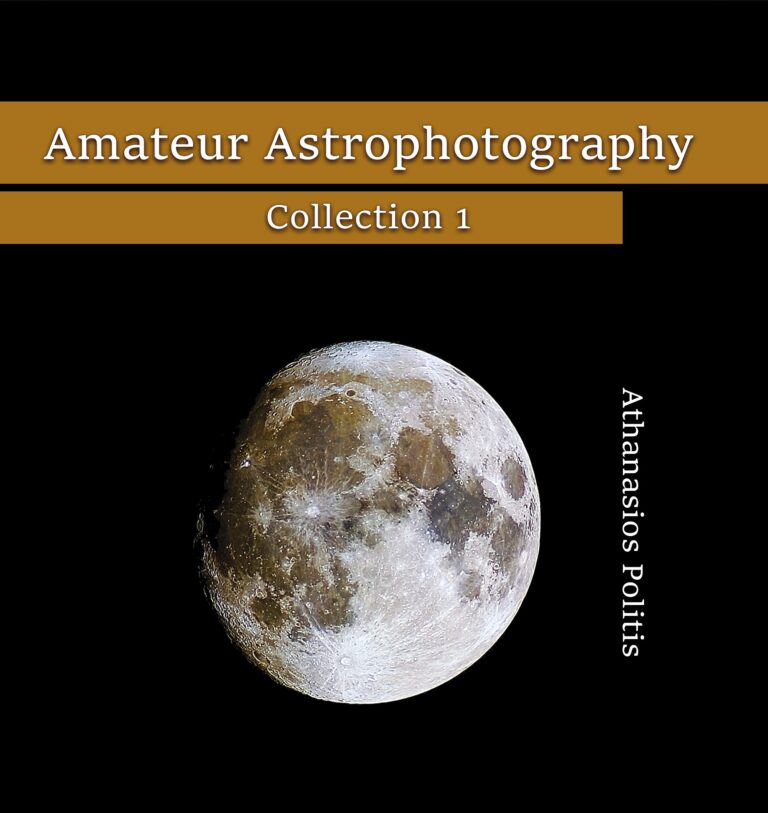

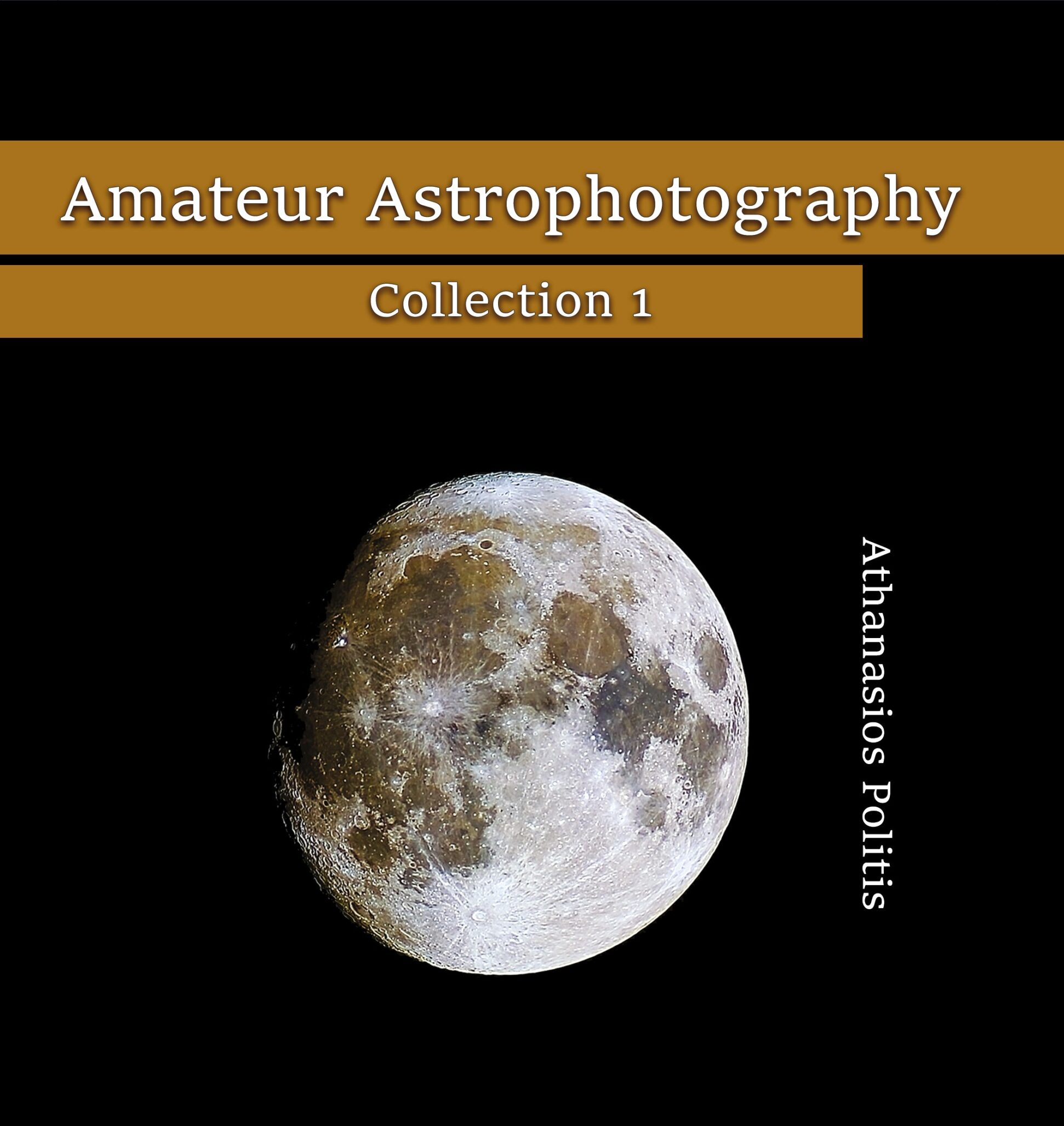
Astrophotography has been around since the camera was first invented, but few outside the astronomical community even give much thought to the surprisingly complicated process by which close-up images of celestial objects are secured. Athanasios Politis’s AMATEUR ASTROPHOTOGRAPHY: Collection 1 is a book designed to give insights into that process.
The content is lightweight, and it is intended, one feels, for interested newcomers rather than seasoned astronomers. 10 pages are given over to a comprehensive rundown of the various bits of kit needed to rig a telescope for photography. As a resident of the United Kingdom, where nights are typically damp and skies cloudy, Politis faces a peculiar set of challenges when it comes to night-time observing. A dew heater and a light pollution filter (the author lives in suburban Surrey) were indispensable additions. Typesetting and presentation are both excellent.
The images Politis captured form the centerpiece of the work, grouped into four chapters according to type of object. His deep-sky work is the most immediately impressive: M33, better known as the Triangulum Galaxy, with its distinctive clumpy outer arms, is beautifully captured given the limited size of his deep-sky telescope (3”) and the light pollution issues presented by his suburban location (the skies over which tend to wash out even the brighter deep-sky objects).
However, AMATEUR ASTROPHOTOGRAPHY feels premature. It is 110 pages long, and when one excludes the front and back matter, the discussion of equipment, the pages containing the dinkus-like symbols that separate the various sections, and the chapter frontispieces, one is left with just under 60 pages of content and only 22 actual photos of celestial objects. Even these vary in quality. While it is admittedly difficult to capture good images of Solar System objects (even using the larger 5” reflector Politis resorted to for planetary work), the images of Mars and the Moon are unremarkable, as is the over-exposed portrait of Jupiter (though Politis does succeed in resolving three of the four Galilean satellites).
A more substantial collection—one, perhaps, that includes images of some of the lesser-known Messier and NGC objects, rather than the old favorites seen here—might perhaps reap richer rewards. Since the book is subtitled “Collection 1,” subsequent volumes may indeed redress the balance.
Athanasios Politis’s AMATEUR ASTROPHOTOGRAPHY: Collection 1 is excellently presented and offers interesting insights into the hobby of astrophotography, though its brief nature and narrow choice of subjects may limit appeal.
~ Craig Jones for IndieReader