
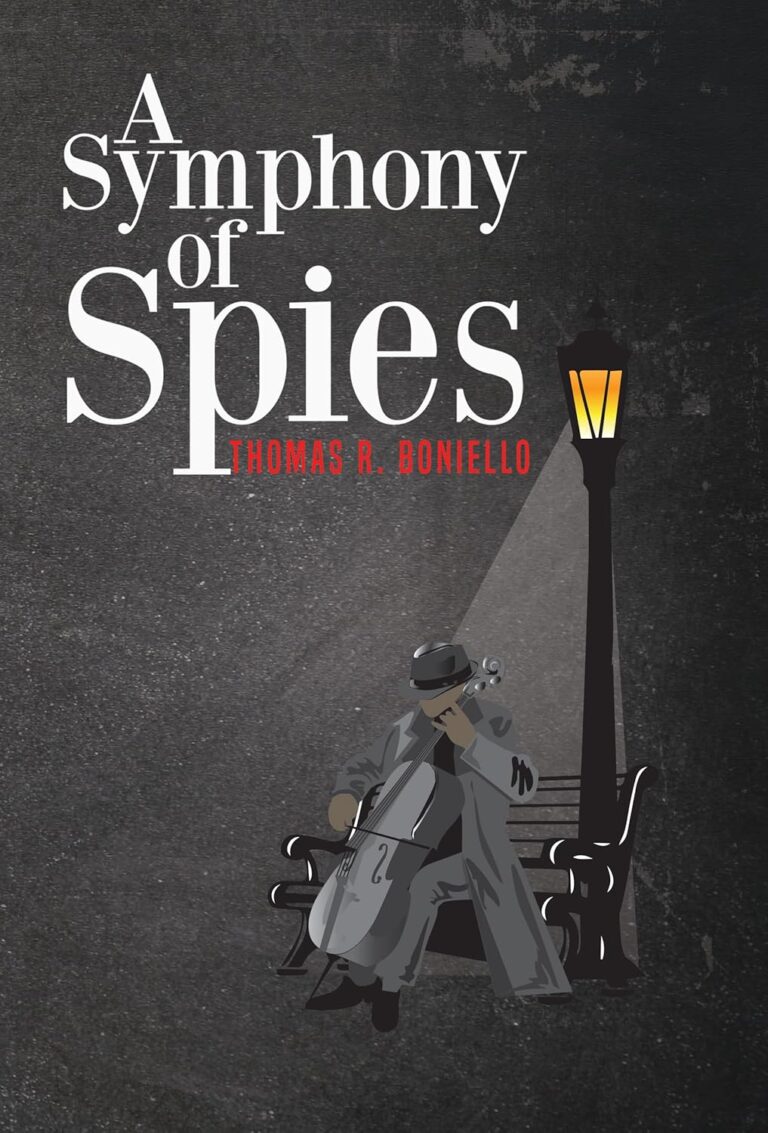

A disappointing hockey game seems like Russian-born Alendreypov's biggest problem. That is until it quickly gives way to something far graver: getting arrested for espionage. When other characters are introduced, things become even more complex.
There's Beth, who out of pure boredom has secretly developed an unauthorized algorithm to track illicit money coming from Russia. Her algorithm does just that, exposing a suspicious transaction worth millions of dollars. Then there’s Drew, a young physicist and hockey player being coached by Alendreypov, who can’t seem to keep his mouth shut. He often overshares information to build relationships, even when such information is classified (a psychological condition called limerence). CIA Director William Kerrigan is at the heart of all this chaos, as he must decide whether to punish Beth for her rogue algorithm or weaponize it while figuring out what to do about Drew’s leaks. The outcome and significance of his decision are only fully realized on a frozen bridge years later.
Skillfully capturing the tension between security and individual freedom as Kerrigan seeks a humane way to handle Drew’s loose lips, Thomas R. Boniello's A SYMPHONY OF SPIES shows how art and culture can be weaponized for evil in the wrong hands. Through a dual timeline in which Drew is being interrogated in the present (causing a flashback that pieces the whole story together), Boniello slowly reveals how espionage can hide in plain sight.
From tracing money to the Cayman Islands to interviewing a Swiss engineer who was seduced and nearly blackmailed, Beth's methodical work creates a satisfying procedural backbone to the narrative. Meanwhile, the college scenes involving late-night dorm parties and a disastrous recital ground the spycraft in basic human moments and make the story feel even more authentic.
However, certain characters who are also central to the plot (such as Nash and Slava) aren't fully fleshed out. Slava remains an enigma, while Nash’s emotional arc is told more than shown. There’s also the issue of a thumb drive containing revolutionary chip specifications that’s introduced with great promise, only to disappear completely. The middle third is filled with Beth’s database searches and Kerrigan’s lengthy briefings, which eventually begin to feel repetitive. Information is delivered more as lectures than as part of the drama.
Indeed, the book’s strength lies in its originality. The shady transactions, the trading of secrets through unsuspecting participants—how these things are achieved feels rather clever and disturbingly plausible. When A SYMPHONY OF SPIES reaches its climax, the pieces finally come together in a way that is both surprising and (in retrospect) inevitable. However, Boniello leaves readers with more questions than answers.
Questioning the limits of loyalty and the cost of secrecy while examining whether art can ever truly be separated from the interests that fund it, Thomas R. Boniello's A SYMPHONY OF SPIES is ambitious.
~ Gabriella Harrison for IndieReader