
Publisher:
Heart Soul Horse Publications
Publication Date:
06/21/2025
Copyright Date:
N/A
ISBN:
9798992769005
Binding:
Paperback
U.S. SRP:
24.95
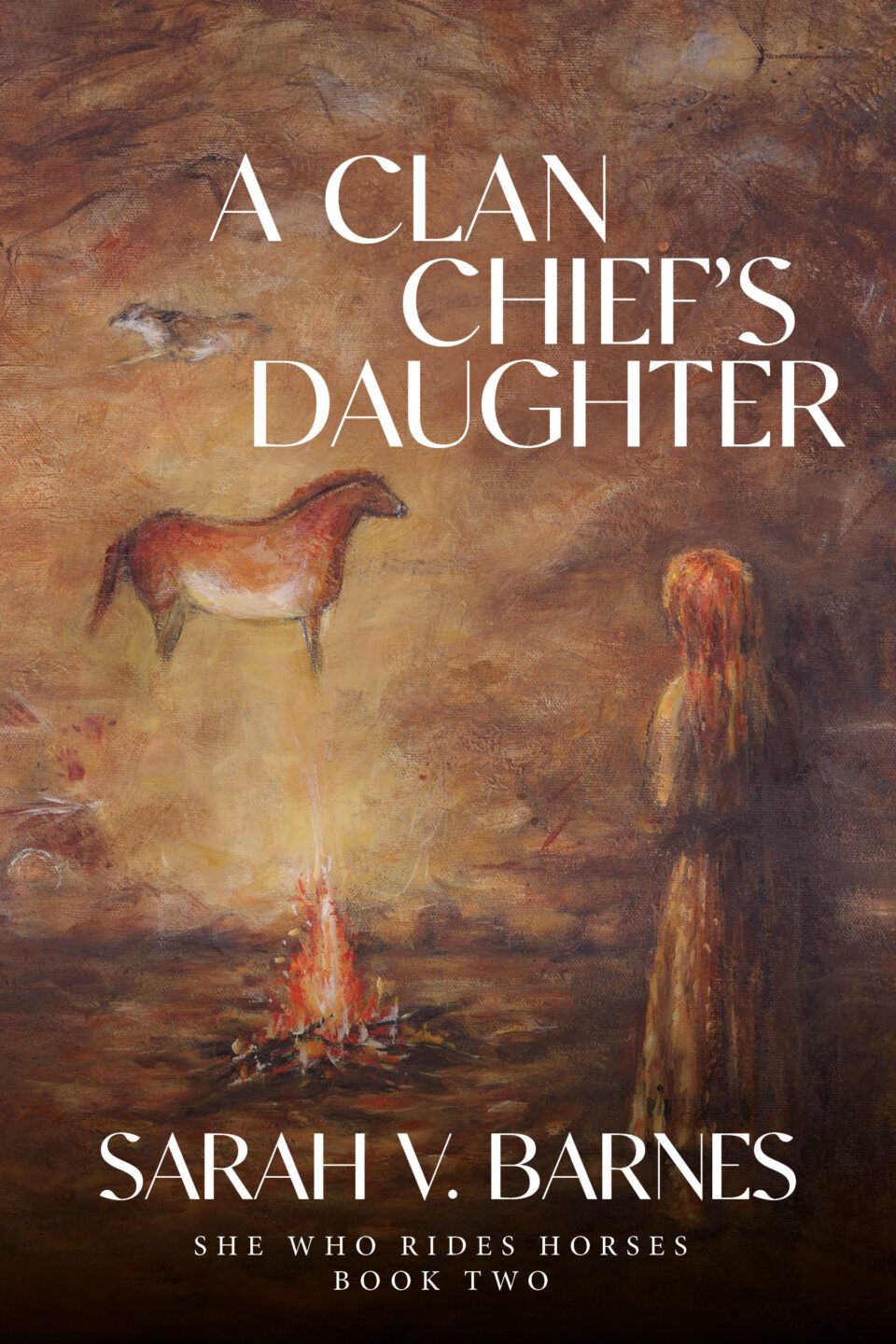
A CLAN CHIEF’S DAUGHTER: She Who Rides Horses (Book 2)
By Sarah V. Barnes

- Posted by IR Staff
- |
On the Indo-European steppe, Naya struggles to find her place in both intertribal politics and a developing landscape of animal husbandry.
In the first installment of the She Who Rides Horses series, Naya survived a harrowing injury and a spiritual journey out in the wilderness. Most importantly, she formed an unusually emotional bond with a red filly and its herd, allowing her to do something that few, if any, humans have ever done: ride a horse. But Naya is now back with her tribe and must contend with typical human affairs, some of which may have dire consequences for the wild horses of the steppe.
Sarah V. Barnes’s A CLAN CHIEF’S DAUGHTER: She Who Rides Horses (Book Two) is, in some ways, highly conventional. “Horse girl” fiction is its own, well-established genre. Fifteen-year-old Naya is a typical YA protagonist: she’s coming of age, undergoing a ceremony, and juggling the emerging realities of sexuality and love. However, the text gets a lot of mileage out of its intriguing setting: the world of the so-called Proto-Indo-European cultural group, whose reconstructed language is both an ancestor to many current language families and also a key to understanding how those language-speakers lived. A CLAN CHIEF’S DAUGHTER lives this setting from top to bottom, in both the core of Naya’s story (she is forming bonds with horses in a time before horses have been domesticated by humans) and in the material circumstances of her culture. If their fragile, young society of early agriculture and intense animal husbandry fails, they may have to transition back to hunting and gathering instead. In practice, this still means the novel shares much in common with fiction about various indigenous peoples (lots of hides, furs, and dugout canoes), but that includes the strengths of that fiction—especially careful attention to both the beauty and danger of the natural world.
Cultural reconstruction of Proto-Indo-European speakers does support the idea that these societies were patriarchal, and it is through gender that A CLAN CHIEF’S DAUGHTER develops its greatest interest and complexity. Naya’s emotional journey is (again) not that different from a more modern one, but that relatability makes it tangible. The text hits some expected beats—excitement and uncertainty about growing up, the fear of losing one’s youthful freedom, the danger of sexual violence, and especially the tendency of women’s lives and sexuality to pass under the guardianship of men. But there’s also a more interesting and complex narrative in the relationship between Naya and her mother Sata, as well as in the tension between daughters who want freedom and mothers who want the same.
The only real weaknesses in A CLAN CHIEF’S DAUGHTER are the absences. There’s a large cast of characters and lots of plot, which tend to pull the narrative away from the most interesting and thematically rich relationships. Perhaps worse, Naya is separated from her beloved horses for nearly the entirety of the text—a hard choice for the She Who Rides Horses series. But again, this is only book two, and readers will no doubt look forward to Naya’s continuing adventures in the next installment.
Though it’s only the middle of a larger story, Sarah V. Barnes’s A CLAN CHIEF’S DAUGHTER: She Who Rides Horses (Book Two) still captivates with the specificity of its setting and a relatable emotional arc.
~ Dan Accardi for IndieReader
Publisher:
Heart Soul Horse Publications
Publication Date:
06/21/2025
Copyright Date:
N/A
ISBN:
9798992769005
Binding:
Paperback
U.S. SRP:
24.95
- Posted by IR Staff
- |
A CLAN CHIEF'S DAUGHTER: She Who Rides Horses (Book Two) expands its world with vivid cultural detail and a strong sense of character continuity. Sarah V. Barnes delivers a story that blends adventure with emotional growth, appealing to readers who enjoy character-focused historical or tribal narratives. Its immersive setting and evolving protagonist (Naya, ‘the first person to ride a horse’) add depth to the series. Books about the relationship between people and horses are not necessarily unique, but the nuance with which Barnes explores these themes certainly is, and makes for an excellent read.