
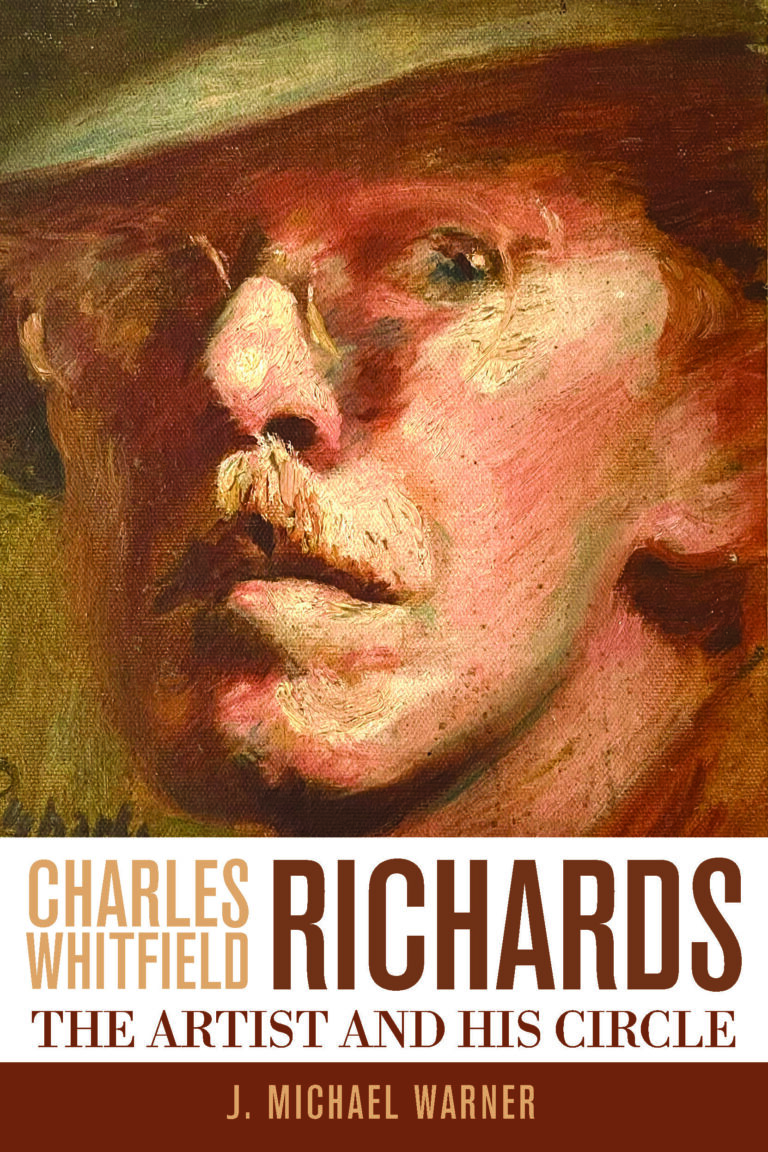
 CHARLES WHITFIELD RICHARDS: The Artist and His Circle
Winner of the 2026 IndieReader Discovery Awards in Biography, Nonfiction
What’s the book’s first line?
“Moses G. Richards had a sore throat.”
What’s the book about? Give us the “pitch”.
Charles Whitfield Richards was a Southern artist and journalist whose career spanned most of the twentieth century. Born in a Mississippi Delta boom town in 1906, he drew on his subsequent experiences as a merchant seaman and as an art student in the Paris of the Lost Generation to become a popular journalist in New York and the South. After World War II, emotional pressures caused Richards to change careers, and he became a full-time visual artist based in New Orleans and Houston. He focused mostly on oil paintings, but he also innovated in printmaking and sculpture.
What inspired you to write the book? A particular person? An event?
In July 1984 my wife and I sat for portraits in Charles Richards’s French Quarter apartment. Richards was by this time old and frail and prone to chills. Despite it being a hot, hot, hot summer day, he kept all his windows shut as we sat on hard stools for the hours-long session. But he kept us entertained with stories of his youth in Rome, Mississippi, and of his travels in France and his studies at the Art Students League in New York. I was enraptured by his colorful descriptions of the characters he met in New Orleans and New York. That’s when I decided I had to write his biography.
What’s the main reason someone should really read this book?
If you have visited New Orleans and have an interest in its history, or if you love Southern art, read this book and peruse the many photos of Richards’s colorful impressionist paintings.
 When did you first decide to become an author?
When I was in college, I worked on the student newspaper. One evening as the Editor and I sat alone in the offices, he was engrossed in writing an editorial, and I typed away at some features story. The Editor was under a lot of pressure because he had published an exclusive story that shone a harsh (but accurate) light on the town’s Public Safety Commissioner and a local TV station. The school administration had come down hard on him. But that quiet evening, as we each sat writing our projects, I looked up and said, innocently and stupidly, “I think some day I’ll write a book.” The Editor looked up at me, brows furrowed, and said: “You??” And that was the moment I knew I would become an author.
Is this the first book that you’ve written?
Yes. I’ve edited previous works, and written articles for journals, but this was my first book.
How much time do you generally spend on your writing?
Three to four hours a day.
What’s a great piece of advice that you can share with fellow indie authors?
The key is perseverance. Keep working and don’t give up. Research the project. Write a draft. Re-write it. Research more. Re-write it again. Hire a good independent editor and pay attention to their advice. Research. Re-write it again. Find five or six beta readers (hire them if you need to — there’s no sin in that) and listen to their advice, especially if more than one makes the same comment. Re-write. Submit. Start writing something new. If someone is interested, celebrate and then listen to their comments. Re-write. Submit again if necessary. Don’t worry if it takes two or three or four years to find a publisher. Be persistent.
Would you go traditional if a publisher came calling? If so, why?
Yes. I did publish my book traditionally with an academic publisher. I strongly recommend it for all the support they provide. Editing, layout, cover design, distribution, publicity. It’s extremely difficult to do all these things by yourself, even if you have the talent for it.
Is there something in particular that motivates you (fame? fortune?)
Experience motivates me. I love learning. I love research and following the story down a rabbit hole of interviews, library research, database research and all the rest. I love learning how to write. I love getting feedback on my writing from editors.
Which writer, living or dead, do you most admire?
There is not one writer who is my favorite. There are so many. At the risk of being cliché, I admire many authors from the 1920s and 1930s such as Hemingway, Fitzgerald, Faulkner, Welty and others. But I also very much admire more recent writers such as Atwood and Tartt.