
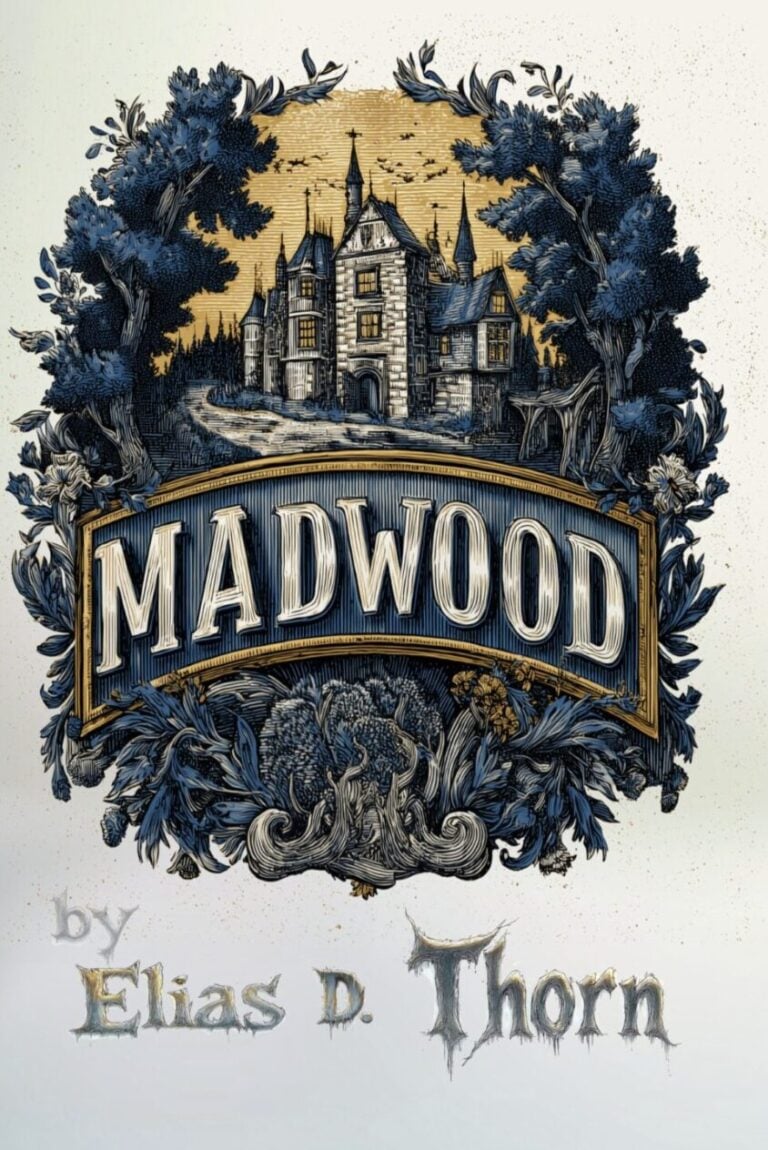
 Madwood: Received a 4+ star review, making it an IndieReader Approved title.
 Madwood: Received a 4+ star review, making it an IndieReader Approved title.
Following find an interview with author Elias D. Thorn:
1.What is the name of the book and when was it published? Madwood. October 31, 2025.
2. What’s the book’s first line? It feeds where the air is heavy. Grief. Terror. Shame. These make the root-tips swell. The IndieReader reviewers caught something I held close: “Evil is already present. Madwood merely feeds on it.”
3. What’s the book about? Give us the “pitch.” A woman discovers the system does not protect the vulnerable. It processes them. So she builds her own system. A Victorian house. A backyard tree that learns. Tenants no one will miss. She thinks she is using Madwood. Madwood is older. “Control is an illusion,” the IndieReader review said. “Characters who think they’re in charge eventually learn they aren’t the authors of their fate.” A tree decides it is tired of being furniture.
4. What inspired you to write the book? A fence post in South America. Dead lumber hammered into the ground—sprouting. That was the seed. The soil was something else. I spent years under a camphor tree in my backyard. Not writing a novel. Letting something grow. The tree kept whispering—not in words. In weight. Grief. Terror. Shame. The things people bury. My wife scheduled a psych evaluation. I did not go. I knew the better doctor. It was sitting under that tree.
5. What’s the main reason someone should really read this book? Because it is not about a magical tree. It is about how easily we trade our choices for comfort. Madwood does not conquer. It waits. It learns what you want. Then it offers to give it to you. All you have to do is let it in. Why are we so willing to be fed upon? One reader said the book felt like a documentary. Another said a character she was supposed to fear stirred something like warmth in her. That does not surprise me. The most frightening thing about Lilith is not that she is unlike us. It is that she is too much like us.
6. What’s the most distinctive thing about the main character? Who—real or fictional—would you say the character reminds you of? She did not break. She learned. She calls her tenants’ deaths “operational losses.” That is not rage. That is arithmetic. A less sentimental Scarlett O’Hara. Or every efficiency consultant who has ever explained why cutting waste is compassionate. There is a cat in the novel. Trapped inside a painting. It says: “I am not an ordinary cat. I am Lilith’s conscience, just one she does not want to see.” That is the heart of the book. She is not without conscience. She has simply learned not to look at it.
7. When did you first decide to become an author? I have been writing my whole life. Diaries that were not diaries. Letters I never sent. I never thought of myself as an author. I thought of myself as someone who wrote to keep breathing. The decision to publish—to step into English-language fiction—came with this book. Van Velzer Press believed in it when it was still only a root system. Their editor and designer both told me they had not read a story this compelling in years. There were other publishers. Van Velzer was the first. They had something the others did not. Passion.
8. Is this the first book you’ve written? No. I have written five or six before this one. Some may never be published. That is a quiet grief I carry. Madwood is the first that fought back. It changed direction on me. It forced me to look at things I would rather have buried. I carved it like a coffin: slowly, with the grain, knowing it might be the only one I ever get right.
9. What do you do for work when you’re not writing? I was, for a time, ranked among the world’s top 100 life insurance advisors. That job taught me something that ended up in Madwood: insurance is not about death. It is about who gets to decide what death means. My history taught me that humans are often treated as actuarial data points. In Madwood, I simply allowed the trees to treat humans the same way. Now I mostly talk to trees.
10. How much time do you generally spend on your writing? For Madwood? Years. I stopped eating. Stopped reading. Stopped watching the news. I sat under a camphor tree and wrote until I could not tell the difference between my own thoughts and the tree’s. My wife scheduled a psych evaluation. I did not go. I finished the book instead.
11. What’s the best and the hardest part of being an indie? The best: no one tells you what to cut. You keep what is strange, what is difficult, what is yours. The hardest: you have to believe the book matters when no one is watching. You have to be your own editor, your own publisher, your own priest. Indie publishing is not for people who need permission.
12. Would you go traditional if a publisher came calling? If so, why? I already have. Van Velzer Press believed in this book when it was still only a root system. I would work with them again. And with any publisher who understands that a book is not a product to be smoothed down, but a living thing that needs room to grow.
13. Is there something in particular that motivates you (fame? fortune?) No. To leave a trace. A book that settles into a reader and refuses to leave. A story that keeps whispering, long after the last page.
14. Which writer, living or dead, do you most admire? Jean-Jacques Rousseau. The way he moves between reality and imagination without asking permission. He writes himself, and in doing so, makes every reader see themselves. He understood that the deepest truth of a person hides in the place they least want to look. That is what I tried to do in Madwood: not to judge. To watch. To let every character have their logic, their weight. To let the reader decide where they stand.
15. Which book do you wish you could have written? Rousseau’s Confessions. Not for its craft alone. For what it is: a person deciding to lay himself bare, without excuse, without ornament. A book that feels inevitable once it exists.