
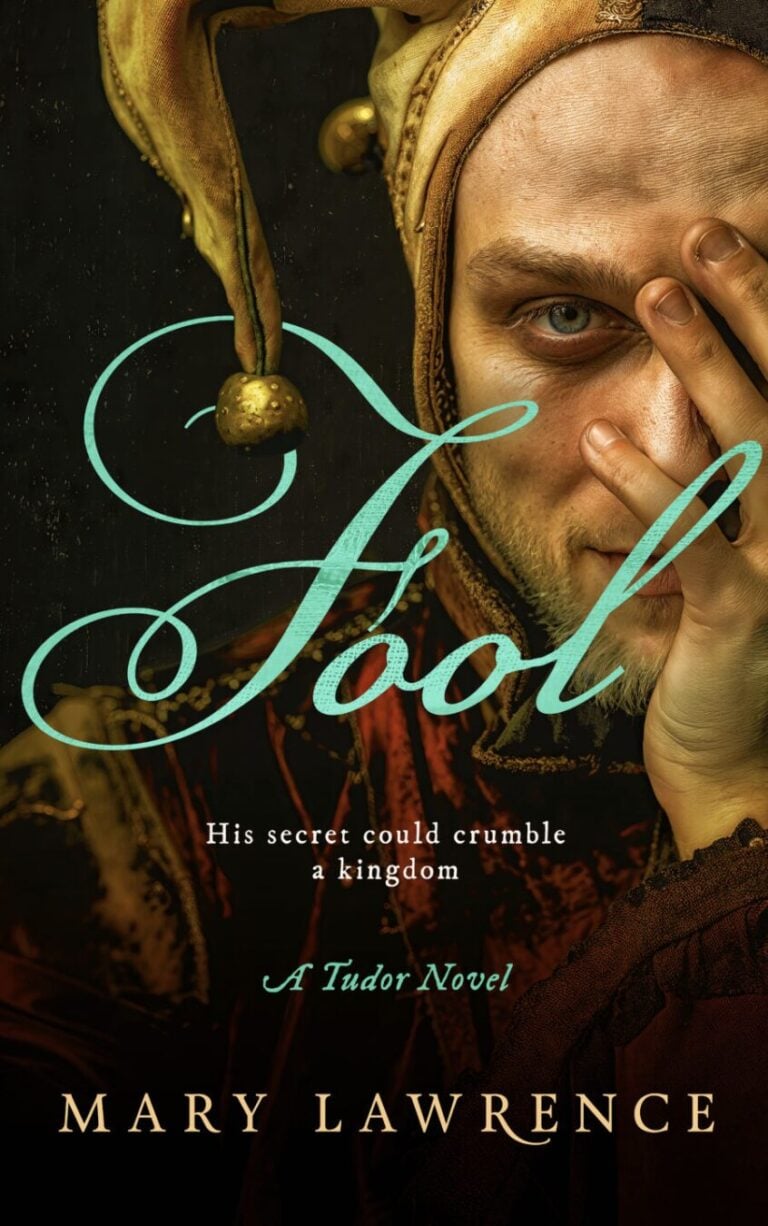
 Fool: Received a 4+ star review, making it an IndieReader Approved title.
 Fool: Received a 4+ star review, making it an IndieReader Approved title.
Following find an interview with author Mary Lawrence:
1. What is the name of the book and when was it published? F00l
2. What’s the book’s first line? “A man of my stature must have twice the wits if he is to survive amongst men twice his height.”
3. What’s the book about? Give us the “pitch”. A fool in Henry VIII’s court is brutally silenced to prevent a scandal that could change history and manipulates a plan of extortion to exact revenge on those who wronged him.
4. What inspired you to write the book? A particular person? An event? Kronos first appeared in my original draft of The Alchemist’s Daughter, but when I reshaped it into a mystery, he no longer fit the Bianca Goddard series—though I couldn’t let him go. When I read about John Lascelles, a protestant who exposed Katherine Howard’s past to Henry VIII’s advisors which triggered her execution and the fall of the Howard family—I knew I had the means to insinuate Kronos into history. What if Kronos had overheard this information and been caught?
5. What’s the main reason someone should really read this book? Fool offers a fresh perspective on Tudor life seen through the eyes of a marginalized character who wields far more power than he is given credit for.
6. What’s the most distinctive thing about the main character? Who-real or fictional-would you say the character reminds you of? The most distinctive thing about Kronos is his dwarfism and the faulty assumptions made about his character based on his physical appearance. I imagine people might compare him to Tyrion Lannister from Game of Thrones. They both understood their challenging place in society.
7. When did you first decide to become an author? I used to screen pap smears for a living and the only interaction I had with patients was the name on their requisition. To dispel my boredom, I used to make up stories in my head about these people based on their name. Kind of a Dickensian obsession of mine. Reading fiction has always been my escape. I wasn’t finding fiction that combined Tudor history with political commentary, wit, and imagination. So, I thought I’d try my hand at it. Granted it took me over 25 years to put together a decent, publishable novel.
8. Is this the first book you’ve written? I’ve written five Bianca Goddard mysteries prior to publishing Fool.
9. What do you do for work when you’re not writing? When I’m not writing I have a berry farm with my husband and we create gourmet jams from our unusual fruits.
10. How much time do you generally spend on your writing? I usually spend my winter writing. The farm takes my time the rest of the year.
11. What’s a great piece of advice that you can share with fellow indie authors? “Fall down seven times, get up eight.” It’s a Japanese proverb. You need perseverance to be a writer. Publishing is a harsh reality and you can’t be a snowflake in this business.
12. What’s the best and the hardest part of being an indie? Definitely the hardest part of being an Indie writer is garnering attention for your title. Getting reviewed in the trade journals is the lifeblood for traditional publishers and authors. Without that, you are really facing an uphill climb. The best part of being an Indie is having control over the cover design. I definitely believe a book cover makes or breaks a title. I buy wine based on whether I like the label—it’s the same for books.
13. Would you go traditional if a publisher came calling? If so, why? The temptation to be traditionally published still appeals to me, but I would make sure I got a decent enough advance where it compels a publisher to promote my book rather than hanging it out there with a minimum of marketing.
14. Is there something in particular that motivates you (fame? fortune?) My motivation is the pleasure I get having created a story that accomplishes my goals for that particular piece. But nothing is more affirming or brings me greater happiness than when a reader reaches out and expresses their enjoyment of my work. That connection is deeply gratifying to me.
15. Which writer, living or dead, do you most admire? I really love Hilary Mantel’s work. Not only her Cromwell series, but Fludd.
16. Which book do you wish you could have written? In my eyes, the most perfect book of all time is The Remains of the Day by Kazuo Ishiguro. The character study of Stevens, the butler, was perfection. Ishiguro’s execution was nuanced, intimate, reflective; the story was perfectly paced and plotted. I reread it every so often and it still moves me to tears.