
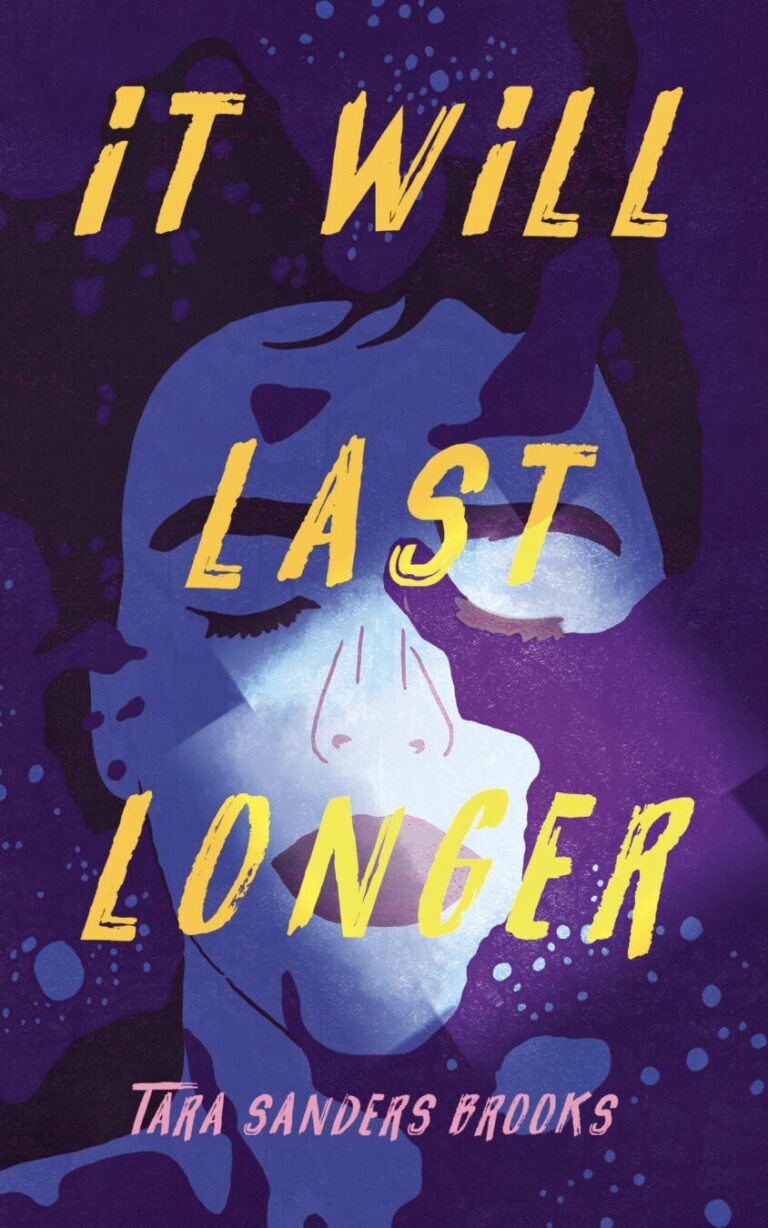
 It Will Last Longer: Received a 4+ star review, making it an IndieReader Approved title.
Following find an interview with author Tara Sanders Brooks:
- What is the name of the book and when was it published?
The name of my debut novel is It Will Last Longer, published September 16, 2025.
2. What’s the book’s first line?
The book’s first line comes in the form of a Discord server comment. Throughout the novel, Discord, Reddit, and news articles are used to propel the story along and give additional perspectives.
PRIVATE DISCORD SERVER
LOS ANGELES FORUM FOR CRITICAL THINKING CHANNEL:
# DEADMANWALKING
Ted H. (he/him) 1/1/2025 1:05 AM
Of course, this ended up with someone “unintentionally” dead. Yet again. Look, I’m not superstitious, but I wouldn’t mess with this kind of thing myself. She was asking for it.
3. What’s the book about? Give us the “pitch”.
When struggling fine art photographer Viv Klein stumbles upon a crime scene in the back alleyways of Los Angeles and snaps a photo of what she sees, she unintentionally finds herself sucked into a surreptitious world of macabre photography that brings into question where her boundaries as an artist and person really lie.
4. What inspired you to write the book? A particular person? An event?
As a filmmaker as well as a novelist, I am intrigued by what inspires people to create their art. I’ve always been fascinated by the photograph “The Most Beautiful Suicide” by Robert Wiles. When Evelyn McHale threw herself from the top of the Empire State Building in 1947, Wiles snapped a photo of her body as it lay on top of a parked car. Time magazine gave the photo a full page spread. The idea that there is something beautiful in death, something that captured the attention of so many people at the time, really interests me. Speculating about a modern day Robert Wiles is what led me down the path to this book.
5. What’s the main reason someone should really read this book?
Someone should read It Will Last Longer if they like exploring gray areas of morality, if they are interested in what inspires art, or if they just like to have a good time and read literary fiction.
6. What’s the most distinctive thing about the main character? Who-real or fictional-would you say the character reminds you of?
Viv Klein is obsessively driven by her creativity. Even when she realizes that pursuing her art is going to lead her down some troubled paths, she can’t deny herself. In that way, her dedication to her ideas reminds me of Howard Roark from The Fountainhead. Viv would absolutely blow up a building if her plans weren’t followed for its execution. That’s the only way that she reminds me of Howard Roark, though. In every other way, she’s very different from an Ayn Rand character.
7. When did you first decide to become an author?
I’ve always been a writer. I used to get in trouble in elementary school for writing instead of paying attention in class. When the double strikes of 2023 shut down the film industry, I had a lot of time on my hands. I started writing what I called “long form prose” because I was scared to call it a novel. What came of that was It Will Last Longer.
8. Is this the first book you’ve written?
This is the first book I’ve written. I’m already working on the second one, so stay tuned.
9. What do you do for work when you’re not writing?
When I’m not writing, I am working as a cinematographer. I have my MFA in Film Production from USC. I love working with the camera, and I’m currently in production on my second feature film as a Director of Photography. I also freelance as a writer for film publications, such as American Cinematographer.
10. How much time do you generally spend on your writing?
I don’t have a rigid writing schedule. It is in constant flux, as it has to be with my unpredictable film schedule. I love when I can get in the rhythm of things and write for hours every day, but that isn’t always manageable. I try not to stress over the ebb and flow and just stay moving forward by inches or miles.
11. What’s the best and the hardest part of being an indie?
I love the autonomy I have as an indie author, but I also long for the support of a traditional team. Marketing my own work is the hardest part for me. Being an indie author means having to tap into all different types of skill sets, some of which don’t come as naturally for me.
12. What’s a great piece of advice that you can share with fellow indie authors?
The best piece of advice I have is to just keep writing and sharing your writing. It’s so easy to get discouraged in this overinundated industry, but the only way to get better is to just keep going, no matter what. Have confidence that you have something worth sharing, and have the courage to keep sharing it.
13. Would you go traditional if a publisher came calling? If so, why?
I would love to go traditional. As much as I love the autonomy of being an indie writer, my ideal would be to focus on the writing and editing and let other specialized professionals help with the slew of other tasks that are necessary to create a successful book. Coming from a film background, I see the value in team collaboration and would love to get to have that experience in publishing.
14. Is there something in particular that motivates you (fame? fortune?)
Far more fickle than fame or fortune, changed minds are what I aim for with my writing. I want to write something that alters perception and truly makes an impact on how people see the world. For me, that ideal is embodied in The Brothers Karamazov by Dostoevsky. I literally have an onion tattooed on my wrist to remind me to live my life by the ethos of the parable of the onion from The Brothers Karamazov. It’s a lofty goal, and maybe a cocky one too, to want to change how people live, but it’s why I want to be a storyteller. I don’t think I have any great answers about the universe, but I want to motivate people to live their lives thinking more about loving other people.
15. Which writer, living or dead, do you most admire?
I’m in awe of how David Foster Wallace’s mind worked when it came to writing prose. His words somehow always cut to the quick, even when he was at his most verbose. Looking at the work, not at the person, he is absolutely the writer I admire the most.
16. Which book do you wish you could have written?
1 Corinthians – I would have changed a few things.