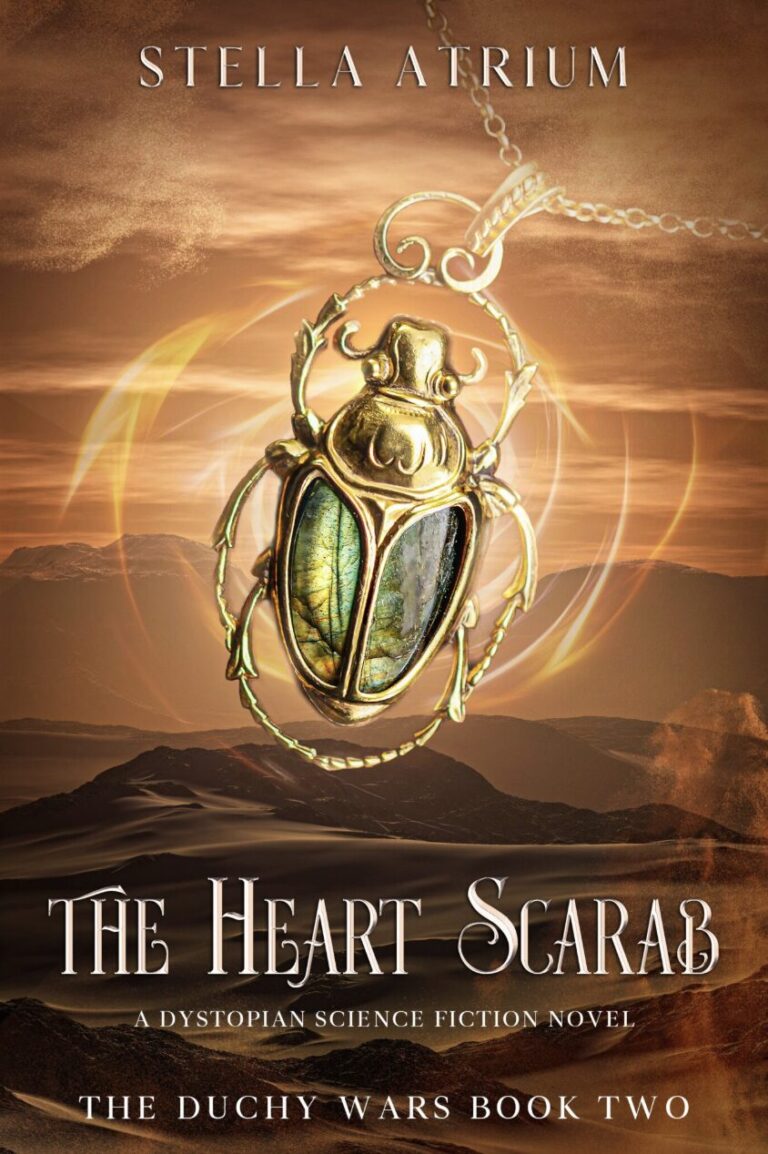
 THE HEART SCARAB: a Dystopian Science Fiction Novel: Received a 4+ star review, making it an IndieReader Approved title.

Following find an interview with author Stella Atrium:
1. What is the name of the book and when was it published?
THE HEART SCARAB: a Dystopian Science Fiction Novel was published on August 6, 2025
2. What’s the book’s first line?
“The doctors are ceasing their efforts now; the priests are done with prayers.”
3. What’s the book about? Give us the “pitch”.
THE HEART SCARAB, the second installment in the Duchy Wars series, is an ambitious and sprawling work of political fantasy, science fiction, and magical realism. Picking up from its predecessor, The Matrix Opal, this sequel expands on its intricate world to offer a much larger and deeper story with both familiar and new characters.
The story focuses on several main threads. Bybiis is recovering from her battles with Ulaya and finding her own path towards understanding more about her beastmaster power. At the same time, Stuben el Cylahi tries to find his place as a police officer in the capital, only to realize that his loyalty is to the displaced Rundi people. Meanwhile, on the sidelines, Ulaya seeks control over the serpents for her own benefit.
4. What inspired you to write the book? A particular person? An event?
Science fiction is for entertainment, of course. I have been looking at trends that impact my life and my readers. This novel addresses questions of population migration and problems of identity in a host country. If we learn something about ourselves or about our own world, that’s just icing on the cake, right?
5. What’s the main reason someone should really read this book?
THE HEAET SCARAB is Book 2 of the second series, so there are many strands of plotlines. The writer assumes that a reader who made it this far into the story is invested in the characters and ready to see them triumph.
Mostly, my stories are about the women, but this setup offers two men to carry the plot. Rufus el Arrivi has been present in all the previous books. Now as a grown man with children, he decides to run for the office of khalif in open elections in a duchy where refugees called Rundi are allowed citizenship.
Meanwhile Stuben works with Rufus as police in Urbyd and witnesses some difficult moments for the refugees. He breaks with Rufus and goes on adventure with Obye who is laboring to recover some Rundi who are abused at a stone quarry.
My inspiration comes from a love of the characters and my own questions about how their lives shape – sometimes as much as surprise to me as to you.
6. What’s the most distinctive thing about the main character?
Stuben el Cylahi emerges in this book as a driving character who puzzles out questions of right and wrong in a fractured world. Previously, he was a street kid and a problem-solver who was impressed with his tribal leader Rufus. He begins to take on real world goals with the displaced Rundi migrants as his assumptions about the value of tribal logic are tested.
7. Who-real or fictional-would you say the character reminds you of?
Stuben is modeled after a frontline immigration officer who must work both sides of prejudice and unequal distribution of resources to ease the struggles of new arrivals who are leaving hard circumstances and seeking a place in the host country. How does he find balance and hold onto his own guiding beliefs?
8. Is this the first book you’ve written?
I’ve been writing since I was a teenager in the 1960s. The Tribal Wars is a 5-book series situated in the distant mining planet of Dolvia. I grew up as a writer while I explored the problems that tribal groups had to solve to bind together as a nation state.
This second series takes on an additional writer challenge of presenting the story in the voices of familiar characters. The voices shift with inflection and intent as characters confront forces beyond their control. The reader can feel disorientated as some sections are jagged, forcing the reader to slow down, reread and reflect.
The story weaves together the fates of warriors, mystics, and serpents in a landscape scarred by mining, politics, and old tribal magic. At the center are the mysterious serpent pouches, objects of power and danger that drive much of the conflict.
9. What’s the best and the hardest part of being an indie?
Looking back after publishing 8 books, I would say that the best part is the satisfaction of discovery that some readers stick with the series and keep buying the next book and the next one.
The hardest part of being an indie writer is learning to self-publish. The publishing world changes every 18 months, so staying ahead of trends for promotion and learning what works or not for reaching readers can be a bigger challenge than writing.
10. What’s a great piece of advice that you can share with fellow indie authors?
Count the cost for the hours you will spend alone at the sacrifice of family and social moments. Find a balance for living in the made-up world and gaining friends in the real world.
11. Would you go traditional if a publisher came calling? If so, why?
Ah, sure… a traditional publisher can push sales into fresh markets and foreign connection.