
received a 4+ star review, making it an IndieReader Approved title.
Following find an interview with author Joshua Ericson.
What is the name of the book and when was it published?
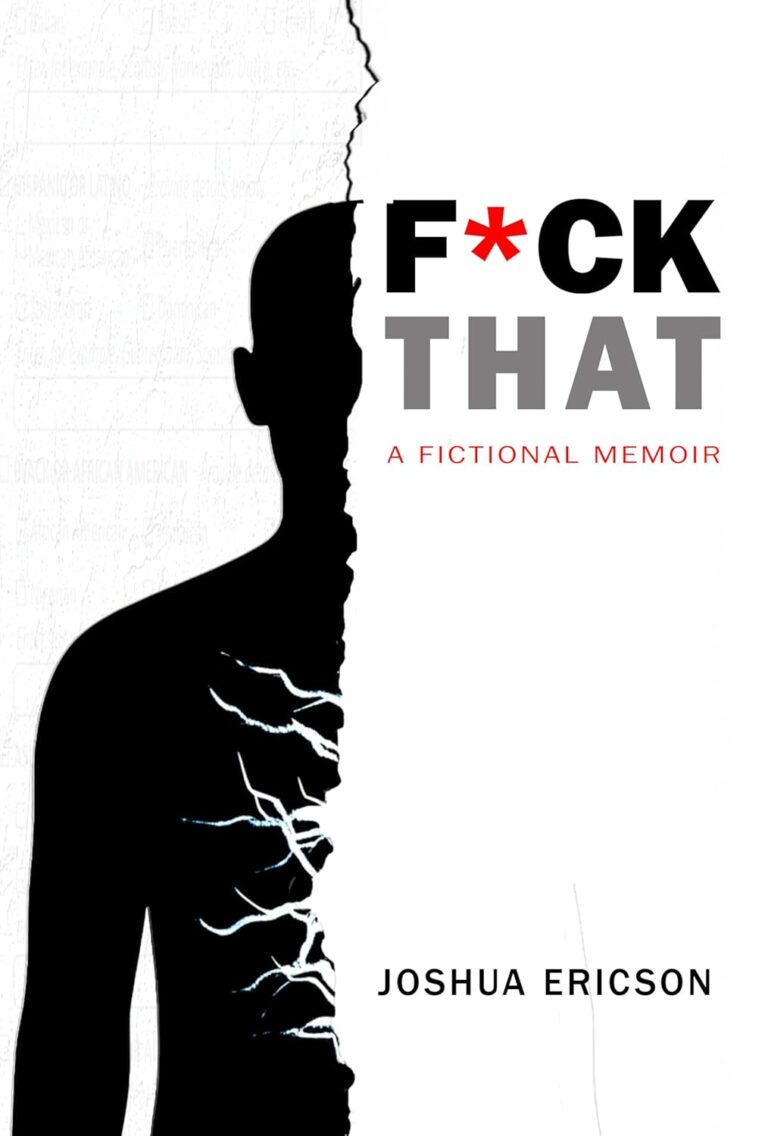
Fuck That, published August 9, 2025.
What’s the book’s first line?
“I’m not here to make you comfortable.”
What’s the book about? Give us the “pitch.”
Fuck That is a defiant, first-person narrative about growing up mixed-race in white America, and what happens when you finally stop performing for other people’s comfort. It’s part memoir, part social reckoning, and fully unfiltered.
This isn’t a diversity manual. This is what it sounds like when someone stops editing themselves just to make others feel okay.
If you’ve ever been forced to pick a side, swallow your truth, or rehearse your identity before speaking, this book doesn’t just see you, it speaks for you.
What inspired you to write the book? A particular person? An event?
There was both an event and a person that inspired me to write this, The Trump administration’s constant DEI assaults. I read an article from the Atlanta Voice one weekend about how the federal DEI rollbacks were disproportionately impacting Black women in government roles. That Monday morning, I was having a conversation with one of my employees. She, as a Black woman, was particularly upset about this. Our conversation was one of shared frustration and disgust.
I couldn’t shake it the rest of the day, and by the time I got home, I had one of those moments where the weight of it all lands, policy, race, silence, expectation, and something in me snapped.
That night, the first chapter had already started writing itself.
I didn’t set out to write a book. I just stopped editing my voice. Five days later, I had a completed book. No filter. No corporate polish. Just a lifetime of performance cracking all at once.
That was the moment. Not inspiration. Not muse. Just a decision: I’m not translating anymore.
What’s the main reason someone should really read this book?
You should read this if you’re mad about the way minorities, women, and the LGBTQIA+ community are treated in America. You should read it if you’re tired of wearing that mask and it’s getting too heavy. You should read it if you want to be an ally and help but don’t know what it really feels like, yet you want to learn.
And maybe more importantly, if you are shouting on the inside because you’re too shy, too afraid, or too exhausted to say it out loud. You should read this because I’m going to say all the things people are often afraid to say themselves. It will feel like a release. And that’s important, because if you keep that bottled up for too long, you’re going to explode.
And if anyone is wondering, Fuck That isn’t just about race. It’s about performance. About the cost of being acceptable. About what it means to be told your story is too complicated to sell.
- Read it if you’ve ever been told to pick a side.
- Read it if you’ve ever passed as safe.
- Read it if you’re tired of code-switching just to survive the room.
What’s the most distinctive thing about the main character? Who—real or fictional—would you say the character reminds you of?
This character doesn’t remind me of anyone external. The book is fictionalized just enough not to call people out. So yeah, it’s me. But not the polished version.
Not the one in this interview. Not the one in the boardroom or cheering my kids on at a track event.
This is the version I buried under years of corporate performance, church manners, and polite silence.
When did you first decide to become an author?
I didn’t decide to become an author. I learned about myself by going to therapy, and I grew so much that I felt I had to tell people what I learned so they could learn it too. The medium I chose was books, and here we are.
Is this the first book you’ve written?
I always liked writing, but as a kid with ADHD, I was not a fan of reading. I wrote lots of stories until high school. Wrote an unpublished book about civil rights at 19, and a few unpublished horror short stories in my early 20s, and then… nothing for about 25 years.
The ideas were there, the passion was there, but I had no real confidence in my ability.
Then I started going to therapy and I learned so much about myself, became so self-aware, I couldn’t NOT start writing.
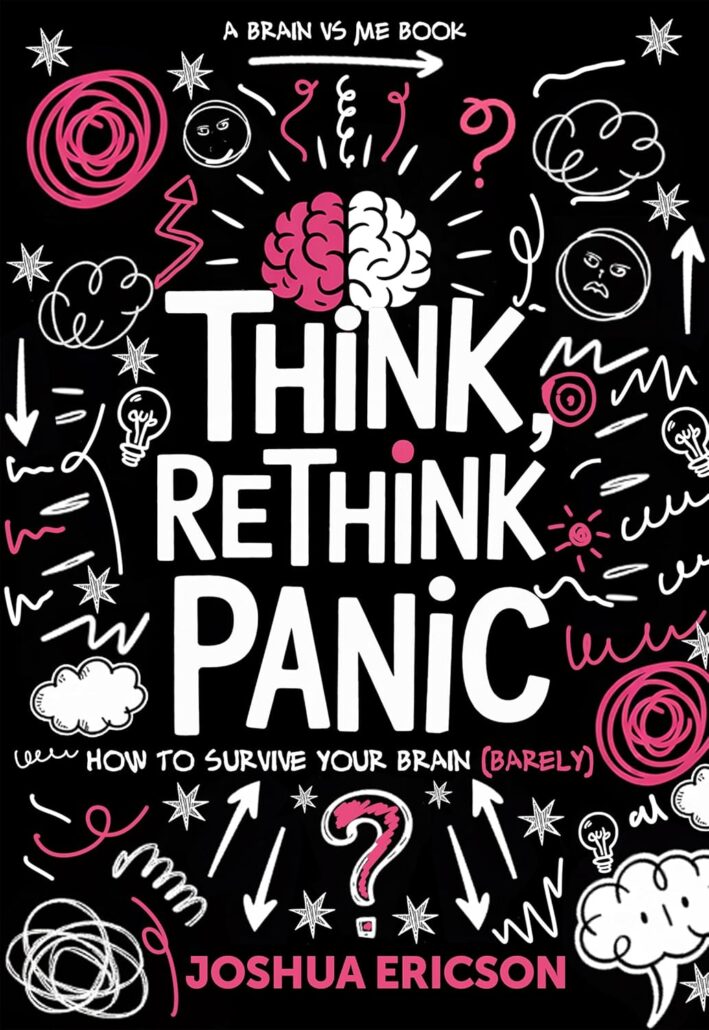
So late December 2024 I started writing about my mental health journey, and 7 months later I published Think, Rethink, Panic. A book VERY unlike Fuck That.
What do you do for work when you’re not writing?
The boring answer is: I’m an IT executive for a non-profit health center.
The more interesting answer is: I do anything that makes the creative-loving side of my brain happy: woodworking, drawing, designing software (yes, I’m a nerd).
How much time do you generally spend on your writing?
Too much, if you ask my wife.
I generally spend 2 to 8 hours per day, despite having two young kids and a full-time job. I usually write when I first wake up, for about an hour. Then I dictate notes to myself on my way to work. Then I write during lunch, dictate more notes on my way home, and after dinner and all that, might disappear into my office until I can’t see straight.
This book though, I was mad. I was focused. I took it from concept to ready to publish in 5 days.
What’s the best and the hardest part of being an indie?
Best: You don’t have to water it down.
Hardest: Visibility. Hands down.
Bonus: Being the entire production team.
What’s a great piece of advice that you can share with fellow indie authors?
Stop waiting to be discovered.
Write like no one’s in the room.
Publish like you don’t need permission.
The world doesn’t need another polished pitch. It needs your truth. Unmuted.
Would you go traditional if a publisher came calling? If so, why?
Only if they promised not to touch the voice.
If they want to distribute the flame wider, fine. But if they try to dim it, dull it, or market it as a feel-good DEI pamphlet? Nah. I’m good.
Is there something in particular that motivates you (fame? fortune?)
Two things:
One: I want to help people get through the things I’ve struggled with, by learning from me and my pain.
Two: My kids might not always listen to me, but when they’re grown, and need help after I’m gone, my words will always be there.
That’s enough.